

close
Choose Your Site
Global
Social Media
Views: 65 Author: Site Editor Publish Time: 2026-02-26 Origin: Site


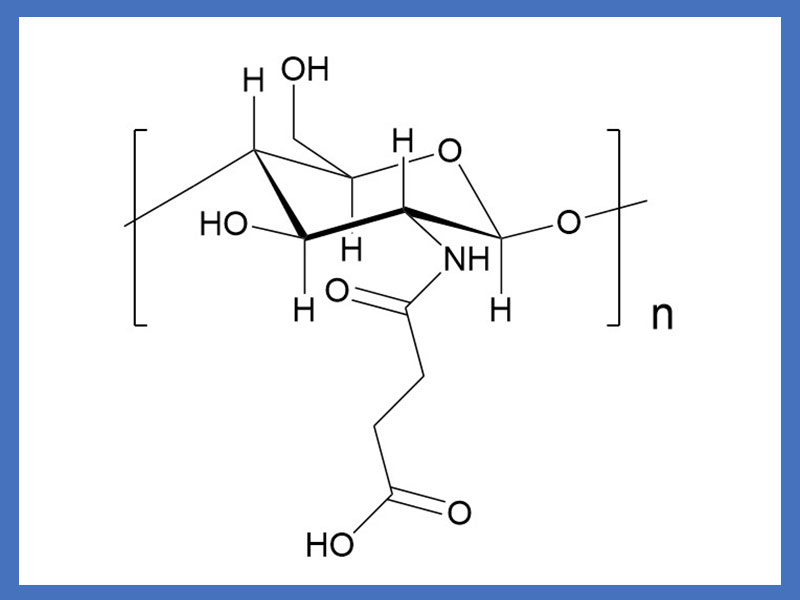
In the current biomedical materials field, a modified natural polymer called succinyl chitosan is generating a wave of research and development enthusiasm. Through chemical modification, scientists have successfully overcome the limitations of traditional chitosan, making it exhibit outstanding performance in drug controlled release, wound healing, and tissue engineering.
01 Chronic Wound Healing
Chronic wound repair has long been a major challenge in clinical practice, especially in diabetic patients.
A research team from Jinan University discovered that N-succinylated chitosan can effectively restore the physiological functions of cells that have been dysregulated by high glucose and TNF-α. In animal experiments, wounds treated with NSC showed faster epithelial tissue regeneration and thicker collagen deposition, offering new hope for the treatment of chronic wounds such as diabetic foot ulcers.
02 Precise Drug Delivery
In the field of drug delivery, succinyl chitosan also demonstrates significant potential.
Researchers from Jadavpur University developed a succinyl curcumin conjugated chitosan polymer prodrug nanoparticle for the treatment of type 2 diabetes. This innovative system can release 97% of curcumin within 7 days at pH = 5. In a diabetic mouse model, the nanoparticles can release curcumin gradually and controllably, effectively lowering fasting blood glucose levels, providing a new approach for diabetes treatment.
03 Advanced Diagnostic Equipment
In the field of diagnostic technology, succinyl chitosan also plays a crucial role.
The IT Medical Fusion Center team combined N-succinylated chitosan with carboxylated carbon nanotubes to form a uniformly dispersed nanocomposite solution. The immunosensor constructed based on this material has a detection limit for myoglobin of 4.2 ng/mL and a wide linear range of 1 to 4000 ng/mL. In diluted serum samples of Mb, the recovery rate of the immunosensor ranged from 100.262% to 118.55%, demonstrating great potential for detecting biomarkers of acute myocardial infarction in clinical samples.
With the continuous optimization of synthesis processes and the emergence of innovative applications, succinyl chitosan is expected to become a star material in the biomedical field in the near future.
From clinical treatment to the health industry, this technology is quietly changing the way humans address health challenges, opening up new possibilities for future medicine.


