

close
Choose Your Site
Global
Social Media
Views: 0 Author: Site Editor Publish Time: 2026-06-28 Origin: Site


Clean beauty formulations increasingly rely on sustainable, biocompatible marine and fungal biopolymers. Consumers actively seek natural alternatives to synthetic thickeners and texturizers. You might feel tempted to swap conventional ingredients directly for natural polymers. However, formulating with chitosan remains notoriously sensitive. Selecting the wrong grade or molecular weight quickly leads to disaster. You might encounter sudden precipitation, severe texture degradation, or highly unstable pH levels. These issues frustrate chemists and inevitably delay product launches. We promise to help you avoid these costly errors. This guide provides a technical, evidence-based framework for evaluating your options. You will learn how to shortlist and source the exact specifications required for your specific formulas. By understanding core metrics, you guarantee both product efficacy and long-term shelf stability.
Specification dictates function: Molecular weight (MW) and Degree of Deacetylation (DDA) are the non-negotiable metrics determining whether chitosan acts as a surface shield or an active delivery system.
Charge compatibility is critical: As a highly cationic polymer, chitosan requires strict formulation parameters to avoid clashing with common anionic thickeners.
Source matters for compliance: Formulators must choose between marine-derived and vegan (fungal) sources based on target demographics and allergen considerations.
Supplier vetting requires strict documentation: Consistent lot-to-lot purity, rigorous heavy metal testing, and precise Certificates of Analysis (CoA) are mandatory for scaling.
You cannot use just any polymer off the shelf for personal care. We must clearly define the baseline requirements for a cosmetic raw material versus industrial or agricultural grades. Industrial grades prioritize high yield and low cost. Manufacturers use them for wastewater flocculation or seed coating. They lack the rigorous refinement processes necessary for skin contact. Skincare formulations demand absolute dermatological safety and purity.
High-quality cosmetic grades enforce strict thresholds for heavy metals. Your formulations require limits well below industrial allowances. Standard dermatological safety profiles demand lead below 10 ppm, with strict caps on arsenic and mercury. Microbiological limits are equally critical. A premium grade typically requires total plate counts under 100 CFU/g to prevent preservative system failure.
Furthermore, you must evaluate high purity markers like low ash and negligible protein content. Why does this matter? Residual crustacean proteins cause severe color degradation over time. They trigger the Maillard reaction, turning your pristine white cream into an unappealing brown lotion. High protein content also introduces foul, fishy off-odors that emerge after a few weeks on the shelf. Achieving cosmetic purity prevents these aesthetic failures.
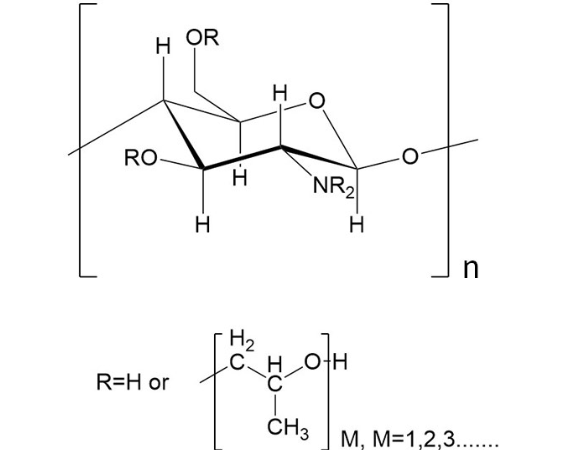
Evaluating raw powders requires looking past the marketing claims. You must verify two primary technical specifications on every Certificate of Analysis (CoA).
Molecular weight fundamentally alters how the polymer interacts with the human epidermis. High MW variants (typically >300 kDa) do not penetrate the skin barrier. Instead, they form a robust, cross-linked mesh on the surface. This makes high MW variants ideal for creating a breathable skincare film former. This film sits on the stratum corneum, significantly reducing Transepidermal Water Loss (TEWL) without feeling tacky or suffocating.
Conversely, low MW variants and oligosaccharides (typically<50 kDa) exhibit entirely different behaviors. Due to their smaller size, they penetrate the upper layers of the epidermis more effectively. They act as a deep moisturizing ingredient. They pull hydration into the skin and can even aid in the delivery of other encapsulated active compounds.
| Specification Feature | Standard Range | Formulation Impact |
|---|---|---|
| High Molecular Weight | >300 kDa | High viscosity, excellent surface film-forming, barrier protection. |
| Low Molecular Weight | <50 kDa | Low viscosity, deep penetration, active compound delivery. |
| Ash Content | <1.0% | Ensures visual clarity in gels, prevents gritty textures. |
| Protein Content | <0.2% | Prevents browning (Maillard reaction) and off-odors over time. |
You must understand DDA to control formulation stability. We explain DDA as the primary driver of solubility and cationic charge density. The deacetylation process removes acetyl groups, exposing reactive amine groups. More exposed amine groups mean a higher positive charge.
We typically establish the standard benchmark at >85% DDA for high-quality cosmetic applications. A high DDA ensures optimal bioactivity. It allows the polymer to bind strongly to negatively charged skin and hair proteins. It also guarantees reliable solubility in weak organic acids, ensuring formulation consistency across different production batches.
Many chemists fail on their first attempt at incorporating these polymers. You must address the "cationic clash" head-on. The inherent risk lies in combining positively charged Cosmetic Grade Chitosan with standard anionic polymers. When you mix it with common thickeners like standard Carbomers, Xanthan Gum, or traditional Hyaluronic Acid, disaster strikes. The opposite charges attract intensely. This rapid reaction results in immediate coacervation, turning your smooth gel into a cloudy, precipitated mess.
You can easily implement formulation workarounds. We recommend the following best practices to bypass ionic conflicts:
Use non-ionic thickeners: Swap anionic carbomers for non-ionic alternatives like Hydroxyethylcellulose (HEC) or Hydroxypropyl Methylcellulose (HPMC).
Utilize specialized derivatives: Standard variants remain sensitive. We suggest upgrading to modified cosmetic chitosan, specifically carboxymethyl derivatives. These modified versions offer broader pH stability and tolerate a wider range of co-ingredients.
Control addition sequencing: Always fully hydrate and acidify the polymer before introducing it to the main water phase.
You must also outline the strict pH dependencies. Standard powder is insoluble in pure water. It requires a distinctly acidic environment (typically pH < 6) to remain soluble. You usually dissolve it using 1% lactic or acetic acid. This acidic requirement heavily influences your broader formulation strategy. You must carefully select preservatives and active ingredients that remain stable and effective in a low-pH environment.
The origin of your raw material dictates your marketing claims and regulatory compliance. Formulators face a critical choice between marine and fungal sources.
Marine-derived (Crustacean): This remains the traditional, highly scalable source. Manufacturers extract it primarily from shrimp and crab shells. It boasts a long, proven track record in clinical efficacy. Many formulators worry about shellfish allergens. However, strict purification processing removes the allergenic proteins, not the polysaccharide itself. Despite this chemical reality, consumer perception may still pose a marketing hurdle.
Fungal-derived (Vegan): This represents the rising alternative for clean beauty brands. Manufacturers extract it from the cell walls of fungi like Aspergillus niger. It completely bypasses shellfish allergen concerns. More importantly, it supports lucrative cruelty-free and vegan marketing claims. This aligns perfectly with modern consumer values.
When you evaluate the cost-to-benefit ratio, consider scale. Marine sources remain vastly cheaper and offer immense supply chain stability for massive commercial scale-up. Fungal sources cost significantly more, but the premium allows brands to command higher retail prices in the vegan skincare niche.
Choosing a reliable supplier makes or breaks your production timeline. Raw material sourcing requires rigorous vetting to ensure consistency.
Assess Lot-to-Lot Consistency: Natural polymers inherently vary based on seasonal harvests and regional sources. A minor variation in DDA ruins your emulsion. You must demand tight specification ranges on CoAs. A trusted supplier guarantees that MW and DDA fluctuate by no more than a few percentage points between lots.
Verify Regulatory & INCI Compliance: Never buy industrial grades repackaged for cosmetics. Verify proper INCI registration. If you formulate for European markets, ensure full REACH compliance. Always request and review clear, globally harmonized safety data sheets (MSDS).
Demand Technical Support & Solubilization Guidance: A reliable supplier does more than ship raw powder. They act as formulation partners. They should provide specific solubilization protocols. They will tell you the exact organic acid ratios needed for proper hydration. If a supplier cannot provide an ingredient compatibility chart, look elsewhere.
Successful formulation relies entirely on technical precision. You must match the Molecular Weight and Degree of Deacetylation directly to your specific product goal. High MW provides exceptional barrier protection, while low MW offers deep hydration. Crucially, you must rigorously manage the formulation’s ionic environment to prevent catastrophic cationic clashes.
Take actionable steps today to improve your R&D processes. First, encourage your purchasing teams to request specific sample grades based on the exact criteria outlined above. Second, thoroughly review the CoAs for heavy metal limits and tight DDA ranges. Finally, initiate small-scale pilot stability testing. Mix these new samples with your current non-ionic base formulas to observe real-world compatibility before scaling up.
A: No. Standard chitosan precipitates in neutral or alkaline environments. It requires an acidic base (pH < 6.0) to remain fully soluble. If your formula demands a neutral pH, formulators must use modified derivatives like water-soluble carboxymethyl variants to prevent precipitation and maintain a clear, stable texture.
A: While both are powerful polysaccharides, they function differently. Hyaluronic acid is anionic and primarily acts as a moisture-binding sponge. Chitosan is cationic. It offers hydration while providing a unique, bio-adhesive film-forming property. It physically bonds to negatively charged skin cells, creating a longer-lasting, breathable protective shield.
A: Depending on the molecular weight and desired function, typical usage ranges from 0.1% to 1.0%. Low MW actives might sit at 0.2%, while high MW structural films can approach 1.0%. Higher concentrations risk excessive viscosity, an unpleasant tacky skin feel, or severe formula pilling during application.


