

close
Choose Your Site
Global
Social Media
Views: 0 Author: Site Editor Publish Time: 2026-06-26 Origin: Site


Transitioning from synthetic polymers to biodegradable alternatives often forces a compromise between performance and formulation stability. R&D directors, cosmetic formulators, and food science engineers face this frustrating trade-off daily. You want sustainable ingredients, but you cannot sacrifice sensory elegance or barrier protection. The problem matters because modern consumers demand clean labels without giving up product efficacy. While traditional chitosan offers proven antimicrobial and protective benefits, its strict requirement for acidic environments limits commercial scalability. This rigid pH dependency makes manufacturing difficult and risks instability in neutral bases. Carboxymethylation resolves this challenge completely, yielding a highly functional, pH-adaptable material. We will examine how this specific derivative functions as a dual-action matrix for advanced moisture control and active ingredient delivery. You will learn how to leverage its unique rheological properties to elevate your next generation of sustainable formulations.
Enhanced Solubility: Modifying standard chitosan with carboxymethyl groups creates a truly water soluble chitosan, viable across a broader pH range.
Dual-Action Performance: Functions simultaneously as a breathable film forming polymer and a high-capacity moisture retention ingredient.
Formulation Synergy: Highly compatible with other cosmetic biomaterials, though viscosity must be managed against electrolyte presence.
Commercial Edge: Offers a biodegradable, ESG-compliant alternative to synthetic occlusives and film-formers without sacrificing sensory feel or barrier efficacy.
Formulators constantly battle to balance hydration, barrier defense, and consumer safety. The industry relies heavily on traditional humectants like glycerin to draw moisture into the substrate. However, glycerin lacks inherent structural protection. It hydrates effectively but washes off easily and leaves the surface vulnerable to environmental stressors. Conversely, synthetic film-formers like dimethicone provide an excellent physical barrier. They lock moisture in and smooth the surface. Yet, these silicones lack biological synergy. They sit inertly on the skin or food surface. Furthermore, silicones face intense regulatory pushback and increasing ESG scrutiny due to poor biodegradability.
Biopolymers offer a natural exit strategy from synthetic dependencies. Unmodified chitosan stands out as a leading candidate due to its inherent antimicrobial and wound-healing properties. However, you quickly encounter a massive formulation roadblock. Unmodified chitosan possesses a pKa around 6.5. It requires a strictly acidic medium to dissolve. If you attempt to incorporate it into a neutral cosmetic emulsion or a mildly alkaline food preservation matrix, it simply precipitates out. This strict pH requirement limits widespread commercial adoption.
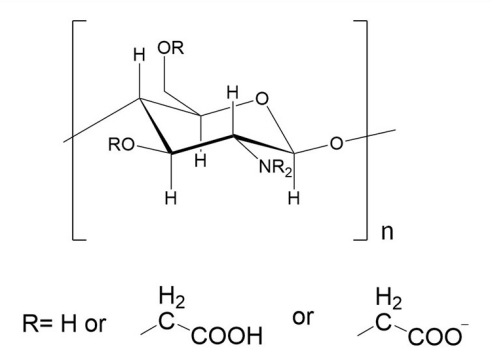
Chemical modification provides an elegant solution to this solubility bottleneck. By introducing carboxymethyl groups (–CH2COOH) into the rigid polymer backbone, we fundamentally alter its physical chemistry. The bulky carboxymethyl groups disrupt the strong intra-molecular and inter-molecular hydrogen bonds. This disruption destroys the tight crystalline structure of the raw material. The result is a highly adaptable water soluble chitosan. It maintains structural integrity in neutral and mildly alkaline environments. You can now harness the protective benefits of a marine or fungal biopolymer without forcing your entire formula into an acidic pH range.
Replacing silicones directly with humectants, leading to increased moisture evaporation.
Failing to adjust the base pH before introducing unmodified biopolymers.
Ignoring the tactile stickiness caused by overloading low-molecular-weight humectants.
When deployed in an aqueous solution, this functionalized derivative creates a sophisticated matrix architecture. It forms a continuous, semi-permeable, and breathable biopolymer network across organic surfaces. This breathability remains crucial for both dermal applications and food coatings. On the skin, a breathable matrix prevents sweat accumulation and maceration. On fresh produce, it allows necessary gas exchange while blocking opportunistic pathogens.
Beyond simple physical protection, the polymer network acts as an advanced delivery system. As the matrix dries and sets, it forms a microscopic reservoir. It traps sensitive active compounds—such as volatile antioxidants, botanical extracts, or fragile peptides—within its polymer mesh. The network then regulates the release kinetics of these compounds. It slows down delivery, extending the product's active efficacy over many hours. This sustained release also reduces localized irritation typically caused by the rapid absorption of highly concentrated actives.
Sensory experience dictates commercial success. Heavy synthetic occlusives often leave a greasy, suffocating residue. In contrast, this biopolymer delivers a lightweight, non-tacky finish. It feels imperceptible on the skin, satisfying consumer demands for premium sensory profiles. To guarantee these properties, you must establish strict evaluation metrics during the R&D phase. Evaluators should thoroughly test the mechanical properties of the cured matrix. You need to ensure it maintains elasticity across varying environmental conditions.
| Testing Metric | Evaluation Method | Target Outcome |
|---|---|---|
| Tensile Strength | Texture analyzer (pull test on cured film) | High resistance to rupture under stress |
| Elasticity & Flexibility | Flex test at low humidity (30% RH) | Zero flaking or micro-cracking |
| Breathability | Water Vapor Transmission Rate (WVTR) assay | Permits normal gas exchange without excess water loss |
| Sensory Profile | Blind tactile panel assessment | Non-tacky, smooth, imperceptible finish |
Integrating a high-performance film forming polymer into your base allows you to drop redundant synthetic texturizers. You streamline your INCI list while actively improving the consumer experience.
Hydration strategies fail when environmental humidity drops. Standard humectants pull water from the atmosphere into the skin when humidity is high. However, in dry winter climates or air-conditioned environments, they can reverse direction. They may pull deep transepidermal water out to the surface, accelerating dehydration. This modified biopolymer bypasses this risk through its unique hygroscopic capacity and high molecular weight.
The molecular backbone features an abundance of hydrophilic functional groups. The newly introduced carboxyl groups, alongside native hydroxyl and amino groups, act as aggressive water-binding sites. They capture environmental moisture and firmly anchor transepidermal water molecules through dense hydrogen bonding. Because the polymer chain is large, it cannot penetrate the stratum corneum. It stays exactly where you want it: on the surface.
This localized surface action drives a significant reduction in Transepidermal Water Loss (TEWL). It achieves this reduction not by complete occlusion—like petroleum jelly does—but by creating a biomimetic moisture-binding shield. The shield breathes, but it holds water tightly within its gel-like structure. It creates an optimal microclimate for the substrate below.
To understand its commercial value, we must look at performance benchmarking. When tested in adverse climates, this material excels. The chart below illustrates comparative moisture retention over time at a challenging 43% Relative Humidity (RH).
| Ingredient Type | Retention at 24h | Retention at 48h | Retention at 72h |
|---|---|---|---|
| Standard Glycerin (Low Mw Humectant) | ~55% | ~30% | ~15% |
| Hyaluronic Acid (High Mw Humectant) | ~78% | ~65% | ~50% |
| Carboxymethyl Chitosan (Dual-Action) | ~85% | ~75% | ~68% |
As the data indicates, deploying a specialized moisture retention ingredient stabilizes formulations intended for harsh climates. It prevents the rapid desiccation seen with standard low-molecular-weight humectants. You secure long-lasting hydration claims without relying on heavy, non-breathable waxes.
Transitioning this biopolymer from the lab bench to commercial production requires strict attention to material specifications. All derivatives are not created equal. The performance of your final product ties directly to the Degree of Substitution (DS). The DS measures how many carboxymethyl groups successfully attached to the polymer chain. A higher DS drastically increases water solubility and broadens the acceptable pH range. However, pushing the DS too high may negatively alter the mechanical strength of the resulting film. Formulators must specify the precise DS range required for their specific application.
Molecular Weight (Mw) plays an equally critical role. High Mw variants weave a dense, robust matrix. They offer superior barrier protection but significantly increase formulation viscosity. They can make emulsions thick and difficult to pump. Low Mw variants form weaker physical barriers but penetrate superficial layers better and keep liquid formulations highly fluid. You must select the Mw based on your desired viscosity and target application.
Electrolyte sensitivity presents the largest formulation risk. Because this material is a polyelectrolyte, it carries a high density of electrical charges along its chain. In pure water, these charges repel each other, uncoiling the polymer and creating a viscous gel. If you introduce salts or formulate in a high ionic strength environment, those ions mask the polymer charges. The polymer chain collapses on itself, causing a sudden, severe drop in viscosity. You must manage salt inputs carefully.
Despite these risks, the material exhibits excellent synergy with other widely used active ingredients. It blends beautifully with hyaluronic acid, alginate, and marine collagen. To succeed, you must follow strict sequence-of-addition protocols. Failing to do so causes coacervation, where oppositely charged polymers crash out of solution into sticky clumps.
Hydrate the Biopolymer First: Disperse the powder into pure, deionized water before adding any other ingredients.
Allow Full Swelling: Wait for the polymer to fully hydrate and form a clear, uniform gel structure.
Adjust the Base pH: Ensure the aqueous base matches your target pH before introducing sensitive actives.
Introduce Electrolytes Last: If salts or highly ionic preservatives are necessary, dilute them and add them at the very end of the batching process under high-shear mixing.
By respecting these rheological boundaries, you can seamlessly integrate this advanced cosmetic biomaterial into complex, multi-active emulsions.
Procuring biologically derived polymers introduces unique supply chain challenges. Unlike synthetic chemicals produced in sterile reactors, biopolymers carry biological variance. Differences in raw material harvesting seasons, climate conditions, and extraction methods can shift the final product profile. Batch-to-batch consistency becomes your primary sourcing risk. Your procurement team must mandate strict Certificates of Analysis (CoA) for every single delivery.
When reviewing a CoA, look beyond simple purity. You must verify the deacetylation degree, the precise molecular weight distribution, and the degree of substitution. Heavy metal limits also require strict scrutiny, especially if the original raw material comes from marine sources. Crustacean shells can absorb environmental contaminants. Ensuring heavy metals remain well below regulatory thresholds protects your brand from costly safety recalls.
From a corporate perspective, this polymer perfectly aligns with modern Environmental, Social, and Governance (ESG) mandates. It is fully biodegradable in environmental conditions. Furthermore, manufacturers often upcycle it from massive industrial waste streams. The traditional pathway utilizes discarded crustacean shells from the seafood industry. A newer, rapidly expanding pathway utilizes fungal waste from agricultural mushroom farming. Both methods divert waste from landfills, supporting aggressive clean-label claims and circular economy initiatives.
When evaluating potential supply partners, apply rigid shortlisting logic. Do not settle for suppliers who only provide raw material specifications. You need partners who understand application science. Prioritize manufacturers who can supply comprehensive clinical data. Ask for evidence of TEWL reduction on human skin models. Request rheological stability curves showing how their specific Carboxymethyl Chitosan reacts across your target pH ranges and salt concentrations. A supplier capable of providing this deep technical support will drastically accelerate your time-to-market.
Carboxymethyl chitosan elegantly solves the solubility limitations that have historically restricted traditional biopolymers. By introducing carboxymethyl groups, chemists have created a highly adaptable, water-soluble matrix. It delivers top-tier film-forming capabilities while simultaneously functioning as a powerful hydration engine.
The strategic value for R&D teams is immense. You gain the ability to consolidate bloated INCI lists. You can combine hydration, breathable barrier protection, and sustained active delivery into one biodegradable, clean-label ingredient.
To capitalize on this technology, take the following actionable next steps:
Audit your current formulations to identify synthetic occlusives or film-formers slated for ESG phase-outs.
Contact suppliers and request samples across varying molecular weights and degrees of substitution.
Conduct immediate salt-tolerance and pH-stability testing within your specific, unfragranced base formulations.
Run internal sensory panels comparing the biopolymer film against your existing benchmarks to ensure consumer acceptance.
A: Standard chitosan possesses a rigid crystalline structure that limits its solubility strictly to acidic environments (pH under 6). Carboxymethylation disrupts this structure by adding hydrophilic groups. This chemical modification makes the derivative highly water-soluble at neutral and mildly alkaline pH levels, vastly expanding its commercial usability across diverse formulations.
A: It is better viewed as a complementary ingredient rather than a direct replacement. While hyaluronic acid excels at drawing deep, localized hydration into the skin layers, this polymer excels at forming a breathable surface matrix. It locks that hydration in, reducing moisture evaporation and extending the overall efficacy.
A: The primary challenge is its high sensitivity to electrolytes. Because it acts as a polyelectrolyte, high-salt environments or strong oppositely charged surfactants mask its charges. This causes the polymer chain to collapse, resulting in severe viscosity loss or potential precipitation (coacervation) within the emulsion.
A: It entirely depends on the original source material. Traditional sources rely on crustacean-derived waste (like crab and shrimp shells), which are not vegan. However, fungal-derived (mushroom) chitosan is increasingly available on the commercial market. Formulators can source this fungal variant for strict vegan compliance.


