

close
Choose Your Site
Global
Social Media
Views: 0 Author: Site Editor Publish Time: 2026-07-25 Origin: Site


Salicylic Acid (SA) presents a fundamental formulation paradox. It remains a highly requested, gold-standard beta-hydroxy acid (BHA) for acne treatment and chemical exfoliation. Yet, it is notoriously difficult to stabilize in cosmetic chassis due to poor water solubility and severe crystallization risks. Formulators and research teams face a saturated supplier market offering various modified SA ingredients. Selecting the wrong delivery system inevitably leads to batch failures, compromised efficacy, pH drift, or consumer reports of severe irritation and aesthetic degradation, such as discoloration.
Successfully deploying this active requires moving beyond raw powder. Formulators must evaluate a comprehensive Salicylic Acid Series based on specific complexation technologies, release kinetics, and the target product format. The requirements for clear aqueous toners differ vastly from those of anhydrous lipid-based balms and ointments. Understanding these technical distinctions ensures product stability, regulatory compliance, and optimal skin delivery.
Solubility Dictates Format: True water soluble salicylic acid variants reduce the need for high-solvent loads (ethanol/glycols), preserving the skin barrier and broadening chassis compatibility.
Complexation Controls Irritation: A salicylic acid inclusion complex (like cyclodextrin) offers sustained release, mitigating the immediate pH shock associated with free SA.
Stability Requires Foresight: Preventing crystallization and trace-iron discoloration requires specific chelating strategies and strict temperature controls during the manufacturing process.
Regulatory Ceilings: High concentration salicylic acid formulations must strictly align with regional regulatory limits for leave-on versus rinse-off applications.
Compatibility Matrix: Formulators must design systems with an understanding of pH boundaries, contrasting the rigid constraints of SA against the wider profiles of Alpha Hydroxy Acids (AHAs).
Defining the baseline requirements for a successful BHA product involves three core metrics. The formulation must deliver high bioavailability, maintain aesthetic stability regarding clarity and color, and ensure consumer tolerability. Raw salicylic acid frequently fails across all three dimensions when improperly formulated. We see this constantly on the bench when chemists attempt to force raw powder into simple aqueous bases without adequate solvent support.
The primary hurdle is the exceptionally low solubility of raw SA in water, which hovers around 0.2% at room temperature. To achieve functional concentrations, traditional formulations rely heavily on solvents like ethanol, propylene glycol, or propanediol. This dependency introduces significant trade-offs. High solvent loads often result in a tacky skin feel, accelerate skin dehydration, and disrupt the epidermal barrier. When you push solvent levels past 15% just to hold 2% SA, you compromise the entire sensory profile of the emulsion or serum.
Thermodynamics further complicate SA solutions. Formulations face a high risk of recrystallization during freeze-thaw cycles or cold-weather shipping. When SA falls out of solution, it forms sharp, needle-like crystals. These crystals physically damage the skin barrier upon application and completely ruin product aesthetics, rendering the batch unsellable. You can observe this under a microscope during accelerated stability testing; once nucleation starts, the entire batch is usually lost.
Efficacy is strictly bound by pH constraints. Salicylic acid has a pKa of approximately 2.97. Maintaining the active free-acid form requires a narrow ideal pH range of 3.0 to 4.0. Contrast this rigid pH profile with the broader, more forgiving ideal pH range of Alpha Hydroxy Acids (AHAs), which typically operate effectively between 3.0 and 4.5. Balancing an effective low pH with consumer comfort and preservative system compatibility remains a constant struggle for formulation chemists.
| Acid Type | pKa Value | Ideal pH Range | Water Solubility (Room Temp) | Primary Formulation Challenge |
|---|---|---|---|---|
| Salicylic Acid (BHA) | 2.97 | 3.0 - 4.0 | ~0.2% | Crystallization & Solvent Dependency |
| Glycolic Acid (AHA) | 3.83 | 3.0 - 4.5 | Highly Soluble | Rapid Penetration & Irritation |
| Lactic Acid (AHA) | 3.86 | 3.0 - 4.5 | Highly Soluble | Tackiness at High Concentrations |
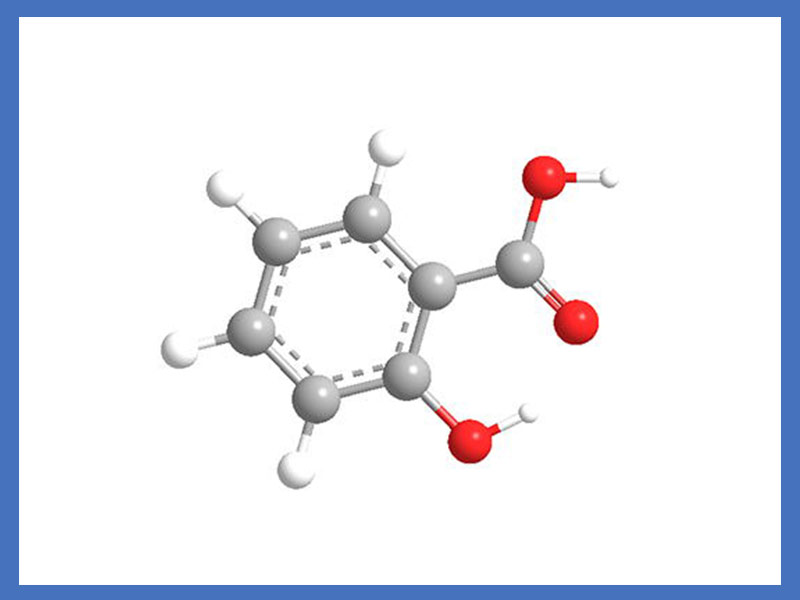
Mapping the supplier landscape of SA modifications helps align raw materials with specific formulation goals. The market generally divides into free salicylic acid and encapsulated or complexed forms. Knowing exactly which variant to pull from the chemical storage room saves weeks of wasted R&D time.
Free SA provides immediate bioavailability but carries a high irritation potential. It demands robust barrier-supporting ingredients to counteract the sudden pH drop on the skin. Conversely, a salicylic acid inclusion complex utilizes host-guest molecular encapsulation chemistry. This technology protects the SA molecule, improves raw material handling by reducing airborne dust, and alters the partition coefficient for enhanced, sustained epidermal delivery.
A cyclodextrin salicylic acid complex specifically uses cyclic oligosaccharides (alpha, beta, or gamma cyclodextrins) as the host molecule. The hydrophobic cavity of the cyclodextrin houses the SA, while the hydrophilic exterior ensures water compatibility. This provides multi-functional benefits, including odor masking, enhanced thermal stability, and targeted release triggered by skin enzymes or moisture.
Aqueous Toners: Require true water-soluble variants to maintain optical clarity without heavy glycols.
Emulsion Serums: Benefit from cyclodextrin complexes to provide sustained release and minimize irritation.
Anhydrous Balms: Need lipophilic modifications or ultra-fine milled powders dispersed in specific wax matrices to prevent grittiness.
Spot Treatments: Utilize high-load complexes to deliver maximum active concentration directly to the sebaceous gland.
Anhydrous and lipid-phase formulations, such as scalp balms and solid ointments, present unique challenges. Dispersing raw SA powder directly into lipid or wax phases often results in a gritty texture due to recrystallization upon cooling. Utilizing lipophilic variants or specific polymer-complexed SA prevents this tactile degradation. You must ensure the cooling phase is tightly controlled to prevent the active from crashing out of the wax matrix.
Achieving high concentration salicylic acid safely requires careful formulation architecture. Professional peels or targeted spot treatments often demand 2% to 5% active loading. Utilizing an inclusion complex allows formulators to achieve these higher active loads without exceeding the solvent capacity of the chassis, preventing solvent-induced irritation.
Auditing a supplier's water-soluble claim requires rigorous laboratory evaluation. Formulators must differentiate between a true aqueous solution and a micro-suspension. A true solution is thermodynamically stable and optically clear. A micro-suspension is only kinetically stable and remains prone to eventual settling, flocculation, or syneresis over time. You can test this by running the sample through a centrifuge at 3000 RPM for 30 minutes; if you see a pellet form at the bottom, you have a suspension, not a solution.
Calculating the active payload and release kinetics is non-negotiable. Formulators must understand the raw-to-complex calculus. If a water soluble salicylic acid complex has a 40% loading rate, formulating it at a 5% inclusion rate yields only 2% active SA in the final product. Always request supplier-verified dissolution profiles and release rate data spanning 8, 12, and 24 hours to validate sustained-release claims.
| Complex Loading Rate | Formulation Inclusion Rate | Final Active SA Yield |
|---|---|---|
| 10% Active Load | 20% | 2.0% |
| 40% Active Load | 5% | 2.0% |
| 50% Active Load | 4% | 2.0% |
Rheology and viscosity impacts must be mapped early in development. Pre-solubilized SA or inclusion complexes interact uniquely with common thickeners like carbomers, xanthan gum, and polyacrylates. The presence of electrolytes from the complex, combined with a low pH environment, carries a high risk of polymer collapse. Formulators should select acid-stable rheology modifiers, such as polyacrylate crosspolymer-6 or sclerotium gum, to maintain desired textures.
Practical R&D steps prevent catastrophic batch failures during commercial scale-up. One of the most common failures is discoloration. Salicylic acid reacts rapidly with trace iron and other transition metals. This reaction leads to pink, brown, or deep purple discoloration in finished batches. Mitigating this requires specific chelants. Disodium EDTA, Phytic Acid, or Sodium Phytate must be incorporated at optimal usage rates to secure aesthetic shelf-life. We typically recommend starting with 0.1% to 0.2% Disodium EDTA added directly to the water phase before any other ingredients.
Order of addition and temperature tolerances dictate processing success. When introducing a cyclodextrin complex, guidelines often suggest addition during the cool-down phase rather than the high-heat water phase. Exceeding temperature maximums or applying excessive shear can cause premature degradation or dissociation of the guest-host complex. Keep your homogenizer speeds below 3000 RPM when incorporating these sensitive complexes.
Chemical compatibility dictates multi-step cocktailing rules. Combining SA with Retinoids involves pH conflicts and oxidation risks. Formulators must employ sequencing strategies or separate encapsulation systems. When formulating SA alongside AHAs like lactic or glycolic acid, the cumulative irritation potential increases. Incorporating Niacinamide requires careful pH buffering to mitigate the risk of niacin flush, which occurs when Niacinamide converts to nicotinic acid at low pH levels. Formulation adjustments must support multi-product layering by stabilizing the skin barrier to accommodate subsequent topicals.
Moving from bench-scale success to commercial viability requires navigating strict regulatory frameworks. Global regulatory limits dictate maximum allowable concentrations. In the EU and Asia, cosmetic leave-on products generally cap SA at 2%. In the US, FDA OTC monographs for acne allow specific ranges depending on the product format. Rinse-off products sometimes permit higher limits, but strict adherence to regional guidelines is mandatory.
Consumer safety and product onboarding design are critical. Utilizing high concentrations necessitates HRIPT (Human Repeat Insult Patch Testing) to validate safety. Formulators should establish consumer patch-test guidelines for packaging instructions to mitigate initial sensitivity. Evaluating the cost-benefit of using an inclusion complex often reveals that it systematically lowers the skin irritation score of the final consumer product, reducing adverse event reports.
Cost-in-use and supply chain reliability influence final ingredient selection. While an inclusion complex carries a higher upfront price per kilo than raw powder, it offers operational savings. Reduced manufacturing cycle times—achieved by eliminating extended heating and mixing phases required for powder dissolution—often offset the higher raw material cost. You spend less time heating kettles and less time troubleshooting failed batches.
Raw salicylic acid is cost-effective but operationally demanding due to frequent stability failures. A specialized series offers engineered solutions tailored for specific chassis formats, ensuring consistent performance and aesthetic stability. To move forward with your next BHA formulation, execute the following steps:
Request comprehensive technical data sheets (TDS) and exact active payload percentages from your suppliers to calculate accurate inclusion rates.
Select true water-soluble variants for clear toners and cyclodextrin complexes for emulsions requiring controlled release.
Incorporate 0.1% to 0.2% of a robust chelating agent like Disodium EDTA into your water phase to prevent iron-induced discoloration.
Initiate 12-week accelerated stability testing, including freeze-thaw cycles and 45°C incubation, on all initial prototypes to validate your preservative and rheology systems.
A: While free SA requires a strict pH of 3.0 to 4.0 for optimal efficacy, inclusion complexes offer more flexibility. Depending on the specific host molecule, these complexes can often remain stable and effective at slightly higher pH ranges, up to 4.5 or 5.0, reducing the irritation potential.
A: Preventing crystallization requires bypassing its thermodynamic instability. Formulators achieve this by utilizing specific glycols and precise pH adjusters to increase solubility. Alternatively, opting for a pre-formulated water-soluble variant entirely eliminates the risk of needle-like crystals forming during temperature fluctuations.
A: Cyclodextrins have inherent optical clarity limits. They often impart a slight haze to aqueous solutions. Therefore, they are better suited for opaque serums, lotions, or emulsion systems rather than crystal-clear toners or micellar waters.
A: Discoloration is typically caused by a chemical reaction between the salicylic acid and trace iron ions present in the water supply or manufacturing equipment. Adding a robust chelating agent, such as Disodium EDTA or Sodium Phytate, binds these metals and prevents the color shift.
A: Regulatory limits vary by region and product type. For general cosmetic leave-on products, the maximum allowed concentration is typically capped at 2% in many major markets, including the EU. Always consult local regulations for specific OTC acne monographs or rinse-off allowances.


