close
Choose Your Site
Global
Social Media
Views: 200 Author: Site Editor Publish Time: 2026-11-04 Origin: Site


A research team has developed an innovative antifungal woven wound dressing that addresses the key clinical challenge of chronic wounds infected by Candida albicans. The new material overcomes the major limitation of amphotericin B (AMB), a potent antifungal drug with poor water solubility that severely hinders topical therapeutic effects, offering a promising new solution for fungal wound repair.
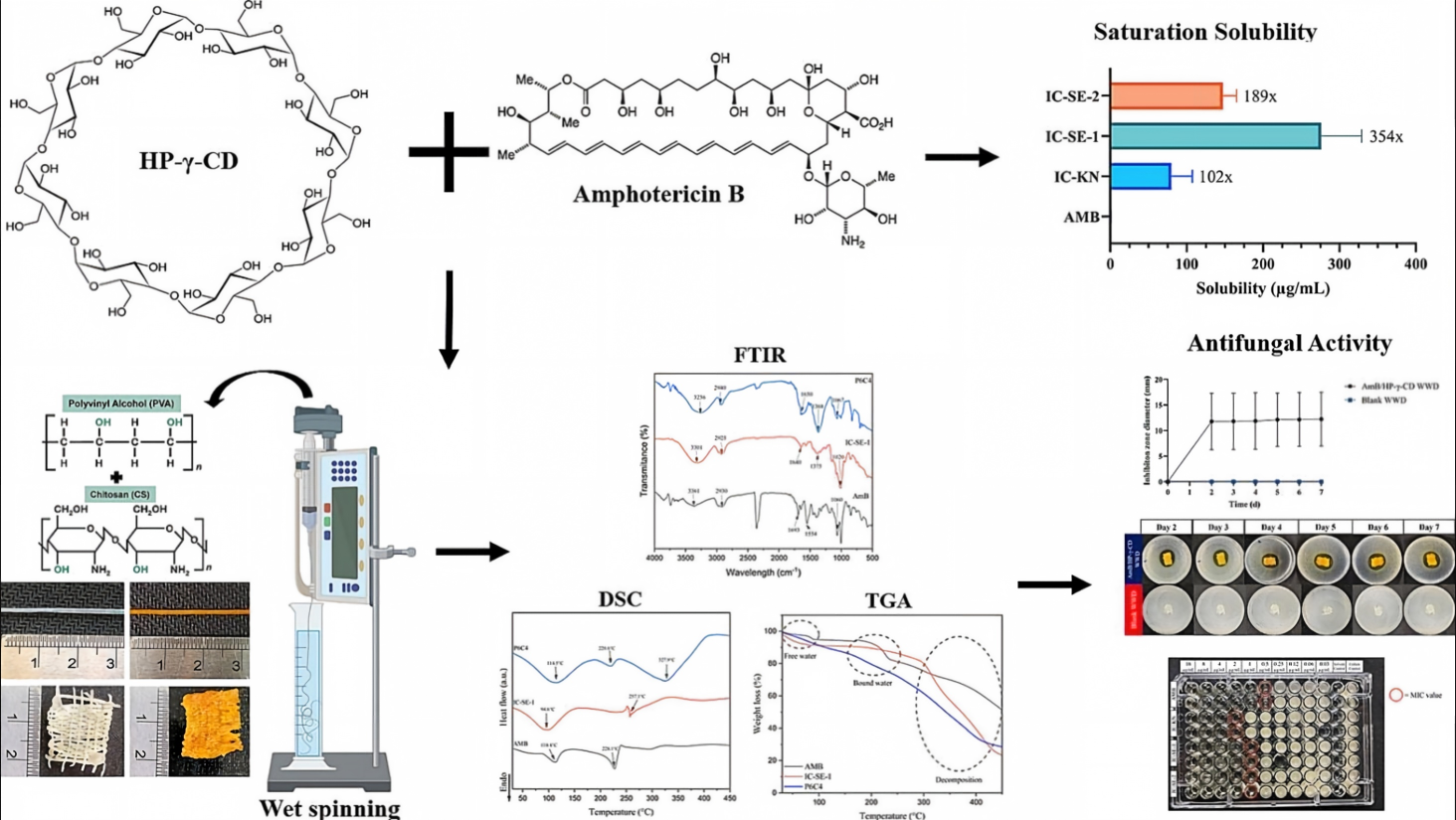
To tackle the poor solubility of AMB, the team pioneered an integrated technical strategy. For the first time, researchers combined hydroxypropyl-γ-cyclodextrin inclusion complexation with dual-crosslinked wet-spun PVA/chitosan fiber systems to fabricate a sustained-release antifungal dressing, filling the research gap of this integrated composite technology.
Experimental results verified that cyclodextrin modification boosted AMB water solubility by 354 times in distilled water and 136 times in physiological buffer solution, while completely preserving its original antifungal activity. Through formulation screening, the optimal PVA-chitosan ratio of 6:4 was determined. Combined with tripolyphosphate and glutaraldehyde dual-crosslinking treatment, the dressing exhibits excellent water retention, swelling capacity and mechanical strength, creating an ideal moist environment for wound healing.
In vitro tests confirmed that the dressing can release drugs stably for seven consecutive days, maintaining drug concentrations above the minimum inhibitory standard to continuously inhibit Candida albicans growth. Meanwhile, its hemolysis rate is lower than 5%, meeting international medical biosafety standards with favorable biocompatibility.
Balancing efficient therapeutic effects, safety and practicality, the woven dressing is adaptable to various wound conditions. Pending further cytotoxicity and in vivo validation, it is expected to be widely applied in clinical treatment of fungal chronic wounds and drive the upgrading of wound repair biomedical materials.