

close
Choose Your Site
Global
Social Media
Views: 0 Author: Site Editor Publish Time: 2026-09-21 Origin: Site


Are ruined cosmetic batches costing your facility thousands of dollars in wasted raw materials? Time is money on the production floor. Transitioning R&D prototypes to commercial-scale vats often triggers severe compounding headaches. Traditional beta-hydroxy acids inherently repel water. They demand high volumes of glycols. Worse, they frequently cause abrasive crystallization upon cooling.
Recent market analyses of cosmetic manufacturing scale-ups highlight a distinct industry shift. Modern brands are aggressively moving away from traditional free-form acids. Industry data shows a massive surge in demand for barrier-friendly clinical skincare. Consequently, contract manufacturers are rapidly adopting encapsulated delivery systems. This transition minimizes volatility on the production floor. It also eliminates the reliance on harsh volatile organic compounds like ethanol. Regulatory pressures regarding VOC emissions are tightening globally. Encapsulation offers a compliant, sustainable path forward for large-scale operations.
This guide provides a complete, actionable checklist for encapsulated active production. It is designed specifically for compounding engineers and cosmetic chemists who need reliable, repeatable batch success.
Solubility is Solved: Utilizing water-soluble variants eliminates the need for harsh solvents. This simplifies the manufacturing process and reduces VOC emissions in the factory.
Stability at Scale: Encapsulation protects the active ingredient from premature degradation. It prevents recrystallization during large-scale cooling phases in massive compounding tanks.
Higher Efficacy, Lower Irritation: Advanced supramolecular delivery systems allow for the safe formulation of potent products. The consumer's delicate skin barrier remains uncompromised.
Seamless Scale-Up: Following a strict checklist regarding temperature thresholds and shear rates prevents costly commercial batch failures.
Targeted Sourcing: Choosing the exact concentration parameters from a reliable supplier forms the baseline of a successful product line.
Scaling up a dermatological formula from a 500ml lab beaker to a 5,000-liter compounding tank changes everything. Physical properties dictate your success. Standard free-form active ingredients are notoriously stubborn. They demand intense sheer and heat. A sudden drop in the cooling jacket temperature often ruins the entire batch through recrystallization.
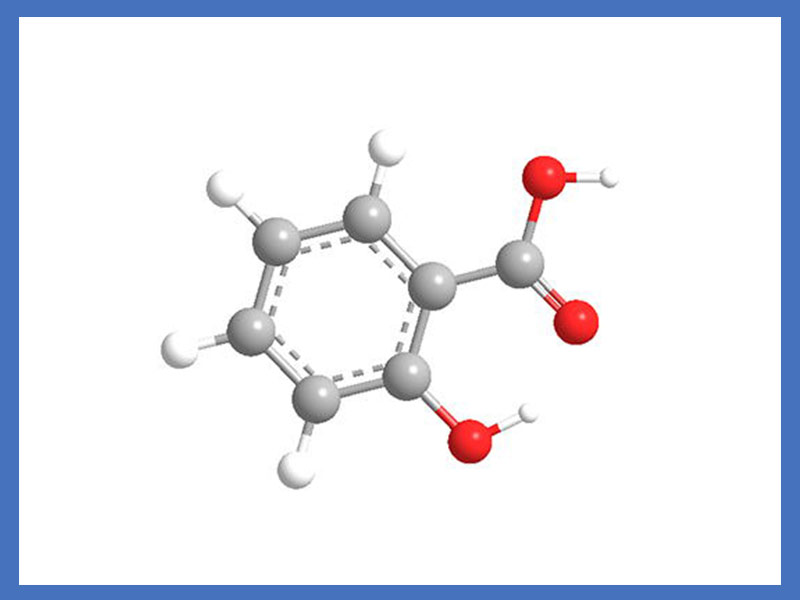
To bypass these chemical engineering hurdles, modern R&D facilities rely on advanced supramolecular chemistry. Specialized ingredients like the Salicylic Acid Series are engineered specifically to solve industrial scale-up issues. They vastly improve the end-user sensory experience while streamlining factory operations.
An inclusion complex physically nests the active ingredient inside a larger host molecule. This creates a robust host-guest architecture without altering the fundamental chemical structure. The active remains completely isolated from sensitive emulsifiers in the aqueous bulk phase. Once applied to the skin, natural moisture triggers a slow, time-released delivery. R&D chemists can formulate highly effective exfoliants that drastically lower the potential for erythema.
Cyclodextrin is the premier host molecule for this encapsulation process. These cyclic oligosaccharides possess a distinct cone-like shape. The exterior is hydrophilic, while the interior cavity is lipophilic. The naturally lipophilic active fits perfectly into the inner cavity. Meanwhile, the hydrophilic exterior allows the entire structure to dissolve seamlessly into water.
For compounding engineers navigating the production floor, this translates to tangible operational benefits. The powder flows smoothly through industrial hoppers without clumping. Airborne dusting is significantly reduced, ensuring a safer respiratory environment for facility workers. Furthermore, the encapsulation prevents the acid from interfering with delicate polymer networks during the initial mixing phases.
A formula that appears perfectly stable in a small beaker can easily separate in a 50-liter vessel. Foundational chemistry must be bulletproof before transferring any formulation to pilot tanks.
The primary advantage of water soluble salicylic acid is its ease of integration. However, formulators must still adhere to strict processing parameters. Traditional variants require a highly acidic environment below pH 3.5 to remain active. This low pH is a primary culprit for consumer skin irritation. Encapsulated forms are far more forgiving.
The optimal pH range for a cyclodextrin salicylic acid complex is typically between 3.0 and 6.0. Formulating closer to the natural skin pH of 4.5 to 5.5 maintains exfoliating efficacy while maximizing comfort. To prevent agglomeration, add the encapsulated powder to the water phase with moderate, sweeping agitation. Pre-dispersing the powder in a room-temperature humectant creates a smooth slurry. This prevents lumps before introduction to the main compounding vessel.
Clinical-grade skincare often demands active claims of 2% to 5%. Achieving this requires calculating the exact input of the raw material based on its active load. Introducing high loads of an inclusion complex adds electrolytes and solid particulate matter into the system. This ionic shift can abruptly disrupt the viscosity of serums and gels. Formulators must adjust gelling agents proactively.
| Polymer Type | Compatibility with Encapsulated Actives | Engineering Adjustment Recommendation |
|---|---|---|
| Standard Carbomer | Low — Highly sensitive to electrolytes | Avoid entirely. Ionic load will collapse the gel structure. |
| Xanthan Gum | High — Electrolyte tolerant | Excellent for stable, natural formulation networks. |
| Polyacrylate Crosspolymer-6 | High — Strong yield value | Ideal for creating crystal-clear, high-viscosity gels at scale. |
| Hydroxyethylcellulose | Medium — Stable but can feel tacky | Use in synergistic combination with natural gums to improve sensory feel. |
Transitioning to a commercial manufacturing environment fundamentally alters chemical behavior. Heat transfer takes significantly longer. Mechanical shear forces are exponentially higher. Bulk cooling rates stretch over several hours.
While encapsulated powders are robust, their supramolecular structures are not impervious to mechanical destruction. Precision is key when activating the tank agitators. Prolonged high shear from a rotor-stator homogenizer running at 8,000 RPM can fracture the host-guest architecture. This causes the active to leak prematurely into the water phase.
Use standard sweep agitation between 200 and 500 RPM to dissolve the powder. If intense homogenization is required for emulsion stability, introduce the encapsulated active after the primary high-shear phase concludes.
Thermal management is a critical failure point. A high-quality complex exhibits excellent thermal stability. In contrast, exposing it to sustained boiling temperatures above 85°C for several hours will degrade the host molecule. The safest operational method is adding the active during the cool-down phase. Wait until the bulk tank temperature drops below 45°C before introducing the pre-mixed slurry. This guarantees absolute structural integrity of the encapsulation shell.
Production teams need a standardized checklist on the factory floor to mitigate human error during high-pressure compounding.
The pilot phase catches thermal and kinetic issues hidden in perfectly controlled beakers.
Verify Active Percentage: Recalculate the exact input required based on the specific lot Certificate of Analysis.
Preservative Compatibility: Test the pilot batch with the chosen preservative system. Certain organic acids shift the pH downward over 48 hours.
Monitor Dissolution Time: Record the exact dissolution time. Note how many minutes of agitation it takes for the powder to achieve complete visual clarity. This kinetic data dictates full-scale mixing times.
Check Viscosity Post-Cooling: Measure viscosity at 24 and 48 hours post-production to ensure the polymer network has fully hydrated against the ionic load.
Full-scale manufacturing introduces unpredictable variables like ambient factory humidity.
Humidity Control: Ensure the raw material is pre-weighed and stored in a tightly sealed, low-humidity staging area. Exposure to high humidity causes the powder to agglomerate into dense bricks.
Jacket Temperature Verification: Verify that the heating jacket temperatures perfectly match the internal bulk temperatures recorded during the pilot phase.
Mid-Batch pH Check: Conduct a mandatory mid-batch pH check before adding the final active phase. Neutralize the base if it is too alkaline to prevent premature degradation.
Visual Clarity Check: Perform a visual check via the tank sight-glass. Clear serums must exhibit zero turbidity. Emulsions should show uniform opacity without graininess.
A commercial scale-up is only validated once the final product withstands a 36-month shelf life. Standard testing procedures must adapt to the unique chemistry of the shell.
Recrystallization occurs when the solvent system evaporates or when the solubility threshold is breached during transit. This creates a gritty, unacceptable texture. Utilizing a salicylic acid inclusion complex naturally mitigates this risk. However, QC departments must still conduct rigorous stress testing.
Subject samples to a minimum of three continuous freeze-thaw cycles. Freezing at -10°C for 24 hours, followed by incubation at 40°C for 24 hours. Visual inspection is insufficient. Examine the emulsion under a polarized light microscope. Free crystals are highly birefringent and appear as bright, needle-like structures. Their absence confirms the encapsulation successfully maintained the active ingredient in a stable state.
Standard titration methods are inaccurate because the active is nested inside a cavity. High-Performance Liquid Chromatography is the gold standard. The QC chemist must first extract the active using a specific solvent mixture and sonication. This disrupts the host-guest interaction for accurate UV detection.
Even with meticulous planning, compounding engineers encounter unexpected behavioral changes in massive mixing tanks. Having a troubleshooting matrix ready allows production teams to address issues in real-time.
An unexpected drop in viscosity or sudden cloudiness often occurs during the final manufacturing phase. The root cause is the electrolyte tolerance of the primary thickening agents. Inclusion complexes introduce a slight ionic load into the water phase. Traditional polyacrylic acid polymers collapse under this ionic interference. Proactively switch to electrolyte-tolerant rheology modifiers during the lab phase.
When formulating a high concentration salicylic acid product, the total input of raw material increases. This amplifies potential chemical conflicts. Avoid strong cationic emulsifiers like Behentrimonium chloride. They interact with the exterior of the complex and lead to precipitation. Monitor the introduction of highly alkaline active ingredients. Driving the bulk batch pH above 6.5 compromises the structural integrity of the inclusion complex over time.
| Production Anomaly | Potential Root Cause | Corrective Engineering Action |
|---|---|---|
| Powder Clumping in Tank | Adding powder too rapidly; insufficient baseline agitation. | Sift powder slowly into the vortex. Pre-disperse the complex in a room-temperature glycol before adding. |
| Sudden Thinning of Emulsion | Electrolyte incompatibility with Carbomer-based thickeners. | Replace standard Carbomer with electrolyte-tolerant polymers or natural gum blends. |
| Micro-Crystals Post-Cooling | Incomplete dissolution during heating; batch cooled too rapidly. | Ensure the water phase is held at 40°C to 45°C long enough for complete dissolution before initiating the cooling jacket. |
Commercial scale-up success depends entirely on the quality and specifications of the raw materials. A reliable supplier offers a tiered portfolio for specific SKU requirements.
For gentle toners and daily cleansers, formulators need mild exfoliation without disrupting the stratum corneum. A 10% water-soluble variant is ideal. It allows for easy micro-dosing and dissolves rapidly in large volumes of water without leaving a sticky residue.
Leave-on serums typically aim for a 1% to 2% active claim. Manufacturers should utilize a 40% water-soluble variant to achieve this efficiently. Formulating with exactly 5% of this raw material yields a perfect 2% active load. This preserves the aesthetic elegance of lightweight serums without overloading the formula with excess powder.
Professional med-spa lines require maximum allowable concentrations. Formulating clinical-grade peels safely requires a 50% inclusion complex. Minimizing the ratio of the cyclodextrin shell to the active acid allows formulators to hit high percentages without creating a chalky finish on the skin.
Scaling up a delicate lab prototype to a commercial bulk batch requires meticulous planning and a deep understanding of supramolecular chemistry. It does not have to result in ruined batches and frustrating recrystallization issues.
Leveraging advanced encapsulated technology saves invaluable time and reduces raw material waste. Compounding engineers can achieve highly stable, skin-friendly formulations with ease. Ensure your next clinical skincare launch is a complete success. Source the perfect grade of encapsulated actives for your specific production needs from New Source Chem today.
No. Unlike traditional free-form variants, a cyclodextrin complex dissolves readily in room temperature or slightly warm water. This completely eliminates the need for volatile solvents like ethanol or propylene glycol. Brands can create non-drying, alcohol-free formulations that appeal to sensitive skin demographics.
The complex is highly versatile on the production floor. It can be dissolved in the initial water phase or added during the cool-down phase strictly below 45°C. For temperature-sensitive emulsions, post-addition during the cooling phase is the recommended best practice to ensure maximum stability.
Yes, absolutely. You simply adjust the input rate in your batch sheet based on the complex's specific concentration. To achieve a 2% active yield using a 40% encapsulated complex, formulate with exactly a 5% input of the raw material.
Yes. Physical encapsulation significantly improves overall chemical compatibility. It can be safely formulated in the same tank alongside Niacinamide, Hyaluronic Acid, and stable Vitamin C derivatives. Ensure the final pH of the bulk batch is balanced appropriately to avoid degrading the shell.
Encapsulated variants are much gentler and less aggressively acidic in the compounding tank. This allows R&D formulators to create highly effective products at a more skin-friendly pH, typically around 4.0 to 5.5, without sacrificing crucial exfoliating efficacy.
While thermally stable, prolonged exposure to temperatures exceeding 85°C for more than two hours can begin to degrade the cyclodextrin host molecule. Always minimize high-heat exposure and aim to incorporate the active during the cooling phase whenever possible.
Cyclodextrin complexes are inherently hygroscopic. If left exposed in a highly humid factory environment before compounding, the powder will absorb moisture from the air and agglomerate into hard lumps. Always keep the raw material tightly sealed in moisture-barrier packaging until the exact moment of addition.


