

close
Choose Your Site
Global
Social Media
Views: 0 Author: Site Editor Publish Time: 2026-09-15 Origin: Site


Why is this specific dicarboxylic acid so notoriously hard to formulate? This highly sought-after ingredient frequently causes gritty, unstable serums that fail stability testing. Skipping rigorous raw material tests inevitably leads to costly batch failures, whereas implementing proper analytical protocols ensures smooth, highly effective cosmetic products. In this engineering guide, you will discover the essential pre-formulation testing steps required to safeguard your next clinical skincare launch.
Purity Dictates Safety: Rigorous testing of the bulk active for assay percentage and heavy metal trace content ensures optimal product safety, minimizes epidermal irritation, and guarantees strict regulatory compliance across global markets.
Solubility Determines Texture: Evaluating dissolution profiles prevents sudden crystallization, completely eliminating the gritty sensory feel traditionally associated with high-percentage creams.
Stability Enhances Shelf Life: Subjecting encapsulated actives to severe thermal stress tests helps formulators understand their superior resistance to temperature shifts and drastic pH fluctuations.
Concentration Verification: Accurate assay testing via High-Performance Liquid Chromatography guarantees that high-load formulations maintain their potency and deliver the promised clinical efficacy without destabilizing the polymer network.
Currently, the derm-cosmetic sector is experiencing a massive surge in demand for barrier-safe exfoliants. Recent industry trend analyses reveal a distinct pivot in consumer behavior. Skincare enthusiasts are actively moving away from harsh, barrier-stripping alpha hydroxy acids in favor of multi-tasking dicarboxylic acids. This industry-wide shift aligns with a growing regulatory focus on clinical efficacy and ingredient purity. Consequently, immense pressure is placed on R&D teams to deliver sophisticated, high-load serums without compromising skin integrity.
However, for cosmetic chemists standing at the mixing vessel, this active presents a unique paradox. It is highly sought-after for its dual efficacy in managing acne-prone skin and mitigating hyperpigmentation. Yet, its baseline physicochemical properties make it one of the most challenging ingredients to compound. Specifically, a high melting point of approximately 106°C and notoriously poor solubility in both water and common cosmetic lipids create severe formulation roadblocks.
When R&D teams bypass comprehensive pre-formulation testing, the consequences are often catastrophic for the product lifecycle. Unverified unprocessed powders can lead to rapid crystallization within the emulsion network. This phenomenon results in a gritty, unappealing texture that consumers immediately reject upon application. Furthermore, improper integration frequently causes pH drift, phase separation, and a significant reduction in the bioavailability of the active molecule.
To circumvent these hurdles, modern raw material suppliers have engineered highly modified iterations. By sourcing from a specialized series of derivatives and rigorously testing them before they ever touch a pilot batch, formulators can mitigate significant financial risks. Pre-formulation testing acts as a critical quality control checkpoint. It translates complex laboratory data into tangible business value, resulting in fewer wasted pilot batches, accelerated time-to-market, and highly stable products that secure positive consumer reviews.
The very first step upon receiving a new batch of bulk active is establishing its chemical identity and baseline purity. For cosmetic grade azelaic acid, purity is directly correlated with safety and clinical efficacy. Impurities or synthetic byproducts originating from the manufacturing process can introduce unwanted odors, color shifts, or potential skin irritants into the final formulation chassis.
High-Performance Liquid Chromatography remains the gold standard for assaying cosmetic actives. During this analytical process, picture the bench chemist dissolving the raw powder in a precise mobile phase. This is often a tailored mixture of buffer and organic solvent. The solution is then passed through a stationary phase column under high pressure. By measuring the retention time and the area under the curve using a UV detector, formulators can confirm that the raw material perfectly matches the supplier Certificate of Analysis. A premium raw material should typically demonstrate a purity assay of 99% or higher. This vital step ensures that the active is not diluted or degraded, which is absolutely essential for calculating the exact input required for the final production batch.
Beyond basic chemical metrics, physical property testing provides immediate clues about raw material integrity. The melting point of pure dicarboxylic acid is well-documented at 106°C to 107°C. If a sample melts at a significantly lower temperature or over a broad unpredictable range, it strongly indicates the presence of unwanted impurities.
Equally important is the moisture content analysis, typically conducted via Karl Fischer titration. Cosmetic grade powders must remain exceptionally dry before compounding. High moisture content inevitably leads to premature clumping, inaccurate weighing during the batching process, and an exponentially increased risk of microbial proliferation during warehouse storage. Ensuring a moisture content of less than 0.5% protects the integrity of the active until it is ready to be introduced to the aqueous phase.
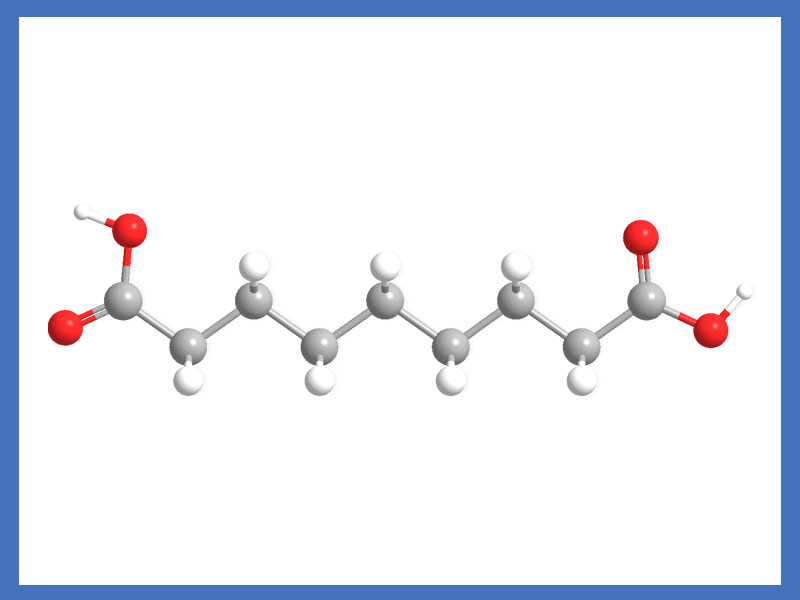
The most notorious pain point in formulating with this specific acid is its stubborn insolubility. Traditional powders require high volumes of glycols, such as propanediol or ethoxydiglycol, alongside elevated temperatures just to dissolve. Consequently, this heavy solvent load can make the final product feel tacky and dramatically increase the potential for skin irritation. Testing the solubility profile of the raw material is therefore a non-negotiable step.
To streamline production and improve sensory profiles, many R&D teams are shifting toward engineered variants. When evaluating water soluble azelaic acid, formulators must conduct specific dissolution tests to verify the manufacturer claims in a real-world lab setting. For instance, a high-quality 40% active powder should dissolve seamlessly into the water phase without requiring extreme heat.
Testing Methods in Practice:
Visual Dissolution Testing: Picture a technician standing at the bench, dropping a precise amount of the raw powder into a beaker of room-temperature deionized water. As the magnetic stirrer spins at a standardized speed, they meticulously record the exact seconds it takes for the milky vortex to turn into a crystal-clear solution without any suspended microscopic particles.
Temperature Stress Dissolution: The clear solution is subsequently stored at varying temperatures including 4°C, 25°C, and 40°C. This critical observation ensures the active does not crash out or crystallize when the final commercial product experiences temperature fluctuations during global shipping.
Spectrophotometry Validation: To quantitatively measure liquid clarity, UV-Vis spectrophotometry is utilized. This ensures there is absolutely no microscopic turbidity that the naked eye might miss.
By verifying solubility data internally, formulators can dramatically reduce their reliance on harsh solvents. This testing phase proves that utilizing specialized variants allows for the creation of clear, lightweight serums that were previously impossible to achieve with standard raw powders.
Even if an active ingredient is chemically pure, its physical dimensions will dictate the end-user sensory experience. For suspension formulations where the acid is dispersed rather than fully dissolved, the particle size of the raw material is the single most critical factor in determining whether a cream feels luxurious or cheap.
Laser diffraction serves as the industry-standard method for determining the particle size distribution of raw powders. By passing a laser beam through a dispersed sample, formulators measure the angle of light scattering to calculate exact particle sizes. Chemists specifically look for the D50 median particle size and D90 parameters. For a smooth cosmetic application, the raw powder should ideally have a micro-fine particle size, often exhibiting a D90 of less than 20 micrometers.
Large, uneven, or jagged particles are the primary culprits behind the grainy feel often complained about in negative consumer reviews. Before moving to the pilot batch phase, examining the particle morphology under a Scanning Electron Microscope provides visual confirmation of the powder uniformity. Testing morphology ensures that the particles are consistently shaped, guaranteeing a silky, elegant slip when the final product is rubbed into the skin.
Raw materials must not only perform well on the day they are mixed; they must remain entirely stable for the entire 24-to-36-month shelf life of the commercial product. The active molecule, in its traditional form, presents unique challenges when exposed to environmental stressors such as temperature fluctuations and UV radiation. To mitigate these specific risks, evaluating advanced encapsulation technologies becomes highly relevant for premium skincare lines.
An encapsulation system functions by housing the active molecule within a host cavity, typically utilizing a cyclodextrin ring. This host-guest structural relationship physically shields the active ingredient from premature oxidation and adverse chemical interactions with other excipients. When testing an azelaic acid inclusion complex, R&D teams should subject the raw material to comprehensive thermal stress and photostability protocols.
Thermal Stress and Freeze-Thaw Resilience
The primary objective of thermal testing is to observe whether the encapsulated active remains stable without precipitating. Formulators design a freeze-thaw cycle test that alternates between -20°C and 40°C over a period of three to five cycles. A successful complex will exhibit absolutely no phase separation or degradation. In contrast, poorly solubilized standard powders often crash out during the thawing phase, resulting in macroscopic crystals that permanently ruin the emulsion.
Photostability Screening
Photostability testing involves exposing the raw material solution to a controlled UV light source, such as a Xenon arc lamp, to measure degradation over time. Analyzing the material post-exposure via chromatography allows chemists to quantify the exact percentage of active retention. This confirms the final serum maintains its intended potency regardless of packaging transparency.
| Testing Parameter | Standard Raw Powder | Advanced Inclusion Complex |
|---|---|---|
| Aqueous Solubility | Below 0.24% at 20°C | Highly soluble, forms clear solution |
| Freeze-Thaw Resilience | High risk of crystallization | Excellent, zero precipitation observed |
| Photostability UV Exposure | Moderate degradation risk | High resistance due to physical encapsulation |
| Formulation pH Range | Narrow requires specific buffering | Broadened compatibility across bases |
Modern dermatological skincare lines frequently demand robust clinical efficacy, driving the market toward formulations containing 10%, 15%, or even 20% active loads. However, loading a formula with high concentration azelaic acid introduces significant physical chemistry challenges. These challenges primarily concern emulsion stability and active bioavailability. Utilizing a 60% active water-soluble variant can streamline this, but before scaling up production, precise assay verification and pH compatibility testing remain mandatory.
Rheological Impact at High Loads
Incorporating large amounts of dicarboxylic acids directly impacts the rheology and zeta potential of the final emulsion. During pre-formulation testing, R&D teams must evaluate how the raw material interacts with various rheology modifiers, such as carbomers or xanthan gum. Standard powders often disrupt polymeric networks, leading to a drastic loss of viscosity and eventual phase separation. By centrifuging prototype blank chassis emulsions loaded with the active at high speeds, formulators can simulate long-term gravitational stress to ensure structural integrity.
pH Compatibility and Bioavailability
The efficacy of the ingredient is highly dependent on the pH of the final formulation. If the pH is too high, the acid becomes fully ionized, which significantly reduces its ability to penetrate the lipid-rich stratum corneum. Conversely, if the pH is too low, the risk of skin irritation increases dramatically.
Pre-formulation testing must include titrating the raw material in solution to map its unique buffering capacity. The ideal formulation window is typically between pH 4.0 and 5.5. Within this specific range, a sufficient percentage of the molecule remains in its un-ionized, bioavailable state. This ensures optimal delivery to the target sites in the epidermis without causing excessive barrier disruption.
Consumer safety and regulatory compliance are non-negotiable aspects of cosmetic manufacturing. Sourcing raw materials requires rigorous safety screening to ensure they are completely free from harmful biological and chemical contaminants. Regulatory bodies mandate strict trace limits. Skipping these tests can easily result in product recalls, severe brand damage, and massive legal liabilities.
Microbial Limits Testing
Even though the acid is inherently antibacterial, the raw powder can still harbor spores if processed in non-sterile environments. Standard protocols dictate testing for the Total Aerobic Microbial Count and Total Yeast and Mold Count. The material is typically dissolved in a neutralizing broth and plated on specific agar media. A high-quality cosmetic grade raw material will consistently report counts of less than 100 CFU/g and complete absence of specified pathogens like Staphylococcus aureus.
Heavy Metal Analysis via ICP-MS
Heavy metal contamination is a critical engineering concern, often originating from the catalysts used during chemical synthesis. Inductively Coupled Plasma Mass Spectrometry is the gold standard for detecting trace metals due to its exceptional sensitivity. During testing, the raw sample undergoes microwave digestion using strong acids to break down the organic matrix. Chemists must ensure the material complies with stringent limits for Lead, Arsenic, Mercury, and Cadmium.
| Contaminant Type | Specific Parameter | Acceptable Limit |
|---|---|---|
| Microbiological | Total Aerobic Count | Less than or equal to 100 CFU/g |
| Microbiological | Yeast and Mold | Less than or equal to 100 CFU/g |
| Heavy Metals | Lead | Less than 10 ppm |
| Heavy Metals | Arsenic | Less than 2 ppm |
| Heavy Metals | Mercury | Less than 1 ppm |
Selecting the appropriate raw material supplier is a strategic engineering decision. This choice directly influences your product time-to-market, thermal stability, and ultimate clinical performance. Formulators should never rely solely on marketing claims. Instead, purchasing decisions must be based on empirical data and comprehensive bench testing.
The Formulator Qualification Checklist:
Request a Comprehensive COA: A reliable Certificate of Analysis should detail the assay percentage, moisture content, melting point, heavy metal profile, and microbiological limits. Always cross-reference this document with your internal lab results.
Evaluate Solubility Data: If your goal is to create a clear aqueous serum, request solubility curves for modified versions to ensure they meet your exact formulation criteria without precipitating.
Analyze Particle Size Distribution: If formulating a suspension, request Laser Diffraction data. Look for D50 and D90 values that indicate a micro-fine powder to prevent a gritty texture.
Conduct Bench-Scale Compatibility Tests: Always request physical samples to perform your own freeze-thaw and rheological compatibility tests before committing to bulk purchasing.
Partnering with a specialized, technology-driven manufacturer allows formulators to select the exact physical form that matches their specific product architecture, thereby accelerating development and ensuring a premium consumer experience.
Proper analytical testing of raw materials serves as the foundational pillar of formulation success. By rigorously verifying purity, aqueous solubility, and particle morphology before beginning pilot production, R&D teams can prevent unwanted crystallization and phase separation in the final product. Furthermore, utilizing advanced water-soluble options or encapsulated complexes saves valuable research time and significantly improves the sensory profile of the cosmetic. Start your pre-formulation testing protocols today to ensure unparalleled clinical efficacy. If you are looking to upgrade your formulation stability, explore the specialized raw materials at New Source Chem to find the exact variant that fits your product architecture.
Standard raw powder is notoriously challenging due to its exceptionally high melting point around 106°C and its poor solubility in both water and standard cosmetic oils. When formulators attempt to incorporate it into traditional emulsions, it often requires high amounts of glycols or harsh solvents. If the solvent system is not perfectly balanced, or if the product experiences temperature fluctuations, the active ingredient quickly crystallizes, leading to a gritty, unpleasant texture.
The primary advantage is the drastic simplification of the formulation engineering process. Water-soluble variants bypass the need for high heat and complex solvent systems. They can be easily incorporated into the aqueous phase at room temperature. This reduces manufacturing energy costs and allows chemists to create clear, lightweight serums that are impossible to achieve with standard powders.
An inclusion complex works through molecular encapsulation. By housing the active molecule inside a host structure like a cyclodextrin cavity, it is physically shielded from the surrounding environment. This prevents it from interacting with incompatible emulsifiers and provides exceptional thermal and photostability, preventing degradation under UV light or severe temperature shifts.
The optimal pH range is typically between 4.0 and 5.5. Because it is a dicarboxylic acid, its efficacy depends on remaining in an un-ionized state to properly penetrate the skin lipid barrier. Formulating below pH 4.0 increases the risk of barrier disruption, while formulating above pH 5.5 causes the acid to ionize, significantly reducing its clinical effectiveness.
Detecting early-stage crystallization requires both microscopic and macroscopic evaluation. Chemists perform physical stability testing utilizing severe freeze-thaw cycles. After the cycles, the emulsion is examined under a polarized light microscope, which easily highlights bright, birefringent crystals. Additionally, spreading a thin layer of the product on a glass slide can quickly reveal any macroscopic grittiness.
Yes, combining these two ingredients is highly popular for targeting hyperpigmentation. However, it requires careful pH management. Niacinamide is most stable around pH 6.0, while the acid prefers a pH between 4.0 and 5.5. Formulators typically aim for a compromise pH around 5.0 to 5.5 to maintain the efficacy of both actives without causing the niacinamide to hydrolyze into irritating nicotinic acid.
The usage rate depends heavily on the specific active load of the modified raw material. For example, if you are using a 40% active water-soluble powder and your target formulation requires a 10% active claim, you would need to input 25% of the raw material into your formula. Always consult the supplier technical data sheet to calculate exact input requirements based on the assay percentage.


