

close
Choose Your Site
Global
Social Media
Views: 0 Author: Site Editor Publish Time: 2026-08-24 Origin: Site


Formulation scientists consistently face challenges when attempting to achieve physical stability and precise drug release profiles. Active pharmaceutical ingredients (APIs) often degrade rapidly in acidic gastrointestinal environments, leading to suboptimal therapeutic outcomes. Selecting the right polymer matrix is the first step in overcoming this barrier. However, improper handling and selection of pH-sensitive excipients frequently result in severe batch variability and outright formulation failure in advanced drug delivery systems. These failures waste valuable active ingredients and delay project timelines during development phases.
Mastering specific handling, solubilization, and processing practices is essential for maximizing formulation efficacy. By integrating targeted excipients into the development pipeline, formulation teams can achieve reliable enteric release. The Pharmaceutical Excipient Chitosan Series provides a reliable solution for these applications. Utilizing highly modified variants allows for exact control over swelling indices and drug release kinetics across varying pH gradients.
Targeted Stability: Succinyl chitosan significantly enhances the physical stability of formulations, particularly in acidic conditions, making it ideal for pH-sensitive microspheres and targeted enteric release.
Therapeutic Synergy: Beyond structural benefits, specific variants like N-succinyl-chitosan exhibit inherent antioxidant and anti-inflammatory properties, offering dual-action value in complex formulations.
Handling Precision: Strict control over moisture, shear stress during spray drying, and solubilization pH is mandatory to prevent polymer degradation and maintain batch-to-batch reproducibility.
Derivative Selection: Choosing between N-succinyl and O-succinyl variants depends on specific water-solubility requirements, API compatibility profiles, and synthesis complexity.
Scalability & Compliance: Successful transition from R&D to commercial scale requires rigorous qualification of the excipient's degree of substitution, molecular weight, and impurity profile.
The synthesis mechanisms used to create N-succinyl-chitosan and O-succinyl-chitosan dictate their final functional properties in drug delivery. N-succinyl chitosan is typically synthesized through the chemical reaction of chitosan and succinic anhydride via the Schiff base mechanism. In a standard laboratory setup, you dissolve the base polymer in a dilute acetic acid solution, introduce methanol, and add succinic anhydride dropwise. The mixture stirs at room temperature for 24 hours before precipitation with acetone. This process targets the primary amine groups on the glucosamine units.
Conversely, producing O-succinyl-chitosan requires a more complex three-step reaction. First, you must protect the amine groups using phthalic anhydride. Next, you direct the succinylation to the hydroxyl groups using succinic anhydride in a pyridine solvent. Finally, you deprotect the amines using hydrazine hydrate. This precise chemical modification alters the polymer backbone, drastically improving water solubility at a neutral pH compared to native chitosan.
Succinylation introduces pH-sensitive carboxyl groups into the polymer matrix. These functional groups remain un-ionized in highly acidic environments, preventing the polymer from dissolving prematurely in the stomach. As the environmental pH increases in the intestinal tract, the carboxyl groups ionize, causing electrostatic repulsion within the polymer chains. This repulsion leads to matrix swelling and the controlled release of the entrapped active pharmaceutical ingredient.
Beyond structural modifications, pre-modification yields secondary biological advantages. The N-succinylation process imparts strong antioxidant and anti-inflammatory properties inherent to the modified polymer. These properties synergize directly with active pharmaceutical ingredients, particularly in formulations designed to treat localized inflammatory conditions like inflammatory bowel disease or diverticulitis. This dual-action capability elevates the excipient from a passive carrier to an active participant in the therapeutic strategy.
Selecting the correct polymer requires a strict evaluation of solubility profiles, biocompatibility, inherent bioactivity, and targeted release capabilities. Formulation scientists must weigh these criteria to determine which derivative aligns with their specific target product profile. Various pharmaceutical chitosan derivatives offer a broad spectrum of functionalities, but their physical behaviors vary significantly based on their functional group substitutions.
When comparing these polymers, distinct operational advantages emerge. For instance, hydroxypropyl chitosan is highly valued for its exceptional film-forming capabilities and moisture retention. We frequently use it as a primary choice for ophthalmic solutions and topical coatings where sustained surface hydration is required. On the other hand, carboxymethyl chitosan exhibits strong amphoteric properties. It is heavily utilized in wound healing applications and tissue engineering due to its rapid gelation characteristics when exposed to specific ionic cross-linkers.
However, for oral and targeted delivery routes, succinyl chitosan provides superior technical performance. Its specific pH-responsive nature ensures that APIs survive gastric transit. This targeted release mechanism prevents the premature degradation of acid-labile drugs, ensuring maximum bioavailability upon reaching the alkaline environment of the small intestine.
| Derivative Type | Primary Functional Group | Key Physical Property | Optimal Pharmaceutical Application |
|---|---|---|---|
| Succinyl Chitosan | Carboxyl / Succinyl | pH-dependent swelling and solubility | Enteric coating, colon-targeted microspheres |
| Hydroxypropyl Chitosan | Hydroxypropyl | High moisture retention, film-forming | Ophthalmic drops, topical films |
| Carboxymethyl Chitosan | Carboxymethyl | Amphoteric behavior, rapid gelation | Wound dressings, hemostatic agents |
Maintaining the structural integrity of modified polymers requires strict adherence to optimal environmental conditions. Temperature and relative humidity (RH) must be tightly controlled to prevent premature hydrolysis or microbial degradation. Bulk excipient storage should be maintained at temperatures between 15°C and 25°C, with relative humidity kept strictly below 45%. We recommend conducting routine Karl Fischer titrations on stored batches to ensure the internal moisture content remains below 10%. Exposure to high humidity environments causes the polymer to absorb ambient moisture, leading to particle agglomeration and a severe reduction in flowability during manufacturing processes.
Desiccation and packaging requirements are non-negotiable for long-term stability. Bulk quantities must be stored in double-lined polyethylene bags, sealed with silica gel desiccant packs, and housed within high-density polyethylene (HDPE) drums. Once a container is opened for sampling or dispensing in the cleanroom, you must purge it with an inert gas, such as nitrogen, before resealing. This practice displaces atmospheric oxygen and moisture, mitigating the risk of oxidative degradation and preserving the polymer's molecular weight over its stated shelf life.
Dissolving these polymers requires precise step-by-step parameters to avoid clumping and ensure a homogeneous solution. The handling of highly water-soluble O-succinyl variants differs from N-succinyl variants. O-succinyl variants typically dissolve readily in deionized water at room temperature under moderate agitation. N-succinyl variants require a more structured approach to fully hydrate before adjusting the pH downward to the target formulation range.
Follow these standard solubilization steps to prevent the formation of insoluble hydrocolloid lumps:
Weigh the required mass of the polymer using a calibrated analytical balance.
Disperse the powder slowly into the vortex of deionized water at 25°C. Do not dump the powder all at once.
Agitate the mixture using an overhead mechanical stirrer at 400 RPM for 120 minutes until the polymer is fully hydrated.
Adjust the pH using 0.1M NaOH or HCl to reach the target formulation baseline.
Allow the solution to rest for 24 hours to eliminate entrained air bubbles before proceeding with downstream processing.
Buffer selection and ionic strength directly impact polymer conformation, viscosity, and subsequent matrix formation. High ionic strength buffers shield the electrostatic charges on the polymer backbone, causing the chains to collapse and reducing the apparent viscosity of the solution. When formulating, utilize low ionic strength buffers initially to achieve complete hydration and maximum chain extension. Adjust the ionic strength only after the polymer is fully dissolved to fine-tune the final viscosity prior to cross-linking or API addition.
Understanding polymer behavior under high-shear mixing and homogenization is critical for maintaining batch consistency. While modified chitosan derivatives possess strong mechanical properties, excessive shear forces induce chain scission, resulting in an unintended reduction in molecular weight. When utilizing rotor-stator homogenizers to create emulsions or nanoparticle dispersions, limit processing times and maintain shear rates below the critical degradation threshold of the specific polymer grade. Implement cooling jackets on mixing vessels to dissipate the frictional heat generated during high-shear operations.
Thermal constraints must be carefully evaluated during spray drying processes. This is particularly important when formulating microspheres for the entrapment of sensitive APIs, such as ciprofloxacin. Exceeding thermal limits leads to polymer charring, Maillard reactions if residual reducing sugars are present, and thermal degradation of the entrapped API. Fine-tuning the feed rate and atomization pressure ensures rapid solvent evaporation, keeping the actual particle temperature well below the exhaust temperature.
| Spray Drying Parameter | Target Range | Operational Rationale |
|---|---|---|
| Inlet Temperature | 120°C - 140°C | Ensures rapid solvent evaporation without causing polymer charring. |
| Outlet Temperature | 60°C - 80°C | Protects the entrapped active pharmaceutical ingredient from thermal degradation. |
| Feed Rate | 5 - 10 mL/min | Prevents atomizer nozzle clogging and controls the final particle size. |
| Atomization Pressure | 1.5 - 2.0 bar | Dictates droplet size and influences the final microsphere morphology. |
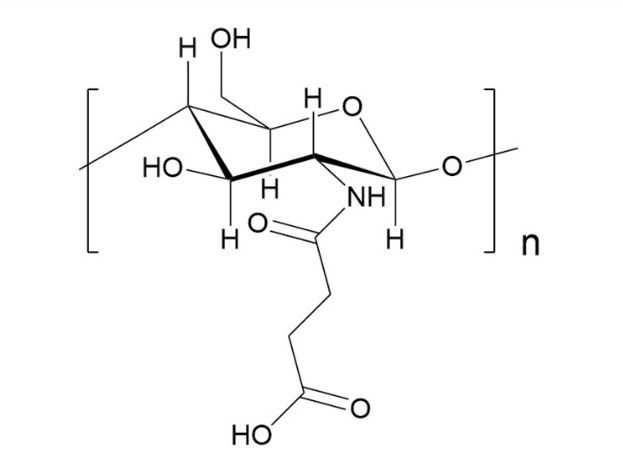
The primary mechanism by which this polymer resists rapid degradation in gastric acid relies on the protonation state of its functional groups. The succinyl groups typically exhibit a pKa value between 4.5 and 5.5. At a low pH (typically 1.2 to 2.0 in the stomach), the introduced carboxyl groups remain protonated and un-ionized. This prevents the polymer chains from repelling each other and expanding. Consequently, the matrix remains tightly coiled and physically stable, ensuring the protection of the active pharmaceutical ingredient from premature release and acid-catalyzed degradation.
There is a direct correlation between the degree of succinylation and the resulting physical stability and swelling behavior of the matrix. A higher degree of substitution increases the density of carboxyl groups. This requires careful calibration during raw material selection. Too low a substitution rate leaves residual primary amines exposed, leading to unwanted swelling in the stomach. Conversely, an optimal degree of substitution ensures the matrix remains impermeable in gastric fluids while remaining highly responsive to the alkaline shift in the lower gastrointestinal tract.
The application of these modified polymers in targeted delivery is highly effective for formulating pH-sensitive microspheres. For instance, in the treatment of diverticulitis via colon-targeted delivery, the polymer matrix must remain intact through the stomach and small intestine. By utilizing specific cross-linking agents like tripolyphosphate (TPP) or genipin in conjunction with the succinylated polymer, formulators create microspheres that only degrade upon reaching the colonic environment, delivering concentrated API directly to the inflamed tissue.
Mapping the swelling index and drug release kinetics across varying pH gradients is a mandatory phase of formulation development. Formulations are typically subjected to sequential dissolution testing using a USP Apparatus II setup. The test starts in 0.1N HCl at pH 1.2 for two hours, followed by a shift to a phosphate buffer at pH 6.8 or 7.4. The swelling index should remain below 15% in the acidic phase. Once transitioned to the simulated intestinal fluid, the polymer rapidly hydrates, and the swelling index spikes, triggering API diffusion.
Establishing quantitative benchmarks for in vitro drug release studies validates formulation efficacy. A standard benchmark for successful enteric release targets less than 10% API release during the two-hour gastric simulation. Following the pH shift, the formulation should achieve a controlled release threshold, targeting 66%+ release within the first four hours in simulated intestinal fluid. Meeting these strict dissolution profiles confirms the functional integrity of the pH-sensitive delivery system.
Testing chemical compatibility between the polymer and various API classes prevents late-stage formulation failures. Hydrophilic APIs generally integrate well into the aqueous polymer matrix, but lipophilic APIs require the use of co-solvents or emulsion-based techniques. Differential Scanning Calorimetry (DSC) and Fourier Transform Infrared Spectroscopy (FTIR) are standard methods for detecting physical phase separations or unwanted covalent interactions between the drug molecule and the polymer backbone prior to scale-up. A DSC thermogram showing the absence of the API's characteristic melting peak indicates a successful amorphous solid dispersion within the polymer matrix.
Formulation adjustments are frequently required to maximize entrapment efficiency during microsphere or nanoparticle preparation. If entrapment efficiency is low, formulators should adjust the polymer-to-drug ratio, increase the concentration of the cross-linking agent, or modify the pH of the coagulation bath. For highly soluble APIs that tend to partition out of the matrix during hardening, utilizing a rapid solvent evaporation technique or a non-aqueous continuous phase significantly improves the final drug loading metrics.
Identifying critical quality attributes (CQAs) for incoming raw materials is the foundation of scalable manufacturing. The molecular weight distribution directly dictates the viscosity and mechanical strength of the final dosage form. We typically target a molecular weight between 50 and 150 kDa for optimal spray drying performance. The degree of deacetylation of the base polymer, combined with the final degree of substitution of the succinyl groups (ideally between 40% and 65%), determines the exact pH at which the polymer will dissolve. Procurement teams must establish strict acceptance criteria for these three metrics to prevent catastrophic batch variations.
Analytical techniques must be employed for verifying excipient consistency and confirming successful succinic anhydride conjugation. FTIR spectroscopy is used to identify the presence of amide I and II bands alongside the characteristic carboxyl stretch, confirming the chemical modification. Nuclear Magnetic Resonance (NMR) spectroscopy provides precise quantification of the degree of substitution. Additionally, rotational rheometry is utilized to map the viscosity profile of the polymer in solution, ensuring it meets the flow characteristics required for downstream processing equipment.
Navigating the current regulatory landscape for modified polymers in major markets requires comprehensive documentation. Both the FDA and EMA classify chemically modified natural polymers as novel excipients unless they have a well-established history of use in approved products. Formulation teams must ensure that the supplier operates under strict Good Manufacturing Practices (GMP) and can provide a comprehensive Drug Master File (DMF) or equivalent technical documentation to support regulatory submissions.
The documentation required for novel excipient justification in Investigational New Drug (IND) applications is extensive. It must include detailed synthesis pathways, residual solvent analyses, heavy metal quantification, and comprehensive toxicological data demonstrating biocompatibility. Providing robust stability data for both the bulk excipient and the final formulated product is critical for satisfying pharmacopeial standards and avoiding clinical hold orders during the regulatory review process. Adhering to ICH Q8 (Pharmaceutical Development) guidelines ensures all formulation variables are properly justified.
Addressing common pitfalls early in the development cycle saves significant resources. Premature API dumping in acidic environments is usually caused by an insufficient degree of substitution or inadequate cross-linking density. Inconsistent microsphere morphology, such as dimpled or collapsed particles, often results from incorrect spray drying parameters or an overly rapid solvent evaporation rate. Viscosity loss over time in liquid formulations typically indicates polymer chain hydrolysis due to improper pH buffering or microbial contamination.
Implementing troubleshooting frameworks allows teams to adjust formulation parameters and recover failed batches quickly.
| Failure Mode | Potential Root Cause | Corrective Action |
|---|---|---|
| Premature API Release in Acid | Insufficient degree of succinylation or low cross-linking. | Specify a polymer grade with >50% substitution and increase TPP concentration. |
| Collapsed Microspheres | Excessive feed rate during spray drying. | Reduce feed rate to<5 mL/min and increase atomization pressure. |
| Viscosity Loss Over Time | Polymer chain hydrolysis due to pH drift. | Buffer the aqueous formulation to pH 6.5-7.0 and store at 2°C-8°C. |
| Insoluble Hydrocolloid Lumps | Rapid powder addition to the solvent. | Sift powder slowly into the vortex under high mechanical agitation. |
Succinyl chitosan offers undeniable technical superiority for pH-sensitive and stable formulations. Its ability to protect sensitive APIs in gastric environments while providing controlled release in the intestinal tract makes it a highly valuable asset in advanced drug delivery. However, this superiority is entirely dependent on observing strict handling protocols, precise solubilization techniques, and rigorous quality control measures throughout the manufacturing process. When evaluating suppliers for these specialized polymers, R&D and procurement teams should utilize a strict shortlisting logic. Verify the synthesis purity by reviewing NMR and FTIR data, and assess the supplier's ability to provide comprehensive CoAs and regulatory support files.
To move forward with integrating these polymers into your development pipeline, execute the following steps:
Request detailed technical data sheets to verify the molecular weight and degree of substitution ranges available for your specific application.
Obtain Certificates of Analysis (CoA) from recent commercial batches to confirm impurity profiles and batch-to-batch consistency.
Order pilot samples to initiate immediate excipient-API compatibility testing and initial dissolution profiling in your laboratory.
Establish a secure, climate-controlled storage protocol in your facility prior to receiving bulk materials to prevent moisture degradation.
A: The primary advantage is its enhanced water solubility at a neutral pH and the introduction of pH-sensitive carboxyl groups. This modification allows for precise, controlled drug release in the intestinal tract while remaining stable in gastric acid. Additionally, the modification process introduces beneficial bioactivities, including distinct antioxidant and anti-inflammatory effects.
A: N-succinyl-chitosan is modified at the primary amine groups via a Schiff base reaction with succinic anhydride. O-succinyl-chitosan targets the hydroxyl groups, requiring a more complex three-step synthesis to protect and deprotect the amines. This difference in functional group modification sites directly impacts their respective water solubility profiles and synthesis complexity.
A: These polymers must be stored in tightly sealed, double-lined polyethylene bags with desiccants, housed in HDPE drums. The storage environment should be maintained at temperatures between 15°C and 25°C, with relative humidity strictly controlled below 45% to prevent moisture ingress, agglomeration, and premature polymer degradation.
A: Yes, it is highly suitable for spray drying, particularly when formulating microspheres for APIs like ciprofloxacin. However, strict thermal and shear controls are necessary. Inlet temperatures should be kept between 120°C and 140°C to prevent polymer charring and thermal degradation of the entrapped active ingredients.
A: Succinyl variants are primarily used for targeted enteric delivery due to their specific pH-responsive swelling behaviors, protecting drugs in the stomach and releasing them in the intestines. Carboxymethyl variants exhibit rapid gelation and strong amphoteric properties, making them better suited for topical applications, hemostatic agents, and wound healing formulations.
A: Entrapment efficiency is influenced by the polymer concentration, the type and density of cross-linking agents used, the inherent solubility of the API, and the specific manufacturing method. Adjusting the polymer-to-drug ratio and the pH of the processing fluids can optimize these metrics during formulation development.


