

close
Choose Your Site
Global
Social Media
Views: 0 Author: Site Editor Publish Time: 2026-10-08 Origin: Site


The pharmaceutical industry is experiencing a profound shift. Formulators actively migrate away from purely synthetic materials. Instead, they seek biopolymers delivering high functionality alongside impeccable natural safety profiles. Chitosan perfectly fits this paradigm. Derived from the chitin of crustacean exoskeletons, this naturally occurring polysaccharide has successfully transitioned from a basic industrial commodity into a cutting-edge pharmaceutical ingredient.
Looking at current pharmaceutical manufacturing trends, the surge in biologics and targeted therapies has fundamentally altered excipient requirements. Traditional synthetic fillers often fail to protect fragile large molecules. Market data reveals a decisive pivot toward functionalized biopolymers. Developers need materials that not only stabilize sensitive active pharmaceutical ingredients but also actively facilitate cellular uptake. This demand for smart excipients capable of responding to specific physiological triggers like pH variations has positioned marine-derived polysaccharides at the forefront of formulation science.
This biopolymer features a unique chemical architecture alongside exceptional biocompatibility and formulation versatility. Consequently, it is now recognized as a cornerstone in modern drug design. It operates not just as a passive filler, but as an active participant in improving drug bioavailability. For R&D professionals and procurement managers, leveraging these advanced materials provides a comprehensive toolkit for overcoming complex drug delivery hurdles. This article explores the core properties, advanced chemical modifications, and practical applications making this biopolymer an indispensable asset in contemporary pharmaceutical development.
Biocompatibility and Safety: Highly valued for its non-toxic, biodegradable nature. It is exceptionally safe for long-term clinical use.
Mucoadhesive Properties: The inherent cationic charge binds effectively to negatively charged mucosal surfaces. This drastically improves drug absorption.
Versatile Derivatives: Chemically modified versions are tailored for specific formulation needs. They successfully overcome the solubility limitations of the native molecule.
Advanced Drug Delivery: Essential in formulating targeted, sustained-release, and novel delivery systems across oral, ocular, nasal, and transdermal routes.
Regulatory Compliance: Understanding purity standards, molecular weight, and regulatory status remains crucial for compliant commercial drug development.
Native chitosan is a linear polysaccharide composed of randomly distributed D-glucosamine and N-acetyl-D-glucosamine units. Understanding its fundamental physical and chemical traits is essential to grasping why formulation scientists highly seek it out.
Outstanding biocompatibility is the primary reason formulators select this biopolymer. When introduced into the human body, it triggers no severe immune or inflammatory responses. Furthermore, it is highly biodegradable. Human enzymes, primarily lysozyme found in tears and saliva, naturally cleave the polymer chain into harmless amino sugars. These metabolic byproducts are easily excreted. They leave no toxic residue behind. This predictable degradation profile is vital for internal medicine and implantable devices.
Moving beyond basic safety, this material stands out from traditional polymers due to its cationic nature in mildly acidic environments. The primary amine groups on its backbone become protonated. They interact strongly with the negatively charged sialic acid residues in mucosal layers. This electrostatic attraction is the engine driving its powerful mucoadhesion. Specifically, it acts as a robust permeation enhancer. It temporarily and reversibly opens tight junctions between epithelial cells. This mechanism allows larger hydrophilic molecules, like therapeutic peptides, to bypass the mucosal barrier and enter systemic circulation.
In aqueous environments, the polymer hydrates to form robust, viscous gel matrices. When an active pharmaceutical ingredient is embedded within this matrix, the drug releases slowly as the polymer swells and eventually degrades. Consequently, pure chitosan serves as an ideal foundation for formulating sustained-release tablets, capsules, and hydrogels.
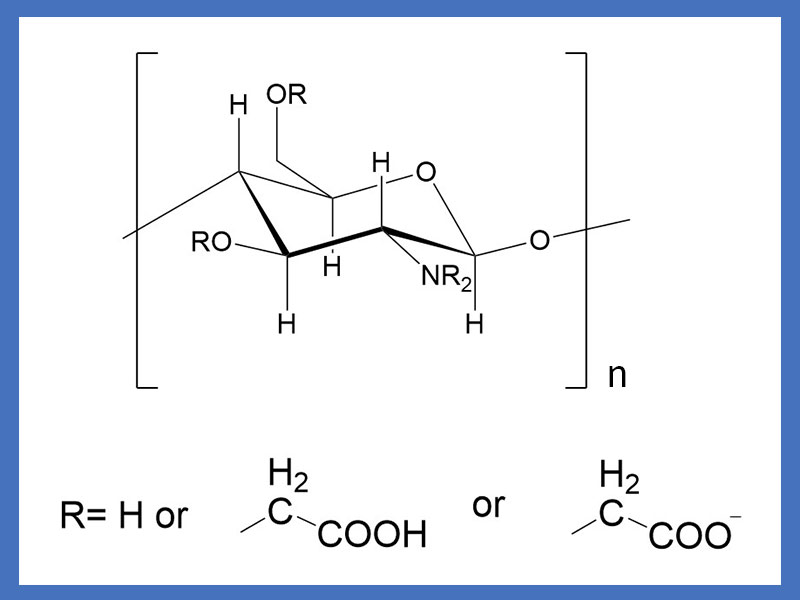
Native chitosan boasts powerful functional properties. However, its practical application in standard formulations is frequently hindered by a restrictive solubility profile. Strong intermolecular hydrogen bonding and a rigid crystalline structure keep the native molecule typically soluble only in acidic environments below pH 6.0. In neutral or alkaline physiological conditions, like the lower intestinal tract or blood plasma, it remains largely insoluble.
The global push for non-invasive delivery methods, like oral insulin or needle-free mucosal vaccines, has accelerated research into functionalized biopolymers. To meet these evolving demands, polymer chemists developed chemically modified variants capable of functioning across diverse physiological pH ranges.
By strategically altering the functional groups on the polymer backbone, scientists disrupt its crystallinity. This chemical modification yields a versatile series of pharmaceutical chitosan derivatives. These engineered excipients maintain the core biological benefits like safety and mucoadhesion. Meanwhile, they function effectively across a much broader pH spectrum.
Utilizing these modified polymers requires strict adherence to quality benchmarks. Medical applications demand high-purity, pharmaceutical-grade materials. Procurement teams must rigorously verify that sourced materials exhibit stringently controlled heavy metal limits, exceptionally low endotoxin levels, and consistent molecular weights. This guarantees batch-to-batch reproducibility.
The premium excipient portfolio comprises several highly specialized derivatives. Each is synthesized to solve distinct formulation challenges.
The synthesis of hydroxypropyl chitosan involves introducing hydroxypropyl groups to the polymer backbone. This addition creates steric hindrance. It prevents the molecular chains from packing tightly together. Consequently, this derivative exhibits excellent water solubility at a neutral pH. It completely eliminates the need for acidic solvents.
Furthermore, it boasts exceptional film-forming properties. Upon application, it dries into a clear, breathable, and flexible film. This characteristic makes it a premier excipient for ophthalmic solutions, topical gels, and advanced wound dressings. In these applications, visual clarity and moisture retention are absolutely paramount.
By introducing carboxymethyl groups, chemists create carboxymethyl chitosan. This is an amphoteric derivative containing both positive amine and negative carboxyl functional groups. This unique chemical architecture grants it high moisture retention capabilities alongside notable antibacterial properties.
More importantly, it is highly pH-responsive. Formulators leverage this sensitivity for targeted drug delivery. For instance, enteric coatings can be engineered to remain intact in the harsh, acidic environment of the stomach. They only dissolve and release the drug payload upon reaching the neutral-to-alkaline environment of the intestines.
Produced by reacting the base polymer with succinic anhydride, succinyl chitosan offers unique structural advantages. These include reduced systemic toxicity and excellent physical stability. It is particularly valued for its long-acting properties.
Engineers primarily deploy this derivative in the formulation of sustained-release matrices and nanoparticle-based drug carriers. Through ionic gelation, it effectively encapsulates sensitive active pharmaceutical ingredients. It shields them from premature enzymatic degradation and ensures a steady, reliable release profile over an extended duration.
For R&D scientists evaluating materials for new drug development, comparing advanced biopolymers to traditional excipients provides critical, evidence-based insights.
| Excipient Type | Biocompatibility | Mucoadhesion | Biological Interactivity | Toxicity Risk |
|---|---|---|---|---|
| Chitosan Derivatives | Excellent (Enzymatically Biodegradable) | High (Cationic Charge) | Active Permeation Enhancer | Very Low |
| Synthetic Polymers (PEG/PVP) | Good to Moderate | None to Low | Passive Filler | Moderate (Tissue Accumulation Risk) |
| Cellulose Derivatives (HPMC/CMC) | Excellent | Low (Non-ionic or Anionic) | Passive Matrix Former | Low |
Synthetic polymers like polyethylene glycol and polyvinylpyrrolidone are industry staples due to their low cost and chemical stability. However, they lack biological interactivity. Unlike certain high-molecular-weight synthetics that carry risks of long-term tissue accumulation, chitosan is broken down into natural metabolites. This presents a significantly lower risk of chronic toxicity.
High-performance functionalized biopolymers may carry a higher initial raw material cost compared to basic synthetic fillers. Nevertheless, the long-term return on investment is substantial. By amplifying drug efficacy, enabling novel non-invasive delivery routes, and reducing required dosages, these advanced excipients extend the patent life of existing drugs and create a more commercially viable final product.
The sheer versatility of these modified polymers allows them to be applied across a wide variety of administrative routes. They fundamentally improve how therapeutics interact with the human body.
Oral administration remains the gold standard for patient compliance. Yet, it poses significant hurdles for fragile molecules like peptides and proteins. Modified chitosan shields these sensitive active pharmaceutical ingredients from destructive gastric acids and digestive enzymes. Once the formulation transitions into the intestines, the polymer's permeation-enhancing capabilities facilitate the opening of epithelial tight junctions. This action drastically boosts intestinal absorption and overall systemic bioavailability.
Nasal and ophthalmic routes are notoriously hindered by the body's natural clearance mechanisms. Blinking, tear turnover, and mucociliary clearance rapidly wash away liquid formulations. By harnessing the strong mucoadhesive forces of these biopolymers, formulators dramatically extend the residence time of the drug in the nasal cavity or on the corneal surface. This prolonged contact time translates to superior absorption. Ultimately, it reduces dosing frequency and improves patient adherence.
In the realm of topical therapies, this biopolymer acts as much more than a passive delivery vehicle. Its inherent antimicrobial properties help mitigate infection risks at the application site. Simultaneously, its film-forming capabilities create a protective, breathable barrier over compromised skin. Consequently, it is highly suitable for transdermal patches, localized hydrogels, and wound-healing ointments designed to deliver targeted relief while actively promoting tissue repair.
Addressing the safety and regulatory landscape is the ultimate deciding factor for pharmaceutical buyers and regulatory affairs teams.
Extensive in vitro and in vivo toxicological studies consistently affirm the low toxicity and general safety of this biopolymer and its derivatives. It is exceptionally well-tolerated by human tissues. It induces no significant mucosal irritation or inflammatory responses when manufactured to high purity standards.
A frequent concern regarding crustacean-derived materials is the potential for shellfish allergies. Shellfish allergies are typically triggered by specific muscle proteins, predominantly tropomyosin, rather than the structural shell itself. Highly purified, pharmaceutical-grade material undergoes rigorous, multi-step extraction processes. These processes systematically eradicate these residual proteins. As a result, the risk of an allergic reaction is considered exceptionally low.
The regulatory acceptance of this biopolymer is well-established globally. It is listed in major compendia, including the European Pharmacopoeia and the United States Pharmacopeia. Furthermore, specific applications have been evaluated by regulatory bodies like the FDA. Some have received Generally Recognized As Safe status, thereby smoothing the regulatory pathway for New Drug Applications.
Selecting the appropriate excipient requires meticulously aligning the physicochemical properties of the active pharmaceutical ingredient with the functional characteristics of the polymer. R&D and procurement teams should consider the following actionable criteria.
If the formulation demands high water solubility at neutral pH and the formation of clear, flexible films, hydroxypropyl chitosan is the optimal choice. If the project goal is pH-triggered release to bypass gastric degradation, carboxymethyl chitosan provides the necessary amphoteric properties. Alternatively, if the objective involves engineering long-acting, highly stable nanoparticles for sustained release, the anionic charge of succinyl chitosan delivers the required structural integrity.
When sourcing these materials, buyers must rigorously scrutinize the Certificate of Analysis. Key metrics include the Degree of Deacetylation. A high degree of deacetylation directly increases the charge density and mucoadhesiveness of the polymer. Additionally, Molecular Weight heavily influences the viscosity and degradation kinetics of the final matrix. Finally, strict limits on endotoxin levels and heavy metals must be verified to ensure unwavering compliance with stringent pharmaceutical standards.
The integration of functional biopolymers has completely transformed modern pharmacology. Chitosan offers an unmatched synergy of natural safety and active mucoadhesion. This remarkable versatility effectively resolves historical formulation challenges, solidifying its role as a vital component in next-generation drug delivery.
By ensuring reliable, targeted, and sustained release, advanced derivatives significantly elevate overall drug efficacy. If your next clinical project requires overcoming solubility barriers or achieving precise targeted release, exploring the high-quality portfolio at New Source Chem is the ideal next step. Evaluate your specific formulation requirements and select the most suitable derivative from New Source Chem to ensure superior patient outcomes and commercial success.
It acts as a multifunctional binder, mucoadhesive agent, permeation enhancer, and controlled-release matrix in drug formulations. By actively interacting with mucosal surfaces and forming protective gel networks, it significantly improves how effectively an active pharmaceutical ingredient is delivered, protected, and systemically absorbed by the body.
Native chitosan is severely limited by its solubility profile, as it only dissolves in acidic environments. Derivatives are chemically modified to achieve water solubility at neutral or alkaline pH levels. This critical modification makes them exponentially more versatile, allowing formulators to seamlessly incorporate them into a wider array of delivery systems, like neutral ophthalmic drops or intestinal-targeted capsules.
Yes. When sourced as a highly purified, pharmaceutical-grade material, it is exceptionally biocompatible and non-toxic. It is extensively researched and safely utilized in oral and targeted internal drug delivery systems due to its predictable degradation profile and highly responsive pH behavior.
It possesses a unique chemical architecture that allows it to form highly stable nanoparticles and hydrogels via ionic cross-linking. This robust structural network physically encapsulates and shields the active pharmaceutical ingredient from premature enzymatic or chemical degradation. This enables a sustained, controlled release over extended periods.
Shellfish allergies are typically triggered by specific muscle proteins, predominantly tropomyosin, rather than the chitin derived from the exoskeleton. Premium pharmaceutical-grade material is subjected to rigorous, multi-stage purification processes designed to completely eradicate these allergenic proteins. This renders the risk of an allergic reaction extremely low for patients.
Yes, specific grades and applications of this biopolymer and its derivatives are recognized by the FDA. It is included in the FDA Inactive Ingredient Database for certain administrative routes and has achieved Generally Recognized As Safe status for specific uses, making it a compliant choice for commercial drug development.
Pharmaceutical-grade material undergoes far more rigorous purification processes compared to food-grade versions. It features strictly controlled molecular weights, high degrees of deacetylation, and extremely low limits for heavy metals, proteins, and endotoxins. These stringent parameters are mandatory to ensure clinical safety, batch-to-batch consistency, and regulatory compliance for medical applications.


