

close
Choose Your Site
Global
Social Media
Views: 0 Author: Site Editor Publish Time: 2026-09-22 Origin: Site


Formulating successful skincare or dermatological products relies heavily on the chemical behavior of active ingredients. Salicylic acid remains the gold standard for acne treatments and chemical exfoliants. Its unique lipophilic structure allows it to penetrate sebum-filled pores. This makes it highly effective for treating comedones and reducing localized inflammation. However, from a manufacturing and procurement perspective, not all raw materials behave identically on the lab bench.
Recent market intelligence reveals a significant shift in dermatological formulation trends. Consumers are increasingly educated about skin barrier health. Consequently, the demand for harsh, alcohol-heavy chemical exfoliants has plummeted. Formulators are now pivoting toward barrier-friendly, slow-release delivery systems. Regulatory bodies are also scrutinizing raw material purity more closely. This means purchasing generic active ingredients is no longer a viable strategy for premium brands. Modern chemistry demands precise selection.
Transitioning from a theoretical product concept to large-scale commercial manufacturing requires rigorous testing. Ordering samples is the critical first step in the research and development process. Yet, asking the wrong questions can lead to severe formulation failures. Imagine dropping an incompatible active ingredient into a complex emulsion, only to watch it cause rapid phase separation or unexpected crystallization. This comprehensive guide is designed for formulation chemists and purchasing managers. It details the empirically-driven questions you must ask your chemical supplier before ordering samples, ensuring you receive the precise chemical profile your formulation demands.
Identify the Right Variant: Always ask suppliers which specific type from their product line best aligns with your final product solvent base.
Demand Documentation First: Never initiate a sample request without reviewing the batch-specific Certificate of Analysis, Safety Data Sheet, and technical solubility guidelines.
Clarify Concentration and Purity: Ensure the sample matches the exact purity grade and active concentration you intend to use in bulk manufacturing.
Evaluate System Compatibility: Pre-determine the pH and solvent requirements of the raw material to ensure stability within your target formulation environment.
Think Beyond the Sample: Ask about minimum order quantities, commercial lead times, and batch-to-batch consistency before testing begins.
Salicylic acid is a highly effective beta-hydroxy acid, commonly known as BHA. However, bench chemists know it is notoriously difficult to formulate in its pure state due to its naturally poor solubility in water. To achieve a standard 2 percent active concentration in a water-based serum, formulators historically had to rely on high volumes of ethanol or specialized glycols. These harsh solvent systems often disrupt the skin barrier. Today, advanced chemical suppliers offer modified versions to solve these distinct manufacturing challenges.
When speaking with a supplier, your first question should address the base of your intended product. If you are developing alcohol-free toners or clear hydrogels, you must ask if the supplier offers water soluble salicylic acid. In standard aqueous environments, traditional pure BHA rapidly crystallizes. This leads to gritty textures and uneven active distribution, which is a serious safety risk. Utilizing a 40 percent water-soluble variant saves significant research time by eliminating the need for complex solvent systems. This specific variant dissolves effortlessly in cold water, keeping your toners perfectly clear without the need for heating phases.
Furthermore, if your target demographic includes consumers with sensitive skin or compromised skin barriers, standard acids may induce erythema. In these scenarios, you must ask about the salicylic acid inclusion complex. This advanced delivery technology physically encapsulates the active molecule within a secondary host structure. By doing so, it prevents a massive spike of the acid on the skin surface. Instead, the encapsulation allows for a slow, controlled release over several hours. This sustained-release mechanism significantly reduces the immediate burning sensation while maintaining keratolytic efficacy.
To dig deeper into this encapsulation technology, specifically ask the supplier if their inclusion complex utilizes cyclodextrin. A cyclodextrin salicylic acid complex is an industry-preferred standard. Cyclodextrins are cyclic oligosaccharides that feature a hydrophobic interior cavity and a hydrophilic exterior. The active acid molecule rests safely inside this cavity. Utilizing a 50 percent cyclodextrin complex not only improves water solubility but also helps to mask inherent medicinal odors and protects the acid from premature oxidation during its shelf life.
To help R&D teams quickly determine the right starting point, refer to the core selection matrix below:
| Variant Type | Active Content | Water Solubility | Irritation Potential | Ideal Formulation |
|---|---|---|---|---|
| Standard Pure Powder | >99% | Very Low | High | Ointments, Alcohol-based serums |
| 40% Water-Soluble | 40% | Excellent | Medium | Clear toners, Hydrogels |
| 50% Inclusion Complex | 50% | Good | Very Low | Sensitive skin lotions, Creams |
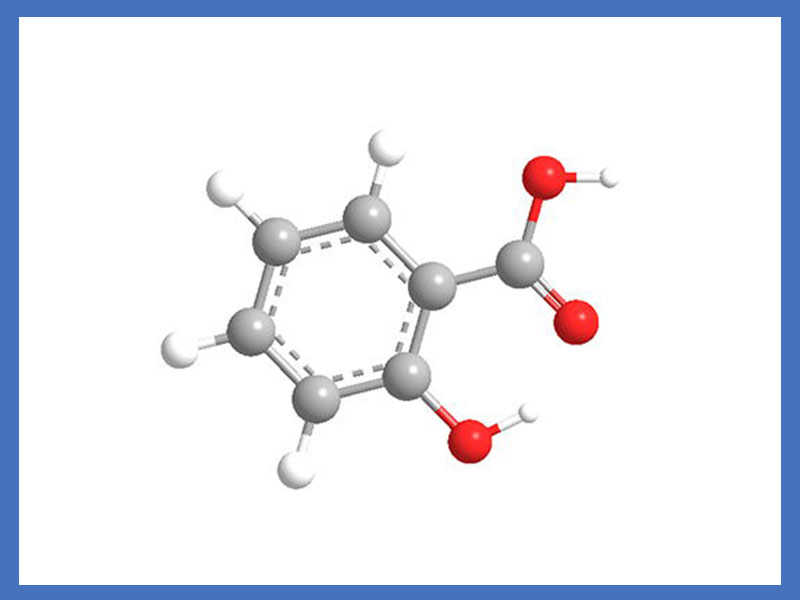
The clinical efficacy and regulatory compliance of your final product depend entirely on the active load and purity of the raw material. Purchasing managers must verify that the sample they receive matches the exact specifications required by their R&D team. This is critical to accurately calculate the cost of goods sold and input percentages.
If your laboratory is formulating professional-grade chemical peels or targeted dermatological ointments, potent raw materials are non-negotiable. You must ask if the supplier provides high concentration salicylic acid and verify the specific assay percentage. Premium grades typically exceed 99 percent purity. Specifically, inquire about the impurity profile. High concentration materials must be rigorously tested for residual solvents and trace phenol. Excess phenol can cause systemic toxicity and will undoubtedly cause the sample to fail safety assessments.
A common pitfall for procurement teams occurs when ordering specialized modified variants. You must explicitly ask the supplier about the actual percentage of free active acid within the specific complex.
For example, if you order a 40 percent inclusion complex, the powder is not entirely active acid. For every 100 grams of the raw material powder, there are exactly 40 grams of actual active ingredient. If your formulation requires a final active load of 2 percent to comply with over-the-counter acne monographs, your chemists will need to input 5 percent of the total complex by weight into the batch. Clarifying this prior to ordering samples prevents severe under-dosing.
In chemical procurement, a physical raw material sample is virtually useless to a professional formulation laboratory if it is not accompanied by rigorous safety documentation. Regulatory bodies require strict traceability of all active cosmetic ingredients. Reviewing these documents before the sample arrives allows your regulatory teams to clear the ingredient for lab use.
Never accept a generic or outdated document. Always ask for a batch-specific Certificate of Analysis that corresponds exactly to the sample lot you will receive. This document is the definitive proof of material quality. Ask your R&D team to verify three critical parameters. First, check the confirmed assay percentage via HPLC. Second, review heavy metal limits to ensure lead and arsenic fall well below regulatory thresholds. Third, verify microbiological purity to confirm the absence of pathogens.
While the Certificate of Analysis proves purity, the comprehensive technical data sheet provides the fundamental physical properties necessary for actual formulation work. It details critical manufacturing data, such as the exact melting point, visual appearance parameters, and bulk density. More importantly, it guides your chemists on the sequence of addition. It advises whether the sample should be added to the water phase, the oil phase, or during the cool-down phase of an emulsion.
Occupational safety cannot be overlooked in the lab. Ask for the GHS-compliant Safety Data Sheet to ensure your technicians know how to handle the sample safely. Pure concentrated BHA is a severe eye irritant and can cause respiratory irritation if the fine powder is inhaled. The document will dictate the necessary personal protective equipment, such as particulate respirators and nitrile gloves, required during the prototyping phase.
Salicylic acid is a highly reactive molecule. Dropping it into an incompatible chemical environment or an incorrect pH level will instantly ruin a batch. This mistake leads to precipitation, cloudiness, or complete loss of exfoliating efficacy.
Before the sample arrives, ask the supplier technical team what specific solvents are best suited for the variant you are ordering. While ethanol is a traditional solvent, many modern brands prefer alcohol-free claims. You need to know if the sample performs best when pre-dissolved in Propylene Glycol, Propanediol, or specific ethoxydiglycol solutions. Understanding the exact ratio of solvent needed to dissolve one gram of the sample saves your chemists days of frustrating benchwork.
In addition, the chemical behavior and exfoliating power of this active are heavily dependent on the pH of the surrounding formula. Because the acid has a pKa of approximately 2.97, formulating a product with a pH significantly higher than 4.0 will convert the free acid into a salicylate ion. While salicylate salts offer some anti-inflammatory benefits, they lose their ability to effectively penetrate lipid-rich pores. Ask the supplier for the optimal pH buffer range to keep the ingredient active. In contrast, if the sample is an encapsulated complex, ask if the encapsulation alters the required pH range, as some modern complexes offer broader stability windows.
Procurement managers must know that what they test successfully in a small lab beaker can be seamlessly scaled up in a 1000-liter manufacturing vessel without unexpected surprises.
You must ask the supplier directly if the sample is pulled from a current commercial production batch or if it is a highly refined lab-made prototype. Lab-made prototypes can sometimes exhibit perfect solubility and pure white coloration. Commercial bulk batches might have a slightly different particle size distribution or a faint off-white tint. Ensure that the physical characteristics, specifically particle size and color on the APHA scale, will remain strictly consistent when you transition to purchasing multiple drums.
Ask about the shelf life of the raw material sample. Stability testing phases for cosmetics typically take between 12 to 24 weeks under accelerated thermal conditions. If the raw material sample is already near the end of its shelf life, it may degrade during your testing process. This yields false-negative stability results. Verify that the sample has at least 18 to 24 months of viable shelf life remaining before you begin your pilot batches.
It is a poor business practice to invest weeks of expensive R&D time testing a raw material sample without first understanding if the supplier fits your commercial business model and supply chain requirements.
Ask what the minimum order quantity is for the specific item you are testing. These thresholds can vary drastically depending on the complexity of the raw material. For instance, the minimum for standard commodity-grade powder might be as low as 25 kilograms. However, a highly specialized custom-manufactured encapsulation technology might require a minimum purchase of 100 kilograms or more. Ensure your purchasing department is comfortable with these financial thresholds before laboratory testing begins.
Ask the supplier how long it takes to fulfill a bulk commercial order once the sample is officially approved by your R&D team. You need to accurately assess their production capacity. If the raw material is manufactured overseas, you must account for extended shipping times, customs clearance, and potential supply chain bottlenecks. Partnering with a supplier who maintains domestic safety stock can significantly mitigate these logistical risks.
Even with the highest quality raw material sample and meticulous documentation, formulators can still run into unexpected roadblocks during the prototyping phase. A true supply partner offers more than just a tracking number.
Ask if the supplier provides direct access to their internal technical team. If your prototype suddenly experiences a cloud point shift, or if the active ingredient begins to recrystallize after two weeks in the stability chamber, you will need expert troubleshooting advice. A supplier that offers dedicated chemist-to-chemist communication is far more valuable than a mere distributor.
Finally, ask if the supplier can provide starting prototype formulas. These baseline recipes outline the exact order of addition, required heating temperatures, and recommended emulsifiers. Utilizing a supplier frame formulation can accelerate your lab testing process by weeks. This allows you to bypass tedious trial-and-error phases and move directly into efficacy testing and sensory evaluation.
Ordering the right sample is a definitive step toward launching a successful skincare product. It protects your engineering investment, saves valuable laboratory time, and prevents costly manufacturing disasters down the line. By asking the right questions about solubility, purity, commercial scalability, and specific chemical variants, you ensure your final formula succeeds in a highly competitive market. Always verify the technical documents before testing begins, and choose a supplier that offers robust formulation support.
At New Source Chem, we specialize in advanced chemical modifications tailored for professional formulators. Whether your project requires standard high-purity powder or sophisticated encapsulated complexes, our technical team is ready to assist. Visit the New Source Chem Salicylic Acid Series to find the exact match for your next breakthrough product and request your targeted sample with confidence today.
Typically, 50 to 100 grams is sufficient for initial lab-scale formulation, stability testing, and compatibility checks. If your laboratory is running multiple pilot batches or testing various solvent systems simultaneously, you may need to request up to 500 grams to ensure you have enough material for comprehensive accelerated stability protocols.
Standard BHA is highly hydrophobic, meaning it actively repels water. If you are creating an alcohol-free toner, a hydrating serum, or a clear gel, using a water-soluble variant saves immense formulation time. It prevents the active from crystallizing out of the solution and eliminates the need to use harsh chemical solvents just to keep the product clear.
The complex physically encapsulates the active acid inside a larger cyclodextrin molecule. This structural modification makes it water-soluble, protects the sensitive acid from premature oxidation, and allows for a slow, sustained release on the skin. This controlled delivery mechanism drastically reduces the redness, peeling, and irritation typically associated with chemical exfoliants.
Absolutely not. High concentration materials are strictly raw ingredients intended for professional manufacturing and laboratory formulation. They must be properly diluted, formulated into a delivery system, and buffered to safe pH levels before any consumer use.
While initial solubility and sensory tests take only a few days to complete on the bench, full stability testing is a longer process. Checking for color changes, unwanted crystallization, and pH drift over time usually takes 4 to 12 weeks in an accelerated thermal testing environment. Always ask your supplier about the expected stability parameters before you begin to set a benchmark for success.
For maximum keratolytic efficacy, the formulation pH should ideally be between 3.0 and 4.0. Because the pKa of the acid is 2.97, keeping the pH in this range ensures a significant portion of the acid remains in its free, active state rather than converting into a less effective salt form.
If you are not using a pre-modified water-soluble variant, you can dissolve the pure powder using alternative glycols such as Propylene Glycol, Propanediol, or Butylene Glycol. Heating the solvent slightly during the mixing phase can accelerate the dissolution process, though it requires precise temperature control to avoid degrading the active ingredient.


