

close
Choose Your Site
Global
Social Media
Views: 0 Author: Site Editor Publish Time: 2026-09-13 Origin: Site


Formulators increasingly rely on advanced, water-soluble biopolymers to stabilize complex drug delivery systems and develop high-performance topical formulations. Standard chitosan offers excellent biocompatibility. However, it suffers from poor solubility at neutral pH, severely limiting its application scope in modern medicine. Chemically modified variants like hydroxypropyl chitosan solve this fundamental flaw. Yet, they introduce severe sourcing complexities. Procuring the wrong specification leads directly to formulation instability, unpredictable release kinetics, and costly regulatory roadblocks. To successfully integrate this biopolymer, R&D and procurement teams must align specific physicochemical properties with exact application requirements. You need to match the degree of substitution and molecular weight to global supply chain dynamics and stringent quality control standards. Navigating these specifications requires a deep understanding of polymer chemistry and rigorous supplier evaluation.
Solubility is Dictated by Substitution: The Degree of Substitution (DS) is the primary specification determining water solubility and functional performance; a mismatch here guarantees formulation failure.
Molecular Weight Controls Viscosity: Precise molecular weight (Mw) specifications are non-negotiable, as they directly dictate the excipient’s thickening capacity, film-forming strength, and degradation rate.
Purity Defines Application Viability: For pharmaceutical applications, strict limits on endotoxins, heavy metals, and residual proteins are mandatory to ensure biocompatibility and regulatory compliance.
Supplier Consistency is the Ultimate Metric: Evaluating a supplier’s batch-to-batch consistency, scalable manufacturing capacity, and comprehensive Certificate of Analysis (CoA) is as critical as the baseline specifications of the polymer itself.
Traditional chitosan exhibits a rigid crystalline structure and strong intermolecular hydrogen bonding. This configuration renders the polymer insoluble in neutral and alkaline environments. Formulators working with physiological pH levels around 7.4 find standard chitosan precipitates out of solution. This precipitation destroys the structural integrity of hydrogels, injectables, and advanced topical creams. Modern excipients must maintain inherent biocompatibility while achieving broad-spectrum solubility across diverse pH ranges.
Polymer chemists overcome this barrier through nucleophilic substitution. This synthesis pathway introduces specific functional groups onto the chitosan backbone. It disrupts the hydrogen bonds and forces the polymer chains apart. The result is a highly functional class of pharmaceutical chitosan derivatives capable of dissolving rapidly in water without requiring acidic solvents. This chemical evolution shifts the material from a niche biomaterial to a foundational excipient in advanced therapeutics. Manufacturing these derivatives at scale requires precise temperature controls and specialized reactor environments to prevent polymer degradation during the substitution phase.
Under strict regulatory definitions, the Pharmaceutical Excipient Chitosan Series categorizes these materials as biosynthetic, substituted homopolymers. The addition of hydroxypropyl groups fundamentally alters the spatial arrangement of the polymer. By attaching these bulky groups to the amino or hydroxyl sites of the glucosamine units, the crystalline structure breaks down into an amorphous state. This transformation renders the material highly water-soluble. This modification occurs without sacrificing the biodegradable and harmless nature of the base polymer. It becomes an ideal candidate for sensitive mucosal and parenteral applications where synthetic polymers might trigger adverse immune responses.
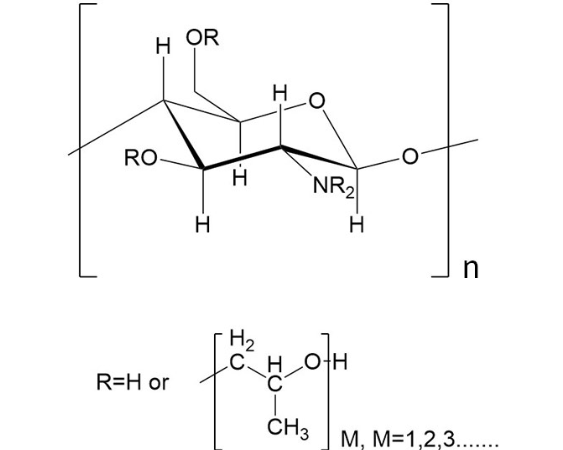
Evaluating hydroxypropyl chitosan requires a strict analytical approach. You cannot rely on generic specification sheets. Formulators must interrogate the exact physicochemical properties of each batch. The Degree of Substitution measures the average number of hydroxypropyl groups attached to each glucosamine unit. When reviewing a Certificate of Analysis, formulators must verify the DS value. Laboratories typically determine this via Proton Nuclear Magnetic Resonance (H-NMR) spectroscopy. A higher percentage of hydroxypropyl groups directly correlates with enhanced solubility profiles across varying pH levels. If the DS falls below the validated threshold, the polymer retains too much of its original crystalline structure. This leads to incomplete dissolution and particulate contamination in the final dosage form.
Matching the DS to the desired outcome dictates formulation success. High DS variants yield rapid, complete dissolution. They are mandatory for clear liquid formulations, ocular drops, and sprayable solutions. Conversely, a lower DS might be intentionally selected for specific controlled-release matrices. In these cases, the formulator wants the polymer to swell slowly rather than dissolve instantly. Specifying the exact DS range prevents catastrophic phase separation during scale-up manufacturing.
Consider the practical implications during compounding. A DS of 40% might require extended mixing times and elevated temperatures to achieve a homogenous solution. A DS exceeding 80% will dissolve readily at room temperature. You must align your manufacturing capabilities with the DS specification you source. Failure to do so results in extended batch cycle times and increased energy consumption on the production floor.
Polymer chain length, expressed as Molecular Weight (Mw), dictates the rheological behavior of the excipient in solution. Analytical laboratories measure Mw using Gel Permeation Chromatography (GPC) calibrated against pullulan or polyethylene glycol standards. The relationship is straightforward. Longer polymer chains entangle more readily, exponentially increasing the viscosity of the solution. Formulators cannot swap a 50 kDa batch for a 500 kDa batch without completely altering the flow characteristics, spreadability, and syringeability of the final product.
Application requirements drive the Mw specification. Low Mw variants excel in applications requiring enhanced tissue penetration, rapid degradation, and low-viscosity sprayable formulations. They allow high polymer loading without turning the solution into an unworkable gel. High Mw variants serve as robust film-forming agents in cosmetics. They provide the structural backbone for sustained-release drug delivery systems. The high entanglement of long chains creates durable matrices that release active pharmaceutical ingredients at predictable, extended rates.
To manage viscosity expectations, establish a baseline testing protocol. Require suppliers to report Brookfield viscosity at a standardized concentration and temperature, typically 1% solution at 20°C. This provides a practical, functional metric alongside the absolute Mw value. It allows compounding technicians to predict how the material will behave in high-shear mixing equipment.
While the final product is a modified derivative, the Deacetylation Degree of the precursor chitosan remains a primary quality attribute. DD measures the ratio of primary amine groups to acetyl groups on the polymer backbone. Extracting chitin from crustacean shells and converting it to chitosan requires harsh alkaline treatments. A high DD in the starting material means more reactive sites are available during the subsequent nucleophilic substitution process. If the base material has a highly variable DD, the resulting derivative will exhibit inconsistent functional group distribution.
The DD impacts both the synthesis efficiency and the final charge density of the excipient. Amine groups that remain unmodified by the hydroxypropyl groups retain a positive charge in slightly acidic environments. This residual cationic nature influences how the excipient interacts with negatively charged APIs, cell membranes, and mucosal surfaces. Formulators must ensure the supplier tightly controls the precursor DD to guarantee predictable mucoadhesion and complexation behaviors in the final product.
Impurity profiles strictly differentiate cosmetic grade from pharmaceutical grade materials. Cosmetic applications tolerate minor residual proteins or ash. Parenteral and advanced mucosal delivery systems require near-absolute purity. Residual proteins from the original crustacean source can trigger severe immune responses. Formulators must demand comprehensive purity testing on every batch, utilizing advanced chromatographic and spectroscopic methods to detect trace contaminants.
Compliance thresholds are non-negotiable for safe application. Heavy metals must remain strictly controlled. Specifications often require limits below 10 ppm for total heavy metals. Specific low thresholds apply for highly toxic elements: lead must remain below 0.5 ppm, and arsenic below 1.5 ppm. Microbial limits must adhere to pharmacopeial standards, ensuring total aerobic microbial counts remain negligible.
For injectable or ophthalmic formulations, endotoxin limits represent the most critical specification. These typically require levels below 100 EU/g. Failure to enforce these limits results in immediate regulatory rejection and severe patient safety risks. Implement a strict testing hierarchy for incoming raw materials:
Verify heavy metal content via Inductively Coupled Plasma Mass Spectrometry (ICP-MS).
Confirm residual protein levels using the Bradford assay or equivalent validated methods.
Execute Limulus Amebocyte Lysate (LAL) testing for precise endotoxin quantification.
Conduct total aerobic microbial count (TAMC) and total combined yeasts and molds count (TYMC) testing.
Advanced drug delivery systems leverage the unique physicochemical properties of modified biopolymers to protect APIs and control their release. Formulators assess these materials for use in nanoparticle synthesis, injectable hydrogels, and mucoadhesive delivery systems. The polymer forms stable complexes with nucleic acids, peptides, and small molecules. By manipulating the polymer concentration and crosslinking density, R&D teams tune the degradation rate to match the desired therapeutic window.
Designing these systems requires balancing competing physical forces. High mucoadhesion strength depends on specific charge densities and polymer chain flexibility. This allows the excipient to interpenetrate the mucin layer. Excessive adhesion or overly dense crosslinking can trap the API, preventing rapid release when required. Formulators must carefully select the Mw and DS to achieve the exact equilibrium between prolonged residence time at the target tissue and the necessary diffusion kinetics of the active compound. For example, delivering a hydrophilic peptide requires a different crosslinking strategy than encapsulating a highly hydrophobic small molecule.
The structural backbone provides an excellent scaffold for secondary modifications in advanced R&D. The presence of reactive hydroxyl and residual amine groups allows chemists to attach targeting ligands, fluorescent tags, or additional functional moieties. Evaluating the polymer's structural suitability involves confirming the exact ratio of these reactive sites. Consistent batch-to-batch functional group distribution ensures reproducible grafting yields during complex synthesis operations.
One highly effective application involves leveraging the polymer as a base for enzymatic grafting. Using biocatalysts like microbial transglutaminase, researchers attach specific peptides directly to the polymer backbone. This biocatalytic approach avoids harsh chemical crosslinkers, preserving the biological activity of the attached peptides. The resulting functionalized polymer enables the creation of next-generation antimicrobial dressings and targeted biological delivery systems with highly specific mechanisms of action.
Dermal applications require careful consideration of material grading. Sourcing cosmetic grade versus pharma grade depends entirely on the regulatory pathway of the final product. Over-the-counter skincare products may utilize high-quality cosmetic grades. Medicated transdermal patches demand strict pharmaceutical compliance. Regardless of the grade, the polymer must exhibit excellent spreadability, clarity, and microbiological safety to perform effectively on the skin.
In skincare and dermatology, formulators utilize this biopolymer as a low-risk thickening and film-forming agent. The polymer creates a breathable, non-occlusive matrix on the skin surface. This film focuses on moisture retention by significantly reducing transepidermal water loss and providing robust barrier protection against environmental pollutants. The hydroxypropyl modification ensures the resulting film remains flexible and smooth. It completely avoids the tackiness or flaking associated with inferior polymeric thickeners. It also acts as an excellent rheological modifier in complex oil-in-water emulsions, stabilizing the formulation against phase separation during long-term storage.
Selecting the correct derivative requires understanding fundamental charge dynamics. The hydroxypropyl variant is primarily non-ionic, though it retains slight cationic properties depending on the residual unsubstituted amine groups. This makes it highly compatible with a broad range of APIs without causing unintended electrostatic precipitation. In contrast, carboxymethyl chitosan introduces carboxyl groups. This renders the polymer amphoteric or distinctly anionic depending on the substitution site and environmental pH.
These conceptual trade-offs dictate formulation strategies. The pH responsiveness of the carboxymethyl variant makes it excellent for smart, stimuli-responsive hydrogels. These swell in alkaline intestinal environments but remain contracted in acidic gastric fluids. If the formulation contains sensitive cationic APIs, the anionic nature of carboxymethyl variants can cause rapid complexation and precipitation. In these scenarios, the non-ionic stability of the hydroxypropyl variant provides a much safer, more predictable excipient matrix.
| Specification Metric | Hydroxypropyl Variant | Carboxymethyl Variant |
|---|---|---|
| Primary Charge | Non-ionic (slightly cationic) | Amphoteric / Anionic |
| Solubility Profile | Highly soluble across broad pH | pH-dependent solubility |
| API Compatibility | Broad compatibility, low interaction | Can precipitate with cationic APIs |
| Primary Application | Film-forming, neutral hydrogels | Stimuli-responsive delivery |
| Viscosity Stability | Stable across temperature shifts | Highly sensitive to ionic strength |
Another primary comparison involves succinylation. succinyl chitosan introduces succinyl groups, creating a strongly anionic polymer with distinct biological behaviors. While the hydroxypropyl variant excels in general solubility, viscosity control, and topical film-forming, the succinyl variant is specifically engineered for advanced systemic applications. The succinylation process significantly alters how the polymer interacts with blood proteins and cellular receptors.
Formulators contrast these materials based on the target delivery route. Succinyl derivatives provide exceptional long-circulating drug delivery capabilities. The anionic charge helps evade rapid clearance by the reticuloendothelial system. This allows nanoparticles to remain in the bloodstream longer. It offers specific tissue targeting advantages, particularly in tumor microenvironments. R&D teams must weigh the need for these advanced systemic targeting features against the straightforward, highly stable solubility and barrier protection offered by hydroxypropyl variants.
Biosynthetic polymers derived from natural sources are inherently prone to variation. The molecular weight and deacetylation degree of the raw chitin extracted from crustacean shells fluctuate based on species, harvest season, and extraction methodology. If the manufacturer fails to control these variables before the substitution phase, the resulting derivative will exhibit wild inconsistencies. Inconsistent DS or Mw can derail an entire commercial production run, causing batches to fail viscosity specs or dissolution profiles.
Procurement teams must implement aggressive mitigation strategies. Relying on standard specification sheets is insufficient. Buyers must mandate tight specification ranges within formal Quality Agreements. R&D must require validated analytical methods on every CoA. If a supplier cannot provide NMR spectra for DS verification or GPC data for Mw distribution, they introduce unacceptable risk into the manufacturing pipeline. Rigorous incoming quality control testing remains mandatory. Setting up a robust internal QA/QC lab to verify supplier claims prevents off-spec material from entering the compounding suite.
As global demand for specialized biopolymers accelerates, securing consistent commercial-scale volumes becomes a significant bottleneck. Many suppliers can produce high-quality laboratory-scale batches but fail catastrophically when scaling up to hundreds of kilograms. The complex synthesis required for nucleophilic substitution demands advanced reactor controls and precise purification protocols. Sudden spikes in demand from the cosmetics or pharmaceutical sectors can rapidly deplete global inventories of high-grade material.
To ensure supply chain resilience, procurement must evaluate suppliers beyond their chemical specifications. Auditing scalable manufacturing capacity is mandatory. Buyers should assess geographic supply chain redundancies, raw material sourcing stability, and historical fulfillment metrics. Establishing secondary qualified suppliers for primary excipients prevents production halts. A robust supplier evaluation program actively tests the manufacturer's ability to deliver consistent quality during peak market demand.
Request historical batch records to verify scale-up consistency.
Audit the facility's reactor capacity and purification infrastructure.
Map the supplier's raw material sourcing network for potential geographic risks.
Establish minimum inventory agreements to buffer against sudden market shortages.
Inadequate excipient documentation causes severe delays in regulatory approvals. Regulatory bodies like the FDA and EMA require exhaustive data on every component within a pharmaceutical formulation. If a supplier cannot provide full traceability from the raw shell harvest through the final purification steps, the excipient cannot be used in regulated products. Missing residual solvent reports or incomplete microbial testing immediately flags the submission for rejection.
Mitigating regulatory risk requires sourcing exclusively from highly qualified manufacturers. Suppliers must provide comprehensive Drug Master Files (DMF) or equivalent technical dossiers. Buyers must demand long-term stability data demonstrating the polymer's shelf life under various ICH conditions. Strict adherence to current Good Manufacturing Practices (cGMP) is non-negotiable. Auditing the supplier's quality management system ensures they maintain the rigorous documentation required to support successful drug applications.
Initiate supplier evaluation by requesting detailed CoAs for at least three consecutive commercial batches to verify manufacturing consistency.
Secure physical samples and conduct internal rheological, solubility, and phase-separation testing under exact formulation conditions.
Verify all regulatory documentation upfront, specifically demanding DMF access, cGMP certification, and validated endotoxin testing protocols.
Establish a formal Quality Agreement that legally binds the supplier to narrow specification ranges for DS and Mw.
A: Standard chitosan has strong intermolecular hydrogen bonding, making it insoluble at neutral pH. Hydroxypropyl chitosan undergoes nucleophilic substitution, adding bulky hydroxypropyl groups that disrupt these hydrogen bonds. This chemical modification transforms the rigid crystalline structure into an amorphous state. The resulting biopolymer is highly water-soluble at physiological pH while retaining its biocompatibility.
A: The degree of substitution (DS) directly dictates the polymer's solubility and physical behavior. A high DS ensures rapid, complete dissolution in water, ideal for clear liquids and sprays. A lower DS retains more structural rigidity, which is useful for controlled-release matrices. DS also influences how the excipient interacts with active pharmaceutical ingredients during complexation.
A: Molecular weight ranges from low (10-50 kDa) to high (over 500 kDa). Low Mw variants provide low viscosity, making them perfect for sprayable formulations and applications requiring rapid tissue penetration. High Mw variants offer superior entanglement, creating high-viscosity solutions used as robust film-forming agents and structural backbones for sustained-release hydrogels.
A: Yes, it is highly safe for topical applications. It boasts excellent biocompatibility and biodegradability, earning a low-risk rating in cosmetic databases. It functions as a premium film-forming and thickening agent, providing breathable barrier protection and reducing transepidermal water loss without leaving a tacky residue on the skin.
A: Yes. The polymer's backbone contains reactive hydroxyl and residual amine groups that serve as excellent scaffolds. It is highly compatible with biocatalysts like microbial transglutaminase. Researchers frequently use this enzymatic approach to graft antimicrobial peptides, such as nisin, directly onto the polymer to create targeted, active biological delivery systems.
A: Choose based on charge and pH requirements. Hydroxypropyl chitosan is primarily non-ionic and maintains stable solubility across broad pH ranges, making it ideal for sensitive APIs. Carboxymethyl chitosan is amphoteric or anionic and exhibits pH-dependent solubility, making it better suited for stimuli-responsive smart hydrogels or specific mucosal targeting.
A: For pharmaceutical applications, you must request a comprehensive Certificate of Analysis detailing DS and Mw testing methods. Additionally, demand a Drug Master File, long-term stability data, residual solvent reports, heavy metal profiles, and validated endotoxin testing results to ensure cGMP compliance.


