

close
Choose Your Site
Global
Social Media
Views: 0 Author: Site Editor Publish Time: 2026-09-16 Origin: Site


The shift toward biocompatible marine biopolymers positions chitosan as a primary ingredient for advanced skincare formulations. Formulators value this material for its film-forming, hydrating, and broad-spectrum antimicrobial properties. Despite these benefits, native chitosan operates as a cationic polymer. Chemists frequently encounter stability issues, phase separation, or precipitation when combining it with common anionic thickeners, specific pH-dependent actives, and diverse emulsifier systems. Successfully leveraging this polymer requires a rigorous understanding of its chemical interactions. This guide breaks down how different derivatives interact with standard skincare ingredients. We provide a technical framework to ensure formulation stability, optimize active delivery, and achieve targeted clinical outcomes without compromising the final product chassis.
Charge Compatibility is Critical: Native chitosan’s cationic nature requires careful pairing; it forms synergistic networks with non-ionic actives like Niacinamide but risks precipitation with strong anionic polymers like standard carbomers.
Derivative Selection Solves Stability Issues: Utilizing specific modified variants—such as amphoteric or water-soluble derivatives—mitigates pH limitations and broadens compatibility with diverse cosmetic bases.
Synergistic Hydration & Repair: When properly formulated, chitosan creates polyelectrolyte complexes with humectants like Hyaluronic Acid, significantly reducing Transepidermal Water Loss (TEWL) and creating a protective network that accelerates barrier recovery.
Preservative System Interactions: Chitosan’s inherent antimicrobial properties can reduce the required load of traditional preservatives, though formulators must verify compatibility to avoid neutralizing the polymer's charge.
Defining the baseline requirements for incorporating these polymers is the first step in product development. You must integrate these materials without compromising the rheology of the final product. Clarity must remain intact in transparent serums, meaning no haziness or particulate suspension. The safety profile must meet stringent regulatory standards for dermal application. Finally, the shelf-life of the cosmetic product cannot degrade over time due to polymer hydrolysis. Achieving these success criteria requires mapping the charge profile of every ingredient in the formula. We measure success through specific, quantifiable metrics during the research and development phase.
Viscosity stability must remain consistent over a 12-week accelerated testing period at 45°C.
Optical clarity in aqueous serums must achieve a light transmission rate greater than 95%.
The formulation must pass standard microbiological challenge testing, such as USP 51, without neutralizing the preservative system.
The tactile sensory profile must dry down smoothly without pilling, flaking, or leaving a tacky residue on the skin.
Native cosmetic grade chitosan contains primary amine groups distributed along its polymer backbone. These amine groups undergo protonation when exposed to mildly acidic pH levels, typically below 6.0. This protonation generates a strong positive charge across the molecule. This positive charge drives skin adhesion, a property known in cosmetic chemistry as substantivity. Human skin carries a slight negative charge due to the presence of specific proteins and amino acids on the stratum corneum. The cationic polymer binds readily to this negatively charged surface. This provides high biocompatibility and offers vital structural support for compromised skin barriers. However, this same positive charge makes the native polymer highly reactive with any anionic (negatively charged) ingredients in the formulation vat.
Native polymers often restrict formulation flexibility due to their strict acidic pH requirements. If you raise the pH above 6.5, native chitosan will deprotonate, lose its solubility, and precipitate out of the solution. Modified derivatives solve these structural limitations by altering the functional groups on the polymer chain. Evaluating the entire Cosmetic Raw Material Chitosan Series allows you to match the exact chemical modification to your specific formulation chassis.
Formulators frequently utilize hydroxypropyl chitosan cosmetics for improved compatibility in complex emulsions. This specific derivative is non-ionic. It remains highly water-soluble at neutral pH levels, completely bypassing the acidic requirements of native variants. This allows seamless integration with a broader range of emulsifiers, including those that break down in low-pH environments. It also delivers superior film-forming flexibility on the skin, making it ideal for lightweight daily moisturizers and makeup primers.
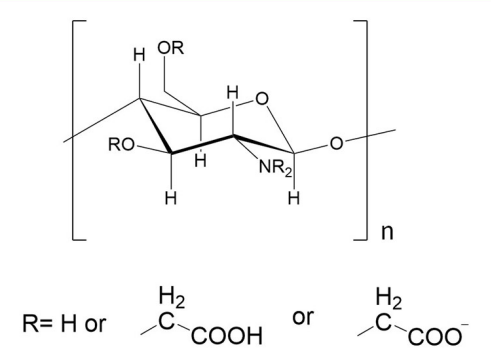
Amphoteric options provide unique versatility for challenging formulations. Utilizing carboxymethyl chitosan cosmetics offers solubility across a much wider pH range. Because it contains both carboxyl (anionic) and amine (cationic) groups, it carries both positive and negative charges depending on the surrounding pH environment. This dual-charge nature resolves many precipitation risks associated with anionic thickeners. It stabilizes complex emulsions effectively and works exceptionally well in gel-cream textures where traditional polymers fail.
Specialized applications require targeted chemical modifications. Assessing chitosan succinamide reveals significantly enhanced moisture-retention capabilities compared to standard grades. It offers improved skin compatibility and a softer sensory feel. Formulators deploy this specific derivative primarily in premium anti-aging serums and intensive overnight masks. It creates a dense, hydrating matrix that plumps the stratum corneum, visibly reducing the appearance of fine lines caused by dehydration.
Combining these marine polymers with Niacinamide (Vitamin B3) yields excellent clinical results. The interaction profile shows high compatibility because Niacinamide is a non-ionic molecule. It lacks strong charge interactions at typical cosmetic use levels of 2% to 5%. You can dissolve both ingredients in the water phase without fear of coacervation. The polymer matrix suspends the vitamin evenly across the skin surface upon application. The clinical outcome is enhanced barrier repair. The combination delivers synergistic anti-inflammatory effects, soothing irritated skin while reinforcing the lipid envelope. This pairing is highly effective in formulations targeting rosacea or post-acne erythema.
Pairing cationic polymers with anionic humectants requires precision, but the payoff is substantial. The interaction profile involves the formation of beneficial polyelectrolyte complexes. The cationic amine groups on the chitosan bind directly with the anionic carboxylate groups on the hyaluronic acid chain. If mixed incorrectly, this causes immediate precipitation. However, when formulated with controlled addition speeds and proper ratios, the outcome is the creation of a highly hydrophilic 3D moisture-binding network. This network sits on the stratum corneum and outperforms either ingredient used in isolation. It traps moisture tightly against the epidermis, preventing evaporation even in low-humidity environments.
| Humectant System | Interaction Mechanism | Formulation Protocol | Clinical Outcome |
|---|---|---|---|
| Hyaluronic Acid (High MW) | Polyelectrolyte complex formation via charge attraction. | Hydrate separately. Add HA phase to Chitosan phase slowly under high shear. | Forms a dense, breathable moisture seal on the skin surface. |
| Glycerin / Propylene Glycol | Hydrogen bonding; acts as a dispersion agent. | Pre-disperse chitosan powder in glycerin before adding water to prevent lumps. | Enhances polymer hydration speed and boosts overall formula humectancy. |
| Sodium PCA | Mild ionic interaction; potential for slight viscosity drop. | Add below 40°C during the cool-down phase. Monitor pH closely. | Mimics the skin's Natural Moisturizing Factor (NMF) for deep hydration. |
Peptides are notoriously unstable in complex formulations, often degrading before they reach their target sites. The interaction profile here is highly protective. The polymer acts as a biocompatible delivery matrix. It encapsulates and stabilizes sensitive peptide chains against enzymatic degradation on the skin surface. The outcome is prolonged contact time. This enhances the bioavailability of anti-aging compounds. It actively stimulates the synthesis of collagen and supports extracellular matrix regeneration. Formulators often use this synergy in targeted eye creams and firming neck treatments.
Barrier repair requires a delicate balance of intercellular lipids and surface film-formers. The interaction profile is highly complementary. The polymer's film-forming properties support lipid-replenishing actives perfectly. It works alongside ceramides, cholesterol, and Centella Asiatica extracts without disrupting the lamellar structures of the emulsion. The outcome is accelerated tissue repair. It creates an optimal microenvironment that shields the skin from external pathogens while the ceramides rebuild the lipid matrix beneath. This combination is ideal for post-procedure recovery creams or treatments for severely sensitized skin.
The most common formulation failure involves rheology modifiers. Native cationic polymers clash violently with strongly anionic thickeners like standard carbomers (e.g., Carbopol 940) or xanthan gum. This creates a high risk of coacervation. The formula will exhibit immediate clumping, phase separation, and a complete loss of viscosity, resulting in a watery, unusable mess. Mitigation requires strategic structural adjustments. You must utilize non-ionic thickeners like hydroxyethylcellulose (HEC) or guar gum. Alternatively, shifting to an amphoteric derivative resolves the charge conflict entirely. If you must use an anionic thickener, you must employ specific order-of-addition protocols, heavily buffering the phases before combining them.
Pre-hydrate the non-ionic thickener (HEC) in the main water phase and heat to 75°C.
In a separate vessel, disperse the chitosan powder in a glycol (like propanediol) to create a slurry.
Add the slurry to a secondary water phase adjusted to pH 4.5 using lactic acid.
Mix the secondary phase until the polymer is completely transparent and fully hydrated.
Combine the two phases under moderate shear, ensuring the temperature remains consistent to prevent thermal shock.
Exfoliating acids present distinct structural challenges. Alpha Hydroxy Acids (AHAs) and Beta Hydroxy Acids (BHAs) often require a very low pH, typically below 3.5, to remain in their free-acid, active state. This highly acidic environment impacts the viscosity of the polymer network. Prolonged exposure to pH levels below 3.0 can cause polymer chain degradation over time. The structural integrity of the film-former weakens, leading to a runny product. Mitigation involves careful buffering strategies. You must select acid-stable derivatives and use sodium citrate or sodium lactate to stabilize the pH drift. Maintaining emulsion stability requires continuous rheological monitoring during the 12-week development phase.
Cleansing formulations introduce massive charge loads into the vat. There are severe incompatibilities with primary anionic surfactants. Ingredients like Sodium Lauryl Sulfate (SLS), Sodium Laureth Sulfate (SLES), or Sodium Cocoyl Isethionate (SCI) react instantly with cationic polymers. This leads to insoluble complexes that precipitate out, leaving cloudy formulas and a sticky residue on the skin. Mitigation requires overhauling the surfactant chassis entirely. You must build cleansing systems using amphoteric or non-ionic surfactants. Decyl Glucoside, Lauryl Glucoside, and Cocamidopropyl Betaine maintain optical clarity. They also preserve the foaming capacity and flash foam characteristics of the final product while allowing the polymer to deposit a conditioning film on the skin.
These polymers serve a dual purpose in cosmetic chemistry. They act as active ingredients and structural components simultaneously. They function as effective thickeners and emulsion stabilizers, reducing the reliance on synthetic waxes. This dual role directly impacts the sensory profile of the product. It improves slip during the initial application phase. It enhances the rub-out phase, preventing the "soaping" effect common in natural emulsions. The after-feel leaves a smooth, non-tacky finish that consumers associate with premium skincare. Proper integration reduces the need for synthetic texturizers like nylon-12 or PMMA.
The antimicrobial mechanism relies entirely on the polymer's physical structure. The degree of deacetylation (DDA) and molecular weight heavily influence efficacy. High DDA variants (above 90%) carry significantly more positive charges along the backbone. These charges attract and disrupt the negatively charged cell membranes of bacteria, fungi, and mold, leading to cellular leakage and death. This inherent property allows formulators to re-evaluate their preservative loads. You can potentially lower traditional preservative concentrations, such as phenoxyethanol or parabens, reducing the overall irritation potential of the formula. However, you must maintain strict challenge test compliance (testing against P. aeruginosa, S. aureus, A. brasiliensis) to ensure consumer safety.
Moisture retention defines effective skincare. These polymers create exceptional, breathable films on the skin surface. Comparing these films against traditional silicones (like dimethicone) reveals distinct physiological advantages. Synthetic polymers often occlude the skin entirely, which can trap sebum and exacerbate acne in prone individuals. Marine biopolymer films reduce Transepidermal Water Loss (TEWL) without suffocating the epidermis. This holds immense clinical relevance for compromised skin barriers, such as those suffering from eczema or undergoing harsh retinoid therapies. It offers a protective layer that retains moisture while allowing the skin to respire naturally and maintain its normal enzymatic functions.
Scaling up production from a 1-kilo lab batch to a 1000-kilo manufacturing run introduces raw material variables. Sourcing requires strict quality control protocols. The critical importance of standardizing Molecular Weight (MW) cannot be overstated. Formulators must also standardize the Degree of Deacetylation (DDA) with their suppliers. Fluctuations in these parameters cause unpredictable viscosity in large-scale manufacturing. If the DDA varies by even 5% between batches, the solubility profile will shift, potentially ruining an entire production run. Establish rigid specifications on your Certificate of Analysis (CoA) regarding ash content, heavy metals, and viscosity before initiating pilot runs.
Origin impacts market positioning, regulatory compliance, and safety claims. Traditional cosmetic grade variants derive from crustacean exoskeletons, primarily shrimp and crab shells. This origin raises valid allergen considerations for consumers with severe shellfish allergies. It has direct implications for hypoallergenic product claims and labeling requirements in certain jurisdictions. Brands targeting clean-beauty standards or vegan demographics must evaluate alternatives. Vegan or fungal-derived options (sourced from Aspergillus niger or specific mushroom strains) are now commercially viable. These alternatives ensure high safety profiles. They completely mitigate shellfish allergen risks while maintaining identical chemical functionality and charge density.
Advanced derivatives carry higher initial raw material costs per kilo compared to standard commodity thickeners. Analyzing the cost of specialized variants versus native polymers is essential for the procurement team. However, formulators must look at the total formula cost rather than the individual line item. These advanced materials offer multifunctional properties. They can replace separate thickeners, synthetic film-formers, and antimicrobial boosters simultaneously. This consolidation often results in overall formulation savings and a shorter Bill of Materials (BOM). The cost-to-performance ratio frequently favors the advanced derivative in premium skincare lines where sensory feel and clinical efficacy justify the initial expenditure.
Audit your current formulation chassis to identify any strong anionic polymers or incompatible surfactants before introducing cationic marine biopolymers into the system.
Request technical data sheets (TDS) and physical samples of specific derivatives to run bench-top solubility, pH tolerance, and clarity tests.
Replace incompatible anionic thickeners with non-ionic alternatives like hydroxyethylcellulose (HEC) to prevent coacervation and phase separation.
Initiate a 12-week accelerated stability testing protocol at 45°C to monitor viscosity shifts, pH drift, and potential polymer degradation.
Conduct Preservative Efficacy Testing (PET) early in the development cycle to determine if you can safely lower your traditional antimicrobial load.
A: Yes. It remains stable in the highly acidic environments required for L-Ascorbic Acid. The polymer's film-forming properties actually help stabilize the vitamin against rapid oxidation on the skin. You must monitor the formulation's viscosity over time, as prolonged exposure to very low pH can cause slight polymer chain degradation.
A: The hydroxypropyl derivative is non-ionic and highly water-soluble at a neutral pH. It completely bypasses the strict acidic pH requirements of native variants. This makes it significantly easier to formulate with diverse emulsifiers, sensitive active ingredients, and standard thickeners without risking precipitation or phase separation.
A: No direct negative chemical interaction exists between these ingredients. Formulators frequently use these polymers to encapsulate or form a protective matrix around unstable retinol molecules. This technique potentially reduces the retinoid irritation profile and improves controlled release on the skin over several hours.
A: Avoid traditional anionic carbomers entirely. Instead, use non-ionic thickeners such as Hydroxyethylcellulose (HEC), Guar Gum, or specific non-ionic synthetic polymers. This strategy prevents coacervation, irreversible phase separation, and the formation of insoluble clumps in your formulation vat.
A: This specialized derivative is known for its superior moisture-binding capacity and excellent biocompatibility. Formulators primarily use it in premium anti-aging formulations to enhance moisture retention, plump the stratum corneum, and stabilize complex active ingredients without leaving a tacky residue.
A: No. While it significantly boosts antimicrobial efficacy and disrupts microbial cell membranes, it should not replace a preservative system entirely. It allows for lower preservative loads, but broad-spectrum preservatives are still required to pass standard microbiological challenge tests and ensure consumer safety.


