

close
Choose Your Site
Global
Social Media
Views: 0 Author: Site Editor Publish Time: 2026-07-29 Origin: Site


Advanced dermatological active ingredients present chemical stability challenges, particularly when utilizing encapsulated delivery systems. While complexation resolves baseline solubility issues, improper storage of these raw materials leads to premature degradation. This structural breakdown compromises formulation efficacy and results in financial loss for manufacturers handling sensitive batches. Implementing strict, evidence-based storage protocols is a fundamental necessity. Proper environmental controls maintain the structural integrity and bioavailability of the Azelaic Acid Series from initial procurement through to the final consumer product. Understanding the precise thermal, hygroscopic, and photolytic vulnerabilities of these complexes ensures the active compound remains potent and stable throughout its intended shelf life. We need to look at exactly how temperature, humidity, and packaging dictate the survival of this raw material on the warehouse floor.
Temperature Control is Non-Negotiable: Optimal stability is maintained in a strictly controlled environment between 15°C to 25°C (59°F to 77°F), with defined excursion limits.
Moisture and Light Vulnerability: The inclusion complex requires hermetic sealing and opaque storage to prevent hygroscopic degradation and UV-induced breakdown.
Formulation Dependency: Post-formulation storage must account for pH balance (ideally close to 5) to maintain the benefits of water soluble azelaic acid.
Compliance and Safety: Strict adherence to Safety Data Sheet (SDS) protocols—including chemical incompatibility and food-grade container bans—is required to prevent cross-contamination and ensure industrial handling compliance.
An azelaic acid inclusion complex typically utilizes cyclodextrins to encapsulate the active molecule. This supramolecular architecture alters the physical properties of the baseline acid. It shields the hydrophobic portions of the molecule within a hydrophilic shell. This host-guest molecular mechanism creates water soluble azelaic acid, allowing for seamless integration into aqueous formulations. You avoid the gritty texture associated with standard powders during the compounding phase.
Because the active ingredient sits within a delicate molecular cavity, this specific structure dictates unique storage requirements. Unlike standard crystalline powder, the inclusion complex relies on weak intermolecular forces to remain intact. Van der Waals forces and hydrogen bonding hold the structure together. Excessive energy input or environmental interference disrupts these bonds. This leads to the release of the guest molecule before it reaches the formulation stage. On the production floor, this translates to poor solubility and clogged inline filters when transferring the aqueous phase into the main mixing vessel.
When the complex faces suboptimal conditions, detrimental chemical reactions occur. High heat or excessive moisture causes the uncoupling of the inclusion complex. The active acid separates from the cyclodextrin host. Moisture absorption triggers recrystallization. The freed acid reverts to its insoluble crystalline state. This causes formulation graininess and phase separation in the final emulsion. Operators often notice this as a white, chalky residue at the bottom of the mixing tank.
The primary success criteria for proper storage involve maintaining the bioavailability of high concentration azelaic acid without any phase separation or loss of active titer over a standard 12 to 24-month shelf life. Achieving this requires strict environmental isolation. You must prevent premature hydrolysis and ensure the active remains fully encapsulated until topical application.
Maintain active titer within 98-102% of the original specification sheet.
Prevent any visible powder caking or loss of flowability in the bulk drum.
Ensure complete dissolution in water at room temperature within 15 minutes of agitation.
Verify the absence of free, uncomplexed acid crystals via microscopic examination.
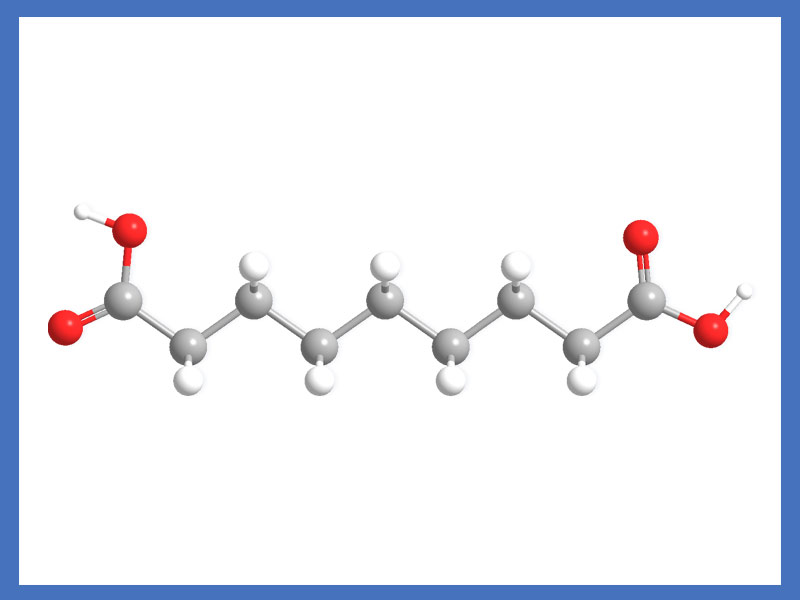
Standard stability testing dictates a definitive temperature range of 15°C to 25°C (59°F to 77°F) for optimal preservation. Maintaining this baseline prevents the thermodynamic disruption of the host-guest complex. Extreme cold presents a risk of precipitation in liquid solutions. The solubility threshold drops, forcing the complex out of solution. Excessive heat accelerates the degradation of the encapsulation matrix, leading to rapid uncoupling.
During shipping, handling, or clinical transit, temporary excursion limits are acceptable between 15°C to 30°C (59°F to 86°F). Prolonged exposure to temperatures exceeding 30°C triggers a quality control rejection. Facilities must monitor transit logs closely. Any deviation beyond these thermal tolerances compromises the active titer. It necessitates immediate quarantine and re-testing of the batch.
| Temperature Range | Physical State Impact | Required Action |
|---|---|---|
| Below 15°C (59°F) | Risk of precipitation in liquid phases; powder remains stable but requires acclimation. | Allow material to reach room temperature before compounding. |
| 15°C to 25°C (59°F to 77°F) | Optimal stability; host-guest complex remains fully intact. | Standard processing and storage. |
| 25°C to 30°C (77°F to 86°F) | Acceptable for short-term transit (under 48 hours). | Monitor exposure time; move to climate control upon receipt. |
| Above 30°C (86°F) | High risk of matrix degradation and uncoupling. | Quarantine batch; mandate HPLC re-testing before use. |
In its raw powder form, the inclusion complex is highly hygroscopic. It acts as a thermodynamic sink for ambient moisture. It readily pulls water vapor from the air. This moisture ingress leads to rapid clumping and caking. It causes premature hydrolysis of the cyclodextrin cavity, destroying the complex's solubility profile. When operators attempt to scoop caked powder, it throws off weight measurements and leads to inconsistent batch dosing.
Storage facilities must maintain strict relative humidity (RH) thresholds. The environment must remain under 60% RH to prevent structural degradation. Climate-controlled warehousing equipped with industrial dehumidification systems preserves the flowability and chemical integrity of the raw powder prior to formulation. Desiccant packs inside the secondary packaging offer an additional layer of localized moisture control.
Ultraviolet (UV) and visible light exert stress on the molecular stability of the active ingredient. Prolonged exposure initiates photolytic breakdown pathways. This leads to oxidation and the generation of free radicals that degrade the complex. This photostability risk requires immediate mitigation at the packaging level. Warehouse skylights or intense fluorescent lighting can degrade exposed powder within hours.
Primary packaging must block harmful light wavelengths entirely. Structural requirements dictate the use of amber glass, opaque high-density polyethylene (HDPE), or foil-lined fiber drums for bulk storage. Transparent containers offer zero photolytic protection. They result in rapid degradation of the active compound. Always keep the drum lids secured when not actively weighing materials.
Selecting the correct storage container materials is critical for raw cosmetic grade azelaic acid. Borosilicate glass provides excellent chemical inertness for smaller batches. Fluorinated HDPE is the industry standard for larger industrial quantities due to its barrier properties against moisture and oxygen permeation. Standard low-density plastics allow too much vapor transmission over a 12-month period.
To exclude atmospheric oxygen and moisture, bulk drums require specific handling techniques. Desiccant inclusion within the outer packaging absorbs residual humidity. Nitrogen purging displaces oxygen before sealing the drum. Double-bagging techniques utilizing heavy-duty polyethylene liners provide a secondary barrier against environmental contamination during long-term storage. Operators must twist and securely zip-tie the inner liners after every use.
The storage environment directly interacts with the finished formulation's pH. Maintaining a formulation pH close to 5 optimizes skin delivery and maintains biological activity. This specific acidic environment prevents the active from degrading while in storage. It ensures the inclusion complex remains stable within the aqueous base. Formulators typically use a citric acid and sodium citrate buffer system to lock in this pH range.
The higher solubility of the complexed active compensates for the naturally lower skin permeability of the baseline acid. Incorrect storage temperatures disrupt this delicate pH-solubility balance, causing pH drift. If the formulation becomes too alkaline, the acid neutralizes. If it becomes too acidic, the cyclodextrin shell degrades, leading to precipitation. Routine pH checks on retained samples help track this stability over time.
Consumer-facing packaging solutions must mitigate air exposure and oxidation risks. Airless pumps are vastly superior to dropper bottles or jars. They prevent oxygen ingress and eliminate physical contact with the product. This maintains the efficacy of the active ingredients. Dropper bottles expose the entire formula to air every time the user opens the cap.
The consumer bathroom storage dilemma presents a major challenge. Exposure to high humidity, steam from showers, and daily temperature fluctuations rapidly accelerate the degradation of finished products. Jar packaging introduces severe risks of microbial contamination and chemical oxidation due to repeated physical contact and daily atmospheric exposure. Hygienic airless dispensing remains the only viable solution for high-end formulations.
Global shipping introduces severe risks, primarily extreme temperature spikes in cargo holds and shipping containers. A container sitting on a tarmac easily exceeds 50°C (122°F). This instantly destroys the inclusion complex. The powder will fuse into a solid block, rendering it useless for aqueous compounding.
Evaluating the logistics approach is necessary. Cold-chain logistics offer perfect temperature control but are often cost-prohibitive for standard cosmetic ingredients. Standard climate-controlled freight, maintained between 15°C and 25°C, provides the optimal balance of financial viability and environmental protection. It ensures the raw material arrives without thermal degradation. Always request temperature data loggers in the shipments to verify transit conditions.
Standard Safety Data Sheet (SDS) guidelines dictate strict handling protocols for the raw complex. Personnel must utilize appropriate personal protective equipment (PPE). N95 respirators prevent inhalation of the fine powder. Nitrile gloves avoid direct dermal contact during the manufacturing phase. Localized exhaust ventilation at the weighing station captures airborne particulates.
Critical chemical incompatibilities require attention. Store the raw material away from strong oxidizing agents, bases, and alkaline materials. This prevents violent neutralization reactions or rapid degradation. Facility compliance mandates the strict prohibition of storing industrial chemicals in containers normally used for food or beverage storage. This prevents accidental ingestion and cross-contamination on the warehouse floor.
Verifying the purity, active titer, and structural integrity of the complex after prolonged storage or transit requires standard analytical methods. High-Performance Liquid Chromatography (HPLC) is the definitive method. It confirms that the active acid remains fully encapsulated and has not degraded into secondary byproducts. UV-Vis spectroscopy can serve as a secondary, faster check for gross degradation.
Facilities must establish rigorous re-test dates. Manage inventory rotation via the First-In, First-Out (FIFO) methodology. Executing routine stability testing protocols ensures that only fully potent, compliant raw materials enter the formulation phase. This protects the final product's market viability and prevents costly batch rejections during final QA release.
Audit your current warehousing climate controls to ensure temperatures remain strictly between 15°C and 25°C with humidity below 60%.
Upgrade supplier transit protocols to guarantee climate-controlled freight, avoiding standard cargo holds prone to temperature spikes.
Transition consumer-facing product lines from jar packaging to opaque airless pumps to eliminate oxidation and microbial contamination risks.
Implement routine HPLC stability testing for all bulk raw materials approaching their 12-month storage mark prior to formulation.
A: The ideal storage temperature is strictly between 15°C to 25°C (59°F to 77°F). Maintaining this climate-controlled baseline prevents the thermal degradation and uncoupling of the host-guest molecular architecture.
A: During transit, temporary excursions between 15°C to 30°C (59°F to 86°F) are acceptable for short durations. Prolonged exposure above 30°C risks permanent degradation and requires immediate QA re-testing upon arrival.
A: The raw powder is highly hygroscopic. Exposure to ambient moisture above 60% relative humidity causes rapid clumping, caking, and premature hydrolysis. This destroys the complex's solubility profile and ruins powder flowability.
A: Maintaining a formulation pH close to 5 optimizes skin delivery and preserves biological activity. Significant pH drift during storage can neutralize the active ingredient or degrade the cyclodextrin encapsulation shell, causing precipitation.
A: Bathrooms experience high humidity, steam, and daily temperature fluctuations. This environment accelerates chemical degradation and oxidation, particularly if the product is housed in jars rather than protective airless pumps.
A: Bulk materials must be isolated from strong oxidizing agents and alkaline bases to prevent neutralization. SDS protocols strictly prohibit storing these chemicals in any containers previously or normally used for food storage.


