

close
Choose Your Site
Global
Social Media
Views: 0 Author: Site Editor Publish Time: 2026-11-19 Origin: Site


Salicylic acid is the gold standard beta-hydroxy acid renowned for its acne-fighting, exfoliating, and anti-inflammatory properties. However, for cosmetic formulators and skincare manufacturers, it remains notoriously difficult to handle on the lab bench. This active ingredient is highly lipophilic. It loves oil and aggressively repels water. When chemists attempt to create stable, water-based products like toners, clear serums, and lightweight gels, they frequently encounter a frustrating phenomenon known as recrystallization.
When the acid crashes out of a solution, it forms visible, needle-like structures. This physical separation ruins the product aesthetic and severely compromises clinical efficacy. Worse, it poses a severe risk of skin irritation. Formulating a beautiful, clear serum in the lab is only half the battle. Ensuring that the serum remains crystal clear after six months of warehouse storage is the true engineering challenge.
This comprehensive guide explores the chemical triggers behind this precipitation. We will examine the severe limitations of traditional solvent systems and detail how modern supramolecular innovations are revolutionizing beta-hydroxy acid formulations.
From an industry perspective, the modern skincare market is undergoing a massive textural shift. Consumers demand minimalist, water-light textures. They actively reject the sticky, heavy, solvent-laden acne formulas of the past. Today's educated buyers want potent exfoliation without the compromised skin barrier associated with high denatured alcohol content.
Furthermore, regulatory bodies and dermatologists are increasingly advocating for barrier-repairing formulations. This creates a direct conflict for traditional chemists. You need high active concentrations to clear acne, but you cannot use the harsh solvents traditionally required to dissolve those actives. This consumer-driven trend makes mastering aqueous, alcohol-free formulations an absolute necessity for competitive skincare brands.
Inherent Insolubility: Pure raw salicylic powder is notoriously insoluble in water. It naturally maxes out at merely 0.2 percent at standard room temperature.
Common Triggers: Environmental and chemical factors act as the leading culprits behind crystallization. Temperature drops during winter shipping, pH fluctuations, and the evaporation of volatile solvents routinely destroy formula stability.
Commercial Compromise: Recrystallization is a critical batch failure. It renders the skincare product ineffective and can cause physical micro-tears to the user epidermal barrier.
Modern Solutions: Older methods rely heavily on sticky glycols. In contrast, modern formulations utilize advanced encapsulation technologies to ensure flawless stability and superior skin feel.
The Ultimate Fix: Upgrading to a supramolecular inclusion complex bypasses the thermodynamic crystallization issue entirely. This allows for cold-processable, highly concentrated aqueous products.
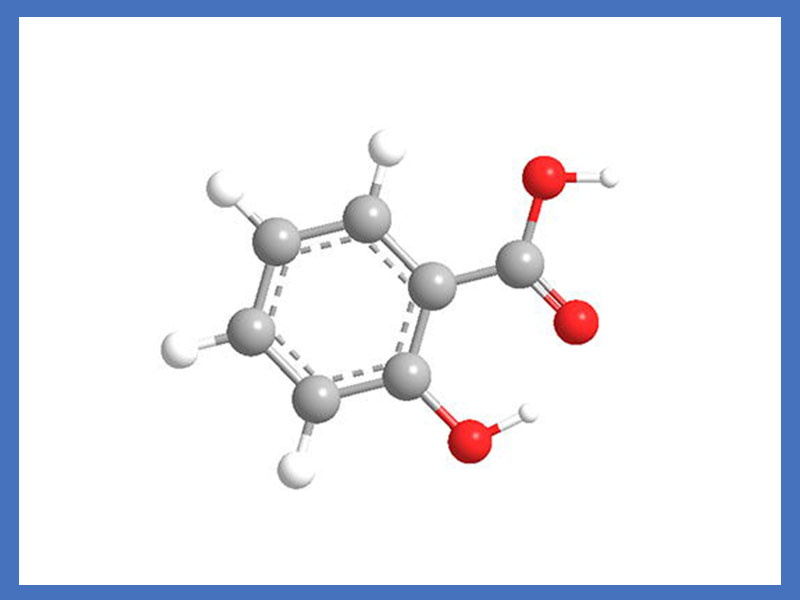
To understand why recrystallization happens so frequently, we must first examine the molecular architecture. The molecule consists of an aromatic benzene ring attached to a carboxylic acid group and a hydroxyl group. While the carboxylic and hydroxyl groups are polar, the dominant feature of the entire structure is the large, non-polar benzene ring.
This specific geometry dictates its hydrophobic and lipophilic nature. Imagine trying to mix pure olive oil into distilled water. The beta-hydroxy molecule behaves in the exact same manner. Water molecules are highly polar and prefer to bond with other polar molecules via hydrogen bonding. The non-polar benzene ring disrupts this delicate hydrogen-bonded network. Consequently, the water phase aggressively repels the acid.
Because of this chemical reality, pure powder has a natural solubility limit of roughly 0.2 grams per 100 milliliters of water at 20 degrees Celsius. Clinical skincare products typically require concentrations of 1 to 2 percent for effective acne treatment. Water alone is entirely insufficient. Formulators must introduce aggressive solvents or surfactants to force the active into a clear solution. When these delicate solvent networks fail, the active immediately reverts to its natural solid state.
Even when a formulation initially looks perfectly clear in the mixing vessel, several environmental factors can cause the active to precipitate over time. Understanding these triggers is essential for rigorous stability testing.
Temperature Fluctuations
Solubility heavily depends on temperature. Heating a solvent increases its kinetic energy, allowing it to dissolve more solute. Conversely, cold environments drastically reduce this kinetic energy. Think about winter freight shipping or consumers storing serums in skincare fridges. As the temperature drops, the solubility threshold of the formula plummets. The liquid can no longer hold the solute, forcing the excess acid to form solid crystals.
Evaporation of Volatile Solvents
Many traditional acne toners rely on volatile solvents like ethanol or propanol to keep the liquid clear. Over time, these alcohols gradually evaporate through packaging micro-leaks. As the solvent concentration decreases, the remaining liquid volume fails to support the active. This leads to immediate crusting around the dispensing pump or a thick layer of white precipitation at the bottom of the bottle.
pH Shifts
The active has a pKa of approximately 2.97. The pH of your formulation dictates the ratio of free acid to the salt form. The free acid exfoliates beautifully but remains highly insoluble. The salt form dissolves easily but offers poor exfoliation. If a formulation lacks proper buffering, interactions with packaging materials can cause the pH to drift. A sudden drop in pH pushes the equilibrium back toward the highly insoluble free acid, triggering rapid crystallization.
Recrystallization is not merely a cosmetic defect. It is a critical formulation failure that poses significant risks to both the consumer skin barrier and your brand reputation.
Loss of Clinical Efficacy
To function properly, the active must remain in a dissolved, molecular state. This allows it to penetrate the lipid layers of the stratum corneum and clear out sebaceous glands. When it forms solid crystals, the molecules lock into a rigid lattice. They can no longer interact with the skin, rendering the acne treatment completely useless.
Physical Skin Damage and Chemical Burns
Under a microscope, these crystals look like sharp needles. When a consumer applies a crystallized serum to their face, they are essentially rubbing microscopic glass shards into their skin. This causes severe micro-abrasions. Specifically, these crystals represent highly concentrated pockets of pure acid. If a large crystal adheres to the skin and slowly dissolves in natural sweat, it delivers an intensely concentrated dose to a localized area. This results in severe erythema, chemical burns, and peeling.
Historically, cosmetic chemists relied on specific workarounds to force stability in water-heavy formulas. While these traditional methods technically prevent precipitation, they severely compromise the sensory experience.
| Formulation Method | Skin Feel & Aesthetics | Stability Risk | Commercial Viability |
|---|---|---|---|
| High Glycol Systems Propylene Glycol, Butylene Glycol | Sticky, tacky, heavy finish. Leaves a shiny film on oily skin. | Moderate. Can crash if temperature drops below freezing. | Low. Modern consumers actively reject sticky textures. |
| High Alcohol Systems Ethanol, Denatured Alcohol | Lightweight, fast-drying. Highly stripping to the skin barrier. | High. Evaporation leads to immediate pump crusting. | Low. Dermatologists advise against high-alcohol acne care. |
| Alkaline Neutralization Sodium Hydroxide Adjustments | Water-light. | Low risk of crystals, but high risk of pH drift. | Poor. Raising pH above 4.5 destroys the exfoliating efficacy. |
| Supramolecular Inclusion Cyclodextrin Encapsulation | Weightless, non-tacky, absorbs instantly like pure water. | Zero. Thermodynamically stable across extreme temperatures. | Excellent. Meets clean beauty and barrier-repair trends. |
For brands looking to create elegant, non-sticky, and alcohol-free toners, the cosmetic industry has decisively shifted toward specialized raw materials. Modern chemical engineering provides a sophisticated solution that moves entirely away from harsh solvents.
The rise of water soluble salicylic acid has fundamentally changed research and development workflows. Through precise supramolecular engineering, manufacturers now offer modified powders that dissolve seamlessly into room-temperature water. Unlike the pure raw material, which requires extensive heating phases and rigorous high-shear mixing, these advanced variants integrate into the water phase with minimal kinetic energy.
Beyond the obvious cosmetic benefits of a clear serum, switching to these advanced materials offers massive advantages for manufacturing scale-up. Traditional processing requires prolonged heating and cooling cycles. This consumes massive amounts of energy and occupies manufacturing vessels for extended periods. By utilizing modernized forms, plant managers can significantly reduce processing time and drastically decrease the rate of costly quality assurance rejections.
While various solubilizers exist, the most scientifically robust method to prevent recrystallization is altering how the active interacts with water on a molecular level. This is achieved through supramolecular chemistry.
An inclusion complex is a highly engineered structure where a host molecule physically encapsulates a guest molecule. In skincare formulations, the most effective host is a cyclodextrin. Cyclodextrins are ring-shaped sugar molecules derived from the enzymatic degradation of starch. The structural geometry resembles a hollow cylinder. The interior cavity is highly hydrophobic, creating an ideal micro-environment for the lipophilic active to reside securely. In contrast, the exterior of the ring is covered in hydroxyl groups, making it highly hydrophilic.
When engineers introduce a cyclodextrin salicylic acid complex into a water-based formulation, the hydrophilic exterior interacts effortlessly with the surrounding water. The entire structure dissolves instantly. Because the active remains shielded inside the hydrophobic cavity, it never comes into direct contact with the aqueous environment. This completely neutralizes the thermodynamic triggers that cause precipitation. Temperature drops, solvent evaporation, and pH fluctuations simply no longer matter.
The clinical beauty boom has shifted consumer demand toward stronger treatments. Users actively seek 2 percent daily exfoliants and 4 percent spot treatments. Achieving these benchmarks in a purely water-based system is nearly impossible when relying on pure raw acid.
Attempting to surpass the 2 percent barrier typically necessitates solvent concentrations that damage skin health. However, by leveraging supramolecular technologies, formulators can easily create high concentration salicylic acid products in purely aqueous bases. The solubility of the complexed active is exponentially higher. Achieving a stable 4 percent active load becomes a straightforward, cold-processable task.
To ensure flawless stability, engineers must select the correct specification based on the final product goals:
For Daily Toners and Mists: If the target active concentration is between 0.5 and 1 percent, a 10 percent active-load complex is ideal. It dissolves instantly in cold water and provides excellent slow-release benefits for sensitive skin.
For Clinical Serums: When targeting the standard 2 percent benchmark, formulators should select a 40 percent water-soluble variant. This allows for a lower total raw material input while guaranteeing absolute clarity without glycols.
For Professional Peels and Spot Treatments: When pushing the boundaries to 4 or 5 percent active loads, utilizing a 50 percent salicylic acid inclusion complex is mandatory. This high-payload material prevents the formula from becoming overly dense while maintaining perfect thermodynamic stability.
By eliminating heavy glycols and skin-stripping alcohols, formulators can focus entirely on aesthetic elegance. The final product glides onto the skin, absorbs rapidly without a tacky finish, and delivers clinical-level exfoliation without the dreaded risk of bottle recrystallization.
The most reliable method to dissolve the active in water without using denatured alcohol is to utilize a supramolecular inclusion complex. By encapsulating the lipophilic molecule inside a water-friendly cyclodextrin ring, the powder dissolves effortlessly into room-temperature water. This eliminates the need for harsh solvents or sticky glycols.
Pure, uncomplexed raw powder has an extremely low maximum solubility of approximately 0.2 percent in water at standard room temperature. To achieve the 2 percent concentration required for effective acne treatments, formulators must use advanced water-soluble variants or rely on heavy solvent systems to force the active into solution.
Gently heating the product while applying continuous mechanical stirring can temporarily redissolve the visible crystals. However, this is almost always a temporary fix. If the initial precipitation was caused by irreversible factors like solvent evaporation, the crystals will inevitably return once the product cools down. For commercial manufacturing, it is much safer to reformulate the product using an inclusion complex.
Yes. The raw active possesses a very strict temperature-dependent solubility curve. Storing water-based products in a cold environment drastically reduces the kinetic energy of the solution. This lowers the solvent capacity to hold the active in its dissolved state, frequently leading to rapid and severe precipitation.
No, it is absolutely not safe. When the active precipitates, it forms microscopically sharp, needle-like structures. Applying these solid crystals to the face causes physical micro-tears and severe abrasion to the epidermal barrier. Furthermore, it can cause localized chemical burns and long-lasting post-inflammatory hyperpigmentation.
Pure powder is a raw, naturally lipophilic material that inherently repels water. It is extremely difficult to stabilize in aqueous environments. In contrast, a cyclodextrin complex is a sophisticated supramolecular structure. It encapsulates the pure active inside the hydrophobic cavity of a water-friendly starch ring, allowing it to dissolve instantly in water.
If you rely on the raw powder, formulating a stable 5 percent water-based serum is incredibly difficult and requires cosmetically unacceptable amounts of drying alcohols. However, by modernizing your formula and utilizing high-concentration inclusion complexes, achieving a perfectly stable, crystal-clear 5 percent aqueous solution is entirely possible and highly efficient.
Formulating water-based beta-hydroxy products does not have to be a constant battle against thermodynamic instability. While traditional triggers like temperature drops, solvent evaporation, and pH shifts will always cause the raw active to precipitate, the modern cosmetic engineer has vastly superior tools at their disposal. By upgrading raw materials and leveraging advanced encapsulation technologies, you can completely bypass the risks of crystallization. For manufacturers looking to elevate their product lines with flawless stability and exceptional skin feel, explore the advanced, cold-processable solutions available at New Source Chem to guarantee your next formulation is a commercial success.


