

close
Choose Your Site
Global
Social Media
Views: 0 Author: Site Editor Publish Time: 2026-11-19 Origin: Site


Ask any veteran bench chemist about formulating skincare, and they will share a well-known industry secret. Azelaic acid is widely celebrated as a miracle ingredient for managing acne, rosacea, and stubborn hyperpigmentation. Yet, it remains notoriously difficult to formulate. Chemists frequently struggle to translate the profound clinical benefits of this dicarboxylic acid into an elegant, consumer-friendly product. The goal is a formula that actually feels good on the skin.
The root of this formulation headache lies in the raw material's inherent physical and chemical properties. Unprocessed powder boasts exceptionally poor solubility alongside a high melting point. If left untreated, incorporating it into a heated base inevitably results in a gritty texture. Severe crystallization occurs over time. Ultimately, this leads to a wildly uneven distribution of the active compound throughout the emulsion.
Fortunately, modern cosmetic chemistry has evolved to meet these thermodynamic challenges head-on. Advanced manufacturing interventions now ensure that these formulas remain smooth, stable, and highly effective from the first pump to the last. This comprehensive guide explores the exact processing techniques required to maintain flawless uniformity. We will cover physical micronization, advanced molecular encapsulation, and targeted solubilization. Furthermore, this serves as a practical resource to help formulators and brand owners select the optimal ingredients to elevate their product lines.
Particle Size Matters: Micronization is the foundational physical processing step required to prevent the abrasive, sandy texture often associated with heavy active loads.
Encapsulation is Game-Changing: Wrapping the active ingredient in a molecular shell drastically improves long-term stability, enhances uniformity, and provides a gentle slow-release mechanism.
Solubility Solves Formulation Woes: Advanced chemical processing yields water-soluble variants. This breakthrough makes it possible to engineer clear, lightweight serums without the risk of crystallization.
Temperature and pH Control: Strict environmental parameters during the active mixing phase are absolutely non-negotiable for locking the ingredient evenly into the emulsion.
Better Processing Equals Better Layering: A highly uniform product layers seamlessly alongside other active ingredients like peptides and retinoids. It prevents pilling and avoids triggering unnecessary erythema.
Recent market analysis reveals a massive shift in consumer expectations regarding active skincare. The era of accepting chalky, medicinal pastes in exchange for clinical results is over. Today's educated skincare users demand "skinimalism"—streamlined routines featuring multi-tasking, potent treatments that feel like luxury cosmetics. Consequently, manufacturers face immense pressure to formulate elegant products featuring high concentration azelaic acid ranging from 10 to 20 percent.
Industry data shows a sharp increase in formulators seeking advanced stabilization techniques. Standard suspensions are no longer commercially viable for premium brands. The trend is rapidly moving toward chemically modified liquid formats and molecularly encapsulated powders. These advanced raw materials allow brands to claim high active percentages while delivering the lightweight, fast-absorbing textures that drive repeat purchases.
Pushing for therapeutic percentages fundamentally alters the rheology of a product. The primary obstacle in working with this ingredient is its stubborn chemical structure. Raw azelaic acid is a saturated dicarboxylic acid that is practically insoluble in water at room temperature. It dissolves at a dismal rate of only about 0.24 percent at 20 degrees Celsius. In addition, it exhibits remarkably poor solubility in standard cosmetic lipids, oils, and common solvents.
Because it naturally resists dissolving into either the water or oil phase of a standard emulsion, it desperately wants to remain in its solid, crystalline state. If a chemist attempts to incorporate unprocessed powder directly into a heated base, thermodynamic instability inevitably follows. Over time, a phenomenon known as Ostwald ripening occurs on the stability testing shelf. The microscopic particles dissolve slightly and redeposit onto larger particles. This causes macroscopic crystals to grow.
For the end-user, this means a cream that initially looked fine suddenly feels like fine sand being rubbed aggressively across a compromised skin barrier. Lack of uniformity is far more than a mere textural flaw. It is a critical efficacy failure. If the active compound clumps together rather than dispersing homogeneously, the consumer receives a highly erratic application. One morning, a pump of the serum might contain almost zero active acid. The next morning, it may deliver a massive, concentrated clump. This localized "hot spot" triggers severe irritation, barrier damage, and redness.
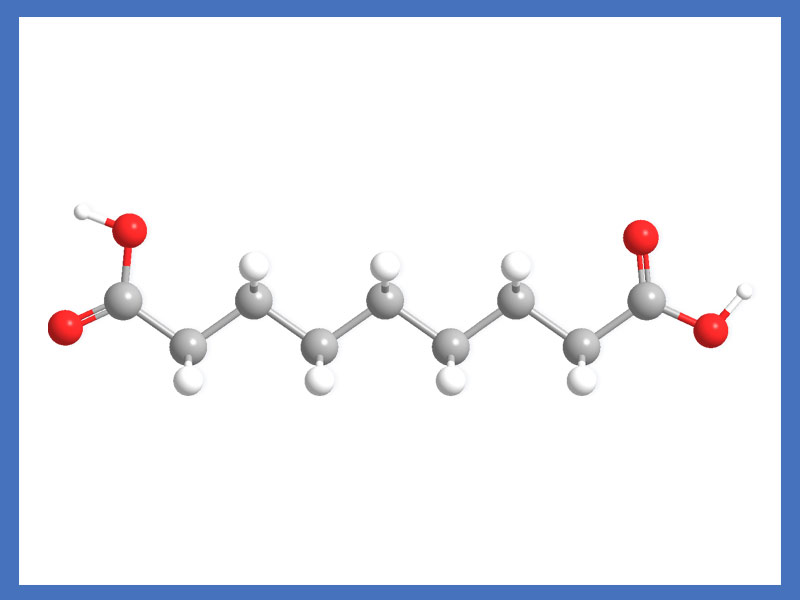
To tame this notoriously uncooperative ingredient, raw material manufacturers must employ rigorous physical manipulation before the powder ever reaches the formulation lab. The most critical physical intervention is milling. This transforms the raw bulk into a viable cosmetic grade azelaic acid.
Micronization is an advanced, high-energy milling process. Standard grinding leaves jagged, inconsistently sized shards. In contrast, modern processing utilizes jet milling technology. High-pressure compressed air forces the raw particles to collide at supersonic speeds. This continuously fractures the crystals until they reach a precise, uniform micrometer size, typically a D90 of less than 10 microns. This strictly controlled particle size distribution is the absolute foundation of a smooth cosmetic formula.
According to Stokes' Law, the settling velocity of a particle in a fluid is directly proportional to the square of its radius. By drastically reducing the particle size, the settling rate is exponentially decreased. Instead of immediately sinking to the bottom of the compounding vat or separating inside the final packaging, these ultra-fine micro-particles remain homogeneously suspended throughout the product's entire shelf life.
Beyond tactile elegance, physical reduction plays a vital role in bioavailability. Smaller, uniform particles possess a vastly increased collective surface area compared to larger crystals. When massaged into the face, this expanded surface area facilitates a more efficient, even interaction with the stratum corneum. The active compound absorbs without the abrasive friction caused by larger structures.
Physical milling solves suspension issues in thick, heavy creams. However, it does not alter the fundamental solubility of the molecule itself. For premium formulations requiring flawless uniformity and a zero-irritation profile, cosmetic chemists transition from physical crushing to highly sophisticated molecular processing.
The most effective molecular technique involves host-guest chemistry utilizing cyclodextrins. These are unique, cyclic oligosaccharides that form a cone-shaped structure. They feature a hydrophilic exterior and a hydrophobic interior cavity. During processing, the active molecule is carefully inserted into this cavity. This creates a highly stable, encapsulated azelaic acid inclusion complex.
This molecular shell provides profound stability benefits. Because the active molecule is physically wrapped inside the cyclodextrin cone, individual acid molecules are completely blocked from interacting with one another. This steric hindrance definitively halts the process of crystallization. By utilizing this complex, formulators guarantee long-term, flawless uniformity. The texture stays silky and consistent.
In addition to structural stability, the inclusion complex dramatically improves the consumer experience through modified delivery kinetics. When applied, the cyclodextrin shell does not dump the active acid onto the skin all at once. Instead, it provides a uniform, sustained release as the complex slowly interacts with skin enzymes and ambient moisture. This controlled mechanism prevents sudden spikes in pH, making it an ideal choice for highly sensitive or rosacea-prone skin.
Brands often look to formulate clear liquid exfoliants, essence toners, and lightweight gel matrices. For these applications, neither micronized powder nor inclusion complexes are sufficient if absolute aqueous clarity is the primary goal. This demands chemical processing to fundamentally rewrite the solubility profile of the ingredient.
To engineer a truly aqueous-friendly ingredient, chemical manufacturers utilize targeted processing techniques. This involves specific salt formations or utilizing proprietary co-solvents and specialized solubilizers during the raw material manufacturing phase. These rigorous steps force the hydrophobic carbon chain of the acid to become miscible. The result is a true water soluble azelaic acid that completely bypasses traditional thermodynamic hurdles.
The development of water-soluble variants has revolutionized modern formulation. Historically, the acid required heavy lipid phases or high concentrations of silicones to remain suspended. Resulting products were inherently thick, paste-like, and occlusive. This advanced processing step liberates formulators from heavy bases. It allows for the creation of crystal-clear aqueous serums that absorb instantly without leaving a greasy or tacky residue.
One of the greatest logistical risks in skincare is extreme temperature fluctuation during global shipping. Traditional suspensions easily break if exposed to freezing cargo holds or sweltering warehouses. In contrast, water-soluble variants maintain their absolute uniformity regardless of environmental stress. Because the ingredient is fully dissolved at a molecular level, it cannot easily precipitate out. This ensures superior commercial viability.
Even if a brand sources the highest quality, perfectly pre-processed raw materials, the final uniformity of the product is ultimately dictated by the physical mixing processes on the active manufacturing floor. Strict environmental controls are absolutely vital.
Standard propeller mixing is vastly insufficient for dispersing high-concentration active powders. Manufacturers must deploy high-shear homogenizers. By carefully calibrating the rotor-stator gap to fractions of a millimeter and running at speeds exceeding 3000 RPM, these machines create intense mechanical and hydraulic shear. This immense force shatters any temporary agglomerations. It drives the active ingredient evenly throughout the emulsion phase, ensuring microscopic uniformity across a massive commercial batch.
The precise timing and temperature at which the acid is introduced into the formula will make or break the product. Adding the ingredient at the wrong thermal phase triggers instant thermal shock and rapid crystallization. Formulators must establish highly specific heating and cooling curves. They often disperse the ingredient at an elevated temperature and then cool it at a tightly controlled rate to lock the dispersion permanently in place.
Azelaic acid is highly pH-dependent. It possesses specific pKa values that dictate its ionization state. For optimal stability and uniform dispersion, the final formula must be strictly buffered to maintain an acidic environment, typically between a pH of 4.0 and 5.0. Utilizing robust buffers like sodium citrate is common practice. If the pH drifts during manufacturing, or if incompatible alkaline thickeners are introduced, the acid quickly crashes out of solution. Precise buffering ensures the active compound remains evenly distributed.
Choosing the correct raw material format is a critical decision for purchasing managers and formulation chemists. The right choice depends entirely on the target product texture, the intended skin type, and the manufacturing equipment available. Below is a practical engineering guide to selecting the optimal ingredient based on actual commercial specifications.
| Raw Material Format | Active Load / Specs | Key Technical Benefit | Ideal Application |
|---|---|---|---|
| Cosmetic Grade (Micronized) | 99% Purity, D90 < 10μm | Highly cost-effective; relies on physical jet milling for suspension stability. | Rich creams, heavy dermatological ointments, and spot treatments. |
| Inclusion Complex (Powder) | Encapsulated in Cyclodextrin | Zero crystallization risk; provides sustained slow-release to prevent erythema. | Sensitive skin formulations and active-heavy daily moisturizers. |
| 40% Water Soluble (Liquid) | 40% Active Content | Excellent aqueous clarity; bypasses the need for high-shear homogenization. | Clear serums, liquid toners, and lightweight gel matrices. |
| 60% Water Soluble (Liquid) | 60% Active Content | Maximum active payload in a liquid format; ideal for clinical-strength products. | Professional peels, high-potency essence waters, and clinical serums. |
The rigorous, highly technical B2B manufacturing steps discussed above are not just lab exercises. They translate directly into tangible benefits for the B2C consumer. When a brand invests in properly processed raw materials, the end-user notices the difference immediately.
Modern skincare consumers rarely rely on a single product. They curate complex, multi-step routines. Poorly processed formulas are infamous for "pilling". This is a frustrating phenomenon where the product aggregates into tiny rubbery balls and rolls off the skin when layered. Highly processed, uniform formats absorb cleanly into the stratum corneum without leaving a powdery residue. This allows for flawless layering alongside other active ingredients, such as peptide serums and retinoid creams, without conflict.
Consumers turn to this ingredient for serious dermatological concerns, which require consistent, predictable treatment. A meticulously processed, uniform formula guarantees that the user receives the exact stated percentage of the active ingredient with every single application. This precision eliminates the risk of unexpected chemical burns from localized clumps. It ensures reliable, clinical-level results over the course of the treatment period.
Maintaining formulation uniformity is never an accident. It is the direct result of precise, intentional engineering and processing steps. From the physical crushing of micronization to the sophisticated molecular wrapping of encapsulation and targeted chemical solubilization, these interventions prevent unwanted crystallization and ensure absolute stability.
Ultimately, the success of a skincare product relies heavily on the quality of the raw ingredient and how it was handled before it ever reached the formulation vat. Pre-formulation processing dictates the final product's texture, efficacy, and consumer acceptance.
If you are looking to elevate your next skincare line with elegant, highly functional active ingredients, source your materials carefully. By choosing from a scientifically advanced series of raw materials, formulators can bypass traditional manufacturing headaches. We encourage brand owners and chemists to explore the specific cosmetic grades, inclusion complexes, and water-soluble liquids available at New Source Chem to deliver the flawless, high-performance products that modern consumers demand.
Grittiness is primarily caused by the ingredient's natural tendency to crystallize and its exceptionally poor solubility in both water and oil. If advanced processing steps like micronization or cyclodextrin encapsulation aren't utilized prior to formulation, the raw powder inevitably clumps together in the base. This creates a rough, sand-like texture over time.
An inclusion complex improves a product by wrapping the active molecule in a protective cyclodextrin shell. This advanced molecular processing step ensures absolute uniformity throughout the formula and physically prevents crystallization. Furthermore, it provides a gentle, slow-release mechanism into the skin. Consequently, this significantly reduces the stinging and irritation often associated with the acid.
Yes, but only if you utilize chemically solubilized variants. Using standard cosmetic grade powder will always result in a cloudy, opaque suspension or require heavy silicones to mask the powdery texture. Water-soluble formats are specifically processed to dissolve entirely and clearly in aqueous bases, making transparent serums and toners possible.
The ingredient is most effective, and structurally stable, at a specific acidic pH range, typically between 4.0 and 5.0. If the pH fluctuates during the manufacturing process or over the product's shelf life, the active compound can easily fall out of solution. This destroys the formula's uniformity and leads to immediate, irreversible crystallization.
Temperature swings during manufacturing or shipping can cause severe thermodynamic stress on a standard suspension. If a product gets too hot, the active particles may partially dissolve, only to recrystallize into much larger, abrasive shards as the product cools down. Utilizing encapsulated or water-soluble formats mitigates this risk, keeping the dispersion stable regardless of environmental changes.
Yes, they can be formulated together, but it requires strict attention to processing. Both are highly pH-dependent acids with poor natural solubility. A formulation engineer must utilize advanced co-solvents and precise thermal phasing to keep both actives uniformly suspended. Using a pre-processed water-soluble variant significantly reduces the complexity of combining these two potent exfoliants.
Absolutely. Highly processed, uniform ingredients absorb cleanly and smoothly into the epidermis without leaving a chalky or powdery residue on the surface. This makes it significantly easier for consumers to layer the treatment with other routine staples, such as heavy moisturizers and SPF, without experiencing frustrating pilling or rolling.


