

close
Choose Your Site
Global
Social Media
Views: 0 Author: Site Editor Publish Time: 2026-09-17 Origin: Site


Formulating skincare with azelaic acid presents a specific technical challenge on the production floor. The main issue is its poor aqueous solubility. At room temperature, it dissolves at roughly 0.24%. This physical limitation frequently leads to crystallization, gritty textures, and severe product pilling when applied by the end-user. We must view precipitation as a direct business risk. It causes batch failures, compromised shelf-life, inconsistent active delivery, and consumer complaints regarding skin irritation and dryness. To solve this, you need precise mixing conditions. Temperature control, solvent selection, and pH balancing are non-negotiable parameters during manufacturing. However, relying solely on extreme heating and heavy solvent loads often compromises the final product texture. Modern R&D is shifting toward advanced raw material formats to bypass these traditional solubility limits entirely. By adopting these new formats, formulators improve compatibility with other trending skincare actives and guarantee a smooth, stable consumer experience.
Temperature & Solvents: Sustained heat (70°C–80°C) combined with optimized co-solvent systems (like propanediol or ethoxydiglycol) is mandatory to fully dissolve pure azelaic acid before emulsification.
Cooling Rate Sensitivity: Rapid cooling phases trigger sudden crystallization; controlled, gradual temperature reduction under specific shear rates is required to maintain stability.
Material Selection Trumps Process: Utilizing a pre-formulated azelaic acid inclusion complex or water soluble azelaic acid drastically reduces the dependency on extreme mixing conditions, high solvent loads, and complex manufacturing steps.
pH Parameters: Maintaining a formulation pH between 4.0 and 5.5 is critical to balance solubility requirements with the acid's pKa for optimal skin penetration and multi-active compatibility.
Consumer Experience: Perfecting dissolution directly mitigates common consumer pain points, such as product pilling when layered with other serums and localized irritation on sensitive skin.
Understanding why azelaic acid precipitates requires a close look at its physical properties. The molecular structure features a rigid crystalline lattice held together by strong intermolecular hydrogen bonds. This configuration results in an exceptionally high melting point of 106°C. Because the molecule strongly prefers its own crystalline state over interacting with water or standard cosmetic lipids, forcing it into a stable solution is inherently difficult. When using standard cosmetic grade azelaic acid, formulators constantly fight against the ingredient's natural drive to return to a solid powder.
Several specific triggers catalyze precipitation during the manufacturing process. You must monitor these variables closely on the compounding floor to prevent batch loss.
Solvent Evaporation: If the water or glycol phase evaporates during prolonged high-heat mixing in an open vessel, the solvent-to-active ratio drops below the saturation point.
Sudden pH Shifts: Adding unbuffered neutralizing agents forces the acid out of solution immediately.
Thermal Shock: If a hot solvent phase hits a cold water phase during transfer, the sudden temperature drop causes instant nucleation. Microscopic crystals form and grow larger over time.
Improper Shear Application: Applying high shear via a rotor-stator homogenizer at the wrong temperature phase provides kinetic energy that encourages crystal lattice formation.
Precipitation degrades the efficacy and viability of the final product. When crystals form, the active ingredient is no longer evenly distributed throughout the emulsion. This leads to uneven application on the skin. Consumers experience localized irritation, often referred to as hot spots, where a high concentration of crystallized acid damages the skin barrier. Formulations suffering from poor dissolution routinely fail standard freeze-thaw stability testing. Most noticeably, these gritty formulations cause severe pilling when consumers attempt to layer the product over moisturizers or under daily SPF.
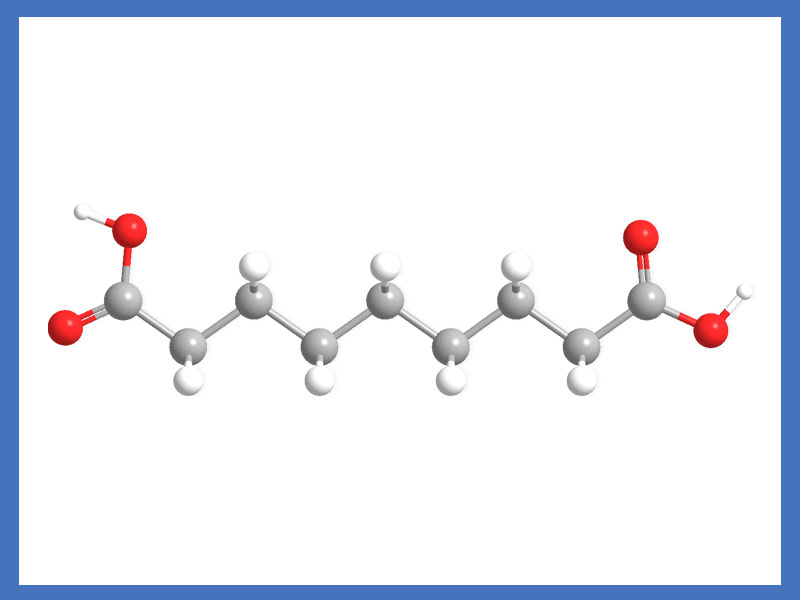
Heat is the primary tool for breaking the crystalline lattice of pure azelaic acid. You must establish a baseline requirement of heating the solvent phase to between 70°C and 80°C. Complete dissolution prior to introducing the active into the main batch is absolutely necessary. Attempting to disperse the powder at lower temperatures leaves micro-crystals intact. These invisible particles act as seeds for massive precipitation later in the product's lifecycle.
Thermal shock poses a severe danger during phase integration. Combining phases with temperature differentials greater than 5°C immediately forces the acid out of solution. Both the oil phase and the water phase must reach identical temperatures before emulsification begins. If you pump a 75°C azelaic acid solvent phase into a 65°C main mixing vessel, the active will crash out instantly, ruining the entire batch. Use jacketed transfer pipes if moving the phase across the manufacturing floor.
Once emulsified, controlled cooling is vital. You must define an optimal cooling gradient to prevent the nucleation of crystals as the batch returns to room temperature. A reduction rate of 1°C to 2°C per minute is standard for high-load acid formulations. Rapid cooling via chilled water jackets causes the outer edges of the batch to solidify too quickly. This traps poorly dissolved active against the cold steel walls and initiates chain-reaction crystallization throughout the vessel.
Water alone cannot hold azelaic acid. You must select the right glycols to increase the saturation point. Formulators typically evaluate Propylene Glycol, Propanediol, Butylene Glycol, and Ethoxydiglycol. Ethoxydiglycol offers superior solubilizing power, but regulatory limits restrict its usage percentages in many global markets. Propanediol serves as an excellent, skin-friendly alternative, though it requires higher input volumes to achieve the same dissolution clarity.
Establishing baseline solvent-to-active ratios is required to keep the acid dissolved at room temperature. A common ratio is 3:1 or 4:1 (solvent to active). However, this creates a significant trade-off. High solvent loads lead to consumer complaints regarding skin tackiness, excessive dryness, and potential barrier disruption. Pushing the solvent load too high ruins the sensory profile of the cream or serum.
The lipid phase also plays a limited but necessary role in stabilizing the active within emulsions. Specific emollients and solubilizers, such as dimethyl isosorbide (DMI), help keep the acid from migrating and crystallizing at the oil-water interface. DMI acts as a penetration enhancer and a secondary solvent, reducing the total glycol burden required in the water phase.
| Solvent Type | Solubilizing Power | Sensory Profile | Typical Usage Rate for 10% AA |
|---|---|---|---|
| Ethoxydiglycol | Very High | Light, fast-absorbing | 15% - 20% |
| Propanediol | Moderate | Slightly tacky, hydrating | 25% - 30% |
| Propylene Glycol | Moderate | Tacky, potential irritant | 25% - 30% |
| Dimethyl Isosorbide (DMI) | High (Co-solvent) | Elegant, non-greasy | 5% - 10% (with glycols) |
Mechanical force dictates how well the powder initially wets out in the solvent. High-shear mixing is necessary during the initial dissolution phase to break down agglomerates of raw powder. Clumps of powder insulate the inner molecules from the hot solvent, delaying dissolution and extending heating times unnecessarily. Use a rotor-stator homogenizer at 3000 to 4000 RPM to ensure every particle makes contact with the hot glycol phase.
Post-emulsification shear requires extreme caution. Excessive shear during the cooling phase inadvertently induces crystallization. The intense mechanical action provides kinetic energy, which encourages dissolved molecules to align and form a crystal lattice. Once the emulsion forms and the temperature drops below 50°C, switch from high-shear homogenization to gentle sweep agitation. Anchor stirrers with Teflon scrapers running at 15 to 30 RPM keep the batch moving without triggering nucleation.
Azelaic acid presents a unique pKa dilemma. It is a dicarboxylic acid with two pKa values: 4.55 and 5.5. These values dictate the ratio of free acid to ionized salt in your formulation. The free acid form is the active state that penetrates the skin and delivers antimicrobial and exfoliating benefits. The ionized salt form is highly water-soluble but significantly less active on the skin. If you raise the pH too high to force solubility, you destroy the product's efficacy.
To balance solubility and efficacy, implement robust buffer systems. Sodium Citrate and Citric Acid work exceptionally well to lock the formulation pH in the 4.5 to 5.0 range. This specific window keeps enough of the acid in its active form while preventing downward pH drift over time. Prepare the buffer solution in a separate side-kettle and add it slowly to the main batch. Without a buffer, the pH may drop during shelf storage, triggering delayed precipitation months after the product leaves the manufacturing facility.
Avoid the temptation of over-neutralization. Adding strong bases like Sodium Hydroxide to clear a cloudy batch converts the azelaic acid entirely into sodium azelate. While this guarantees a clear, precipitation-free serum, it completely compromises the exfoliating benefits expected from the ingredient. Consumers will not see the desired results, leading to poor reviews and lack of repeat purchases.
Stable, precipitation-free mixing conditions allow azelaic acid to be safely formulated alongside popular actives. When properly dissolved, it pairs beautifully with Hyaluronic Acid, Niacinamide, and Vitamin C derivatives. A stable emulsion prevents cross-precipitation, ensuring that introducing a new active does not suddenly crash the azelaic acid out of solution. This stability is required for modern multi-action serums.
Pairing azelaic acid with strong exfoliants like AHAs, BHAs, or Retinol presents significant formulation challenges. Perfectly dissolved active loads are mandatory here. If the azelaic acid precipitates, the resulting gritty texture physically micro-tears the skin during application. When you combine this physical damage with the chemical exfoliation of AHAs or Retinol, you trigger compounded irritation and severe skin barrier damage.
Optimizing solubility directly enhances the sensitive skin experience. By achieving complete dissolution without relying on massive glycol loads, you create gentler, non-drying creams. Heavy, tacky solvent loads exacerbate redness and trap heat against the skin. A well-formulated, fully dissolved product glides on smoothly, absorbs quickly, and delivers the calming benefits of the acid without the sting of excess solvents.
Many brands attempt to bypass dissolution entirely by creating traditional suspensions. This involves milling the raw powder down to a particle size of less than 10 microns and suspending it in a thick gel network. Suspension realities are harsh. They require expensive milling equipment, rely heavily on rheology modifiers like carbomers or xanthan gum to prevent settling, and often still feel chalky on the skin. Suspensions are notorious for pilling when layered with other products.
Sourcing chemically modified or solubilized derivatives offers a massive operational advantage. Utilizing a pre-formulated water soluble azelaic acid eliminates the need for high-heat processing. You no longer need to maintain 80°C temperatures or calculate complex glycol ratios. This format simply stirs into the water phase at room temperature, drastically reducing batch times, energy costs, and the risk of end-user pilling.
Encapsulation technology provides another powerful solution. Cyclodextrin creates a molecular cage, shielding the hydrophobic portions of the azelaic acid molecule from the surrounding water. This mechanism of action physically prevents the acid molecules from aggregating and forming crystals. The outer shell of the cyclodextrin is hydrophilic, allowing the entire complex to dissolve effortlessly in water.
The formulation benefits of an azelaic acid inclusion complex are extensive. It completely prevents precipitation and protects the active against degradation from light and oxygen. It allows for true cold-process formulation, saving immense amounts of manufacturing energy. On the skin, the complex provides a sustained, gentle release profile. As the skin's natural enzymes break down the cyclodextrin, the acid releases slowly, making it ideal for highly sensitive skin applications.
Scaling the solvents becomes exponentially difficult when targeting 10% to 20% active loads. Keeping 15% pure powder in solution using traditional mixing conditions requires so much glycol that the final product feels like sticky glue. This high solvent ratio strips the skin of its natural lipids, causing severe dryness and irritation that counteracts the soothing properties of the acid.
To succeed at these levels, you must evaluate your supplier portfolio carefully. Guide your R&D team to select the right format from a comprehensive Azelaic Acid Series based on the target concentration. For a 10% daily serum, a solubilized liquid format works best. For a 15% spot treatment cream, an encapsulated powder prevents gritty textures. For a 20% clinical gel, utilizing high concentration azelaic acid in a water-soluble format is the only way to maintain a cosmetically elegant feel without crashing the batch.
What works in a 1kg lab beaker frequently fails in a 1000kg manufacturing vessel. Heat transfer and cooling rates change drastically during scale-up. A small beaker cools quickly and evenly. A massive steel jacketed tank retains heat in the center while cooling rapidly on the edges. This discrepancy often results in unexpected scale-up precipitation, where crystals form along the tank walls and ruin the entire production run.
Rigorous stability testing protocols are mandatory before moving to full-scale production. You must subject pilot batches to 3-cycle freeze-thaw testing. Drop the temperature to -10°C for 24 hours, then raise it to 40°C for 24 hours. Repeat this three times. Afterward, use centrifugation at 3000 RPM for 10 minutes to force any micro-crystals to the bottom of the test tube. If you see a white sediment, your mixing conditions or solvent ratios are insufficient.
To mitigate these risks, always formulate with a 10-15% solubility safety margin. Use slightly more solvent or encapsulation technology than strictly necessary at room temperature. This buffer accounts for real-world shipping and storage temperature fluctuations. A product might sit in a freezing delivery truck overnight; without a safety margin, the acid will crystallize before it ever reaches the consumer.
To guarantee batch stability and eliminate consumer complaints regarding gritty textures, R&D and production teams must align on strict manufacturing protocols. Take the following steps to optimize your next formulation run:
Audit your current manufacturing vessels to confirm they can maintain strict 1°C to 2°C per minute cooling rates without localized cold spots.
Request technical data sheets and solubility profiles for water-soluble and encapsulated formats to compare against your current pure powder specifications.
Run a 3-cycle freeze-thaw test on your current formulation and use centrifugation to check for hidden micro-crystallization.
Reformulate high-load products using inclusion complexes to eliminate the tacky skin feel caused by excessive glycols.
A: It crystallizes due to its high melting point (106°C), strong intermolecular hydrogen bonding, and extremely low solubility in water (0.24%). When solvent evaporates, pH shifts rapidly, or the batch cools too fast, the molecules naturally seek to reform their rigid crystalline lattice, dropping out of the emulsion.
A: You must heat the solvent phase to between 70°C and 80°C. Attempting to dissolve the powder at lower temperatures leaves microscopic seed crystals intact, which inevitably trigger massive precipitation as the product sits on the shelf.
A: No. Excessive high shear during the cooling phase provides kinetic energy that encourages dissolved molecules to align and form crystals. Switch to gentle sweep agitation once the temperature drops below 50°C to prevent inducing nucleation.
A: Higher pH levels convert the acid into a highly soluble ionized salt, but this destroys its exfoliating efficacy. You must use a buffer system to lock the pH between 4.5 and 5.0, balancing necessary solubility with optimal skin benefits.
A: Pilling occurs when the acid is poorly dissolved or suspended in heavy polymers. As the water and solvents evaporate on the skin, the acid crystallizes instantly. Using water-soluble formats or inclusion complexes prevents this gritty residue entirely.
A: It is a modified raw material where azelaic acid molecules are encapsulated inside a cyclodextrin cage. This hydrophilic outer shell allows the complex to dissolve easily in water at room temperature, preventing precipitation and reducing skin irritation.


