

close
Choose Your Site
Global
Social Media
Views: 0 Author: Site Editor Publish Time: 2026-08-28 Origin: Site


Traditional azelaic acid—a naturally occurring dicarboxylic acid derived from grains like barley and rye—presents notorious formulation challenges. Despite its clinical efficacy, its poor aqueous and lipid solubility, high melting point, and tendency to crystallize often result in gritty textures and compromised bioavailability. When sourcing raw materials for hyperpigmentation, post-inflammatory hyperpigmentation (PIH), or rosacea-targeted skincare lines, R&D and procurement teams must evaluate multiple formats of the active ingredient. Failing to rigorously stress-test a sample can lead to late-stage stability failures, batch recalls, or poor consumer compliance due to cosmetic inelegant textures. To mitigate scale-up risks, formulators need a standardized evaluation protocol. This guide outlines a comprehensive decision-stage framework for testing an Azelaic Acid Series sample, from initial physicochemical checks to advanced stability, O/W microemulsion compatibility, and efficacy profiling.
Formulation-Specific Sourcing: Selecting between standard powders, water-soluble derivatives, or encapsulated complexes dictates the entire formulation architecture, solvent requirement, and final product format (e.g., cream vs. gel).
Crystallization is the Primary Risk: High concentration formulations require rigorous thermal cycling tests to evaluate the raw material's propensity for recrystallization over time.
pH and Compatibility Constraints: Sample evaluation must include stress-testing alongside common co-actives (e.g., niacinamide, hyaluronic acid) within the narrow optimal pH range of 4.0–5.0, while ensuring it does not compound irritation when layered with other exfoliants.
Delivery System Trade-offs: Advanced formats like an azelaic acid inclusion complex improve stability and penetration but require a cost-benefit analysis against standard cosmetic grade azelaic acid during the evaluation phase.
When evaluating raw materials, laboratory teams must establish strict success criteria based on the final product brief. Evaluating samples without a clear formulation target wastes bench time and resources. The physical and chemical properties of the active ingredient dictate the required solvent system, the emulsification strategy, and the final packaging choice.
Establish baseline requirements based on the intended vehicle. Determine if the sample is destined for a clear aqueous serum, an oil-in-water (O/W) microemulsion, an anhydrous suspension, a lightweight gel, or a rich cream. Each vehicle demands a specific physical form of the active. Clear serums require high water solubility, making standard powders unviable without excessive solvent use. Anhydrous suspensions rely on ultra-fine particle sizes to prevent a gritty skin feel. Mapping the raw material to the vehicle early prevents formulation dead-ends. You must also consider packaging compatibility. High-solvent systems required for standard powders can degrade certain plastics or cause airless pump mechanisms to seize over time.
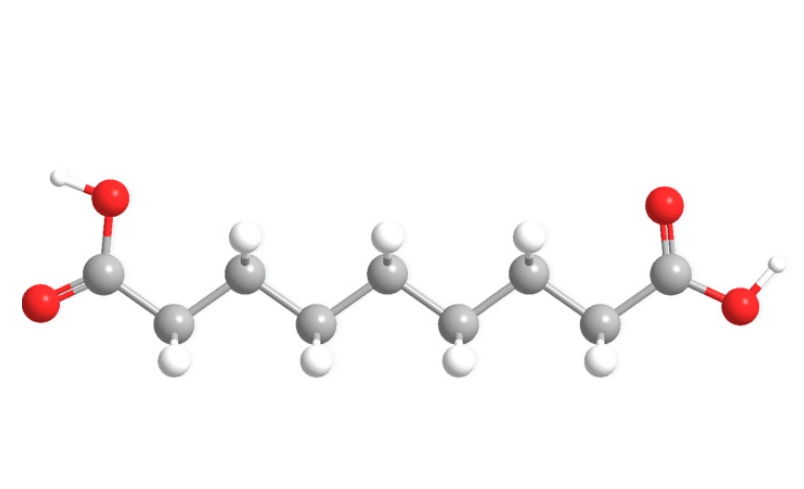
Define acceptable thresholds for heavy metals, residual solvents, and assay purity before initiating lab trials. High-quality cosmetic grade azelaic acid typically exceeds 99% purity. Verify the dicarboxylic acid chemical structure through provided documentation. Request High-Performance Liquid Chromatography (HPLC) data from the supplier to confirm the absence of degradation byproducts. Establish strict limits for trace impurities, as these can catalyze oxidation in the final formula or trigger skin sensitization in compromised barriers. Heavy metal limits should strictly adhere to regional regulatory guidelines, typically requiring lead under 10 ppm and arsenic under 2 ppm.
Establish acceptable limits for particulate feel, tackiness, and spreadability. These factors are heavily influenced by the raw material's particle size and solubility profile. Consumers quickly reject gritty textures or sticky finishes. Sensory benchmarking forms a critical first step in sample evaluation. Formulators should map the desired rheology and yield stress of the final product, ensuring the chosen raw material does not negatively impact the emulsion's sensory profile during rub-in or dry-down phases. Use a rheometer to measure the storage and loss moduli of prototypes to quantify these sensory attributes objectively.
The market offers several variations of this active ingredient, each engineered to solve specific formulation challenges. Selecting the correct variant during the sampling phase streamlines development and reduces the need for complex solvent architectures.
Standard powder remains the industry standard for specific chassis types. It requires careful handling due to its high melting point and low solubility. It works best for suspensions, anhydrous formulas, rich creams, and high-shear O/W emulsions. Particle size distribution is paramount during evaluation. Compare micronized grades against standard grades using laser diffraction. You want a tight distribution curve to ensure consistent behavior. Verify the melting point (typically around 106°C) using Differential Scanning Calorimetry (DSC) to ensure raw material authenticity and purity. Formulating with this grade requires significant heat or high concentrations of glycols like ethoxydiglycol, propanediol, or dimethyl isosorbide to achieve partial solubility.
Derivatives are chemically modified to overcome the inherent hydrophobicity of the standard acid, offering a completely different formulation experience. They are ideal for clear serums, aqueous toners, and lightweight hydrogels. Test the true solubility limits in water at room temperature. Monitor the impact on formulation viscosity, as high salt concentrations can break certain polymeric thickeners like carbomers. You will often need to switch to salt-tolerant gums like xanthan or sclerotium. Assess active conversion rates on the skin when using water soluble azelaic acid to ensure clinical efficacy matches the standard acid. This format eliminates the need for aggressive heating phases and reduces reliance on heavy solvent systems.
Encapsulation technology physically traps the active molecule within a delivery vehicle, such as a cyclodextrin ring, altering its physical behavior without changing its chemical structure. This is best for sensitive skin formulations, controlled release systems, and minimizing formulation conflicts with incompatible co-actives. Evaluate shell stability under high-shear mixing and homogenization. Measure release kinetics using Franz diffusion cells. Assess the reduction of sensory irritation during human patch testing. An azelaic acid inclusion complex often solves stubborn solubility and irritation issues simultaneously. It provides a slow-release mechanism that enhances tolerability while preventing premature crystallization in the aqueous phase.
| Format | Primary Advantage | Main Formulation Challenge | Ideal Product Type | Processing Temperature |
|---|---|---|---|---|
| Standard Powder | High clinical data backing | Poor solubility, crystallization risk | Creams, Anhydrous Suspensions | High (70°C - 85°C) |
| Water Soluble Derivative | Ease of use in aqueous systems | Potential viscosity drop in polymers | Clear Serums, Toners | Room Temperature |
| Inclusion Complex | Low irritation, high stability | Shear sensitivity during manufacturing | Sensitive Skin Lotions | Low to Medium (Below 40°C) |
Once samples arrive at the laboratory, initial physicochemical testing determines their viability. Skipping these baseline checks often leads to unpredictable behavior during the emulsification process.
Test solubility across a matrix of common cosmetic solvents. Utilize propanediol, ethoxydiglycol, glycerin, dimethyl isosorbide (DMI), and ethanol. Determine the maximum saturation point before precipitation occurs at room temperature. This data guides the optimal solvent-to-active ratio in the final chassis. For standard powders, formulators must map the exact temperature required to achieve complete dissolution in the chosen solvent blend. Record the cooling curve to identify the exact temperature at which recrystallization begins. This thermal mapping is critical for designing the manufacturing procedure and determining the correct phase-combination temperatures.
Follow this standard protocol for solvent mapping:
Prepare 100g solutions of various solvent blends (e.g., 50% Propanediol / 50% DMI).
Gradually add the active powder in 1% increments under continuous magnetic stirring.
Apply heat incrementally (up to 80°C) until the solution turns completely clear.
Remove from heat and monitor the solution as it cools to room temperature.
Record the exact temperature at which the first signs of cloudiness or nucleation appear.
Conduct microscopic evaluation of the raw powder. Check for uniform particle size and shape. Irregular, large crystals indicate a lower-quality grade that will inevitably cause texture issues. Perform a standardized rub-out test by dispersing a 10% concentration of the powder into a simple lipid base, such as caprylic/capric triglyceride. Apply the dispersion to the volar forearm. This assesses baseline grittiness and skin-feel. Use a Hegman gauge to quantify the fineness of the dispersion. If the raw material feels abrasive in a simple lipid base, it will likely feel abrasive in a complex emulsion unless subjected to extreme milling or high-shear homogenization.
Evaluate baseline odor and color upon sample receipt. Standard material should present as a white to slightly yellowish crystalline powder. It must possess minimal odor. Off-colors, clumping, or strong scents indicate impurities, residual manufacturing solvents, or degradation during transit. Document these properties photographically. Compare subsequent batches against this baseline to ensure supplier consistency. Any deviation in organoleptic properties warrants immediate rejection of the sample, as these impurities can destabilize sensitive emulsion systems or alter the final product's fragrance profile. Use a colorimeter to establish objective L*a*b* values for the raw powder.
Moving from raw material analysis to prototype formulation introduces new variables. Stress-testing the active within a complete chassis reveals its true stability profile and interaction with other ingredients.
Formulate a prototype at the maximum intended concentration. Targeting 10-15% high concentration azelaic acid requires robust stabilization strategies. Subject the prototype to accelerated freeze-thaw cycles. A standard protocol involves 24 hours at -20°C followed by 24 hours at 40°C, repeated for three consecutive cycles. After each cycle, observe a smear of the emulsion under polarized light microscopy. Look for any signs of crystal growth or Ostwald ripening. Crystals appear as bright, birefringent structures against a dark background. If crystallization occurs, the solvent system must be adjusted, or a different raw material format must be selected. You may also need to introduce crystallization inhibitors like specific polymers or adjust the lipid phase polarity.
If utilizing standard powder, evaluate the sample's performance within an oil-in-water microemulsion chassis. Microemulsions maximize thermodynamic stability and prevent the active from precipitating out of solution. Test various surfactant ratios, such as Polysorbate 80 combined with lecithin, to find the optimal hydrophilic-lipophilic balance (HLB) that accommodates the dissolved acid. A successful microemulsion enhances topical administration, driving the active deeper into the stratum corneum while maintaining a cosmetically elegant, translucent appearance. Utilize the Phase Inversion Temperature (PIT) method to create ultra-fine droplet sizes that improve the optical clarity and stability of the system.
Evaluate the sample's impact on the formulation's final pH. The pKa values of the acid dictate its behavior in solution. Test the buffering capacity required to maintain the formula strictly between pH 4.0 and 5.0. In this range, the free acid remains highly effective against target skin concerns but is notoriously difficult to keep in solution. Utilize buffer systems like citric acid and sodium citrate or lactic acid and sodium lactate to lock the pH. Monitor the pH weekly during accelerated stability testing at 45°C for 12 weeks. A drifting pH indicates instability, potential esterification with alcohols in the formula, or degradation of the active.
Modern skincare formulations rarely rely on a single active ingredient. Layering and mixing tests with hyaluronic acid are mandatory. Check for viscosity loss or polymer cleavage, as high acid loads can break down certain molecular weights of hyaluronic acid over time. Test compatibility with niacinamide carefully. Monitor for pH drift and potential flushing reactions caused by the conversion of niacinamide to nicotinic acid in low-pH environments. Stress-test the sample alongside other chemical exfoliants, such as alpha-hydroxy acids (AHAs) or beta-hydroxy acids (BHAs). Evaluate the cumulative pH drop and assess potential over-exfoliation risks through in-vitro barrier disruption models.
Stability and elegance mean nothing if the active fails to deliver clinical results. The evaluation process must include efficacy profiling to ensure the chosen raw material format performs as expected on the skin.
Evaluate in-vitro models or ex-vivo skin assays. Measure the sample's efficacy in downregulating tyrosinase, the enzyme responsible for melanin production. This data is critical for products targeting hyperpigmentation and PIH. Conduct melanin quantification assays using B16 melanoma cell lines to verify the active's inhibitory effect. Additionally, assess the reduction of inflammatory markers, such as interleukins (IL-6, IL-8), in cell cultures to validate the ingredient's efficacy for redness and rosacea management. Compare the efficacy data of the sampled raw material against established clinical benchmarks to ensure the supplier's grade meets industry standards.
Compare the in-vitro skin penetration rates using Franz diffusion cells. Test the standard powder dispersion against an encapsulated complex or a water-soluble derivative. Evaluate the requirement for penetration enhancers based on the specific raw material format chosen. Standard powders often require high levels of glycols to penetrate the lipid matrix of the stratum corneum effectively. Analyze the receptor fluid in the Franz cell using HPLC to quantify the exact amount of active that successfully crossed the membrane. Inclusion complexes may offer optimized delivery kinetics, releasing the active steadily over time without the need for aggressive solvent drivers.
Assess the raw material's potential to disrupt the skin barrier at target concentrations. Ensure the final formulation remains appropriate for everyday use. Utilize reconstructed human epidermis (RhE) models, such as EpiDerm, to test cell viability after application using MTT assays. Evaluate if water-soluble or encapsulated variants demonstrably reduce the stinging sensation commonly associated with the free acid. Compare the prototype against a standard lactic acid sting test protocol. A format that offers a gentler alternative to traditional exfoliants provides a significant market advantage, especially for brands targeting consumers with compromised skin barriers or severe rosacea.
Transitioning from successful lab evaluation to full-scale manufacturing introduces logistical and financial risks. Formulators must weigh the benefits of advanced raw materials against their operational impact.
Standard powders are highly cost-effective per kilogram but require high volumes of expensive solvents, like ethoxydiglycol or DMI, to achieve formulation elegance. This hidden solvent cost often offsets the initial raw material savings. Furthermore, high solvent loads can render the final product unpleasantly tacky, requiring additional sensory modifiers like silicones or silica powders to correct the skin feel. Inclusion complexes cost significantly more per kilo. However, they simplify the chassis, eliminate the need for complex solvent architectures, and drastically reduce R&D formulation time. Procurement teams must conduct a holistic cost-analysis that includes the price of required excipients, not just the active ingredient itself.
Lab-scale dissolution often utilizes prolonged heat, sometimes holding beakers at 80°C for extended periods to force the standard powder into solution. This protocol may not be energy-efficient or even feasible in large-scale 5,000-liter manufacturing tanks. Heating and cooling massive water jackets takes hours, significantly increasing batch processing times and utility costs. Evaluate the sample's dissolution time at lower temperatures. Test the material under standardized high-shear homogenization to ensure factory viability. If a raw material requires 90°C heat and aggressive milling to remain stable, the risk of batch failure during commercial scale-up increases exponentially. Transfer pipes can easily clog if the bulk cools too rapidly during filling, causing the active to crystallize mid-transfer. Mitigate this by selecting easily dispersible formats or pre-solubilized variants for large-scale production runs.
A successful evaluation of this active requires moving far beyond basic certificate of analysis checks. Formulators must execute rigorous, stress-tested prototyping specifically targeting solubility limits, crystallization risks, and co-active compatibility. Choose standard cosmetic grade material for cost-sensitive suspensions or robust microemulsions. Opt for water-soluble variants for clear aqueous formats like toners and serums. Select inclusion complexes for premium, low-irritation chassis targeting sensitive skin or rosacea.
Request 500g samples of the chosen variants to conduct comprehensive solubility and thermal mapping.
Secure the accompanying safety data sheets, CoAs, and HPLC purity data before initiating any formulation work.
Initiate a 12-week accelerated stability test at 45°C and freeze-thaw cycles in your baseline chassis to monitor for delayed crystallization.
Conduct a holistic cost-analysis comparing the raw material price against the required solvent and energy expenses for scale-up.
A: Standard azelaic acid is poorly soluble in water, typically dissolving at less than 0.24% at room temperature. Formulators must use glycols, specialized solvents like dimethyl isosorbide, or prolonged heat to incorporate it into aqueous phases successfully.
A: An inclusion complex encapsulates the active ingredient, often using cyclodextrins. This dramatically improves its water dispersibility, prevents crystallization, and provides a slow-release mechanism that reduces skin irritation and redness upon application.
A: The optimal pH is generally between 4.0 and 5.0. This range balances the efficacy of the free acid form with skin tolerability, though it requires careful solvent selection and robust buffer systems to prevent the active from precipitating.
A: Yes, water-soluble derivatives are specifically engineered for clear, aqueous systems. They offer similar brightening and sebum-regulating benefits without the cloudiness, grittiness, or heavy solvent requirements of the standard acid.
A: Preventing crystallization requires a combination of appropriate solvent systems, maintaining strict temperature control during the cool-down phase, and potentially utilizing O/W microemulsion technology to keep the active thermodynamically stable.
A: Yes, it generally layers well with hyaluronic acid, niacinamide, and gentle cleansers. However, formulators should monitor cumulative pH drops when combining it with strong AHAs or BHAs to prevent severe barrier disruption or over-exfoliation.


