

close
Choose Your Site
Global
Social Media
Views: 0 Author: Site Editor Publish Time: 2026-10-11 Origin: Site


The personal care sector relies heavily on natural and biocompatible ingredients. Formulators highly value biopolymers for their film-forming, hydrating, and antimicrobial capabilities. However, sourcing high-quality active ingredients is only the first step. Navigating regulatory compliance often becomes a logistical headache for cosmetic chemists and supply chain managers.
Imagine this scenario. A highly anticipated product launch halts because a single missing certificate triggers a customs hold. Even worse, a newly formulated serum separates entirely on the shelf due to unverified molecular weight data. Formulation failures and costly product recalls happen frequently when R&D teams ignore empirical data.
To mitigate these critical risks, buyers must demand transparent paperwork from their manufacturing partners. This article serves as a practical, bottom-of-funnel checklist for procurement teams. Read on to discover the exact quality, safety, and shipping dossiers you need to secure a smooth procurement process and guarantee a stable end product.
Quality Assurance is Non-Negotiable: A Certificate of Analysis and Technical Data Sheet are mandatory. They verify the purity, molecular weight, and deacetylation degree of the raw material. These documents form the empirical baseline for any stable emulsion.
Safety First: Always require a globally compliant Material Safety Data Sheet. This ensures safe laboratory handling, mitigates occupational hazards, and establishes proper warehouse storage protocols.
Derivative-Specific Data: Modified variants require highly specific solubility, substitution degree, and pH stability documentation to validate their structural integrity.
Regulatory Compliance: Documents proving exact INCI registration, strict heavy metal limits, and microbial safety are essential. They help you pass global regulations like the EU Cosmetics Regulation and US FDA guidelines.
Smooth Logistics: Proper international trade paperwork prevents costly customs demurrage fees. You must secure a Certificate of Origin and REACH declarations for uninterrupted supply chain operations.
In the business-to-business procurement of specialty chemicals, verifiable paperwork is just as critical as the physical ingredient itself. For procurement managers and laboratory scientists, documentation acts as the primary risk management tool. It provides the objective proof necessary to validate marketing claims and maintain rigorous batch-to-batch consistency.
Precise technical dossiers help laboratory teams accurately predict how these unique biopolymers will interact within a complex chemical matrix. Standard biopolymers are cationic, meaning they carry a positive charge. They behave vastly differently than the conventional anionic thickeners typically used in personal care. Without exact specifications regarding charge density and molecular weight, formulators risk severe coagulation, sudden phase separation, or unintended pH crashes.
Armed with accurate data, chemists can intelligently adjust processing parameters. They can tweak homogenization shear rates and hydration temperatures to perfectly accommodate the physical properties of the purchased batch.
Current industry analysis reveals a profound shift toward absolute traceability. Driven by the global clean beauty movement and stricter regulatory frameworks, authorities are scrutinizing supply chains more rigorously than ever before. It is no longer sufficient to merely claim a product is natural. Brands must provide empirical proof.
Recent updates to international safety standards mandate that brands verify the origin, safety, and legality of every raw material. Comprehensive documentation proves due diligence. It demonstrates that a brand has thoroughly vetted its supply chain from the extraction facility to the retail shelf, protecting companies from legal liabilities and crushing financial penalties.
When sourcing specialized polymers for personal care applications, buyers must proactively request the big three quality assurance documents. Every reputable manufacturer is obligated to provide these foundational records with every commercial shipment.
The Certificate of Analysis is a batch-specific document detailing the precise laboratory testing results of the material before it leaves the factory floor. When evaluating cosmetic grade chitosan, procurement teams must scrutinize several critical metrics that directly dictate formulation performance. The Degree of Deacetylation must be verified, as it controls the cationic charge density and antimicrobial efficacy. High-quality cosmetic grades typically demand a deacetylation degree greater than 90 percent.
Furthermore, the certificate should clearly outline the molecular weight, moisture content, and ash content. These data points confirm that the specific drum you receive perfectly matches your agreed-upon purchasing specifications.
While the analysis certificate is tied to a specific production run, the Technical Data Sheet serves as the universal instruction manual for formulators. It outlines the fundamental characteristics of the product line. A robust data sheet will include detailed descriptions of the physical appearance and precise solubility profiles across different aqueous environments.
It will also list recommended usage rates, typically ranging from 0.1 to 2.0 percent, along with acceptable pH stability ranges. From a practical standpoint, it should provide processing guidelines and highlight known incompatibilities with specific surfactants. This saves research and development teams countless hours of trial and error.
The globally standardized 16-section safety data sheet is an absolute mandate for occupational safety and environmental hazard management. Warehouse teams and lab technicians must review this document closely before ever opening a container. Sections regarding first aid measures, handling and storage, and physical properties are particularly vital. For sensitive biopolymers, the safety sheet will emphasize storing the powder in cool, dry conditions away from direct ultraviolet light and strong oxidizing agents. This prevents the premature degradation of delicate polymer chains.
Moving beyond basic physical quality checks, cosmetic manufacturers must secure documentation that validates legal market compliance and supports consumer-facing product claims.
Accurate ingredient labeling is a strict legal requirement in nearly every global consumer market. Suppliers must provide official documentation confirming the exact International Nomenclature of Cosmetic Ingredients name and the corresponding Chemical Abstracts Service number on their company letterhead. Utilizing an incorrect or overly generic nomenclature on retail packaging can immediately trigger regulatory audits and force highly expensive packaging redesigns.
Because traditional variants of this polymer are extracted from marine crustacean shells, the raw material is inherently susceptible to environmental contamination. Rigorous third-party testing reports are mandatory to prove the absolute absence of dangerous heavy metals. The paperwork must show that levels of lead, arsenic, mercury, and cadmium fall strictly below the limits set by international authorities.
In addition, microbial test reports must verify acceptable limits for total aerobic microbial count and confirm the complete absence of pathogens like Staphylococcus aureus. This ensures consumer safety and prevents end-product spoilage.
Consumer demand for transparent and ethical sourcing requires highly specific declarations. Since traditional marine-derived extracts carry a risk of residual shellfish proteins, suppliers must provide allergen declarations to help brands assess liability. Conversely, if a brand is formulating specifically for the vegan market, they must source fungal-based alternatives. Securing official cruelty-free declarations directly from the manufacturer is the only legal way to substantiate those lucrative marketing claims.
The raw material series extends far beyond the standard base polymer. It encompasses advanced, water-soluble derivatives engineered to overcome specific formulation hurdles. Each unique chemical modification requires specialized technical documentation and real-world parameters to validate its structural integrity.
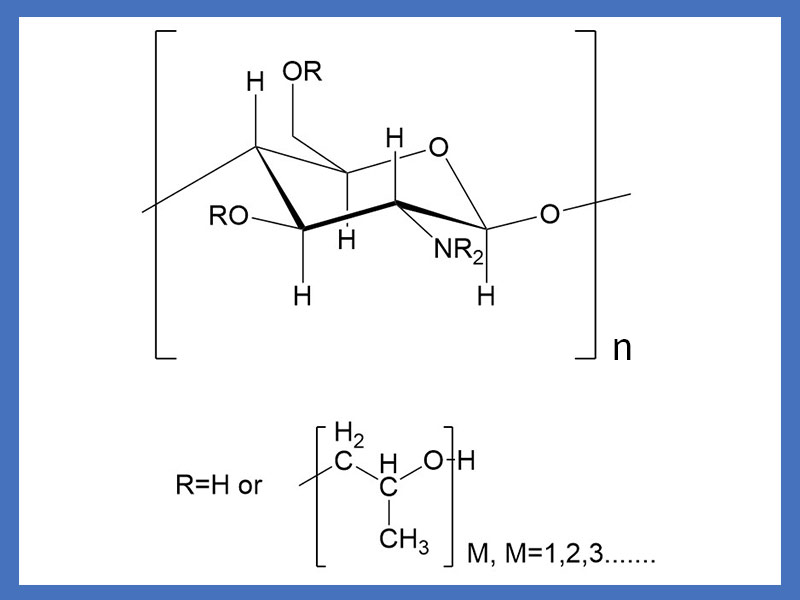
Standard polymers typically require an acidic environment to dissolve, severely limiting their use in neutral pH formulations. To solve this chemical bottleneck, manufacturers produce hydroxypropyl chitosan cosmetics. This is a non-ionic derivative engineered for exceptional water solubility. When procuring this specific variant, buyers must request documentation detailing the Degree of Substitution. A typical high-performance grade will show a substitution degree above 80 percent, proving its ability to dissolve rapidly in water without harsh organic acids.
Similarly, carboxymethyl chitosan cosmetics are highly prized for superior moisture-retention capabilities. Because this derivative is amphoteric, containing both positive and negative charges, it exhibits complex behavior depending entirely on the formulation pH. Procurement teams must request extensive stability data sheets showing exactly how the ingredient performs across pH levels of 5.0 to 7.0. This empirical evidence prevents the costly mistake of formulating a toner that gradually loses viscosity over its shelf life.
Used predominantly in premium anti-aging skincare and salon-grade hair systems, chitosan succinamide is a highly compatible derivative. Due to its sophisticated nature, buyers must request advanced formulation guidelines and compatibility charts. High-quality suppliers will provide clinical efficacy data sheets demonstrating the ingredient's ability to reduce transepidermal water loss, giving research teams the hard science needed to back up premium product claims.
| Derivative Type | Ionic Nature | Key Parameter to Verify | Primary Document Required |
|---|---|---|---|
| Standard Base Polymer | Cationic | Deacetylation Degree > 90% | Batch-Specific COA |
| Hydroxypropyl Variant | Non-ionic | Degree of Substitution > 80% | Solubility Profile & TDS |
| Carboxymethyl Variant | Amphoteric | Stable at pH 5.0 - 7.0 | pH Stability Data Sheet |
| Succinamide Variant | Anionic Compatible | Moisture Retention Rate | Clinical Efficacy Report |
Moving specialty chemicals across international borders introduces a distinct set of logistical hurdles. Precise import and export documentation is essential to navigate customs clearance efficiently and avoid unexpected tariff disputes.
The Certificate of Origin is a formalized trade document declaring the specific country in which the raw material was manufactured. This document is critical for international trade compliance and directly impacts the calculation of import duties. Depending on existing free trade agreements between nations, presenting a valid certificate can significantly reduce the total landed cost of the ingredient.
Standard shipping documents must align perfectly with the technical dossiers. Customs officials and border quality control inspectors will cross-reference these documents to ensure absolute accuracy. It is imperative that the batch numbers, gross weights, and net weights listed on the logistics paperwork match the corresponding analysis certificate exactly. Discrepancies here are a primary trigger for prolonged customs holds.
If you are importing raw materials into the European Union, compliance with the REACH regulation is an absolute legal necessity. While polymers themselves are generally exempt from full registration, the underlying monomers used to manufacture them may still require registration. Suppliers must provide official REACH compliance declarations or specific polymer exemption certificates to ensure the material can legally clear European customs.
In the global chemical trade, fraudulent or heavily manipulated documentation is a tangible risk that can ruin a brand overnight. Procurement managers must act as vigilant auditors, critically evaluating the paperwork provided by potential suppliers.
The most fundamental verification step is ensuring physical traceability. Buyers must inspect incoming shipments to ensure that the batch number printed on the drum matches the batch number on the analysis certificate, the commercial invoice, and the packing list perfectly. If a supplier provides a generic certificate without a specific batch number, or if testing dates precede the actual manufacturing date, it is a glaring red flag indicating poor quality control.
When reviewing heavy metal or microbial test reports, buyers should always verify the credentials of the testing laboratory. The facility should hold an active ISO accreditation, guaranteeing technical competence. Furthermore, procurement teams should closely inspect digital certificates for signs of alteration, such as mismatched fonts or outdated inspection dates that have been visibly overwritten.
A reputable manufacturer will always use precise, internationally recognized nomenclature on all official documents. Buyers should be highly suspicious of suppliers who use vague terms, such as simply labeling a chemically modified derivative as a raw extract instead of its precise chemical designation. Vague labeling obscures the true nature of the ingredient and leads directly to regulatory rejection during product registration.
Selecting the right manufacturing partner is about much more than negotiating the lowest price per kilogram. It is about establishing a secure, transparent, and legally compliant supply chain.
Working with a transparent, ISO-certified manufacturer who proactively provides a complete dossier for their raw materials drastically reduces the administrative burden on your internal teams. A trusted supplier anticipates the regulatory needs of their clients. They offer updated safety data sheets, batch-specific analysis certificates, and comprehensive efficacy data without hesitation. By securing compliant ingredients from a reliable source, brands can focus their valuable resources on product innovation rather than battling administrative hurdles.
Sourcing advanced biopolymers requires strict attention to detail. Securing the proper compliance certificates is what ultimately guarantees a successful and stable end product. Proper documentation serves as the ultimate shield, protecting your brand reputation, ensuring uncompromised consumer safety, and significantly speeding up your time to market. Do not let missing paperwork derail your next product launch. We strongly recommend evaluating your current supply chain and upgrading to a partner who prioritizes transparency. Explore the complete range of fully documented, high-performance biopolymers at https://www.newsourcechem.com to find the exact derivative that fits your next skincare or haircare project.
The standard INCI name for the unmodified polymer is simply Chitosan. However, it is crucial to note that chemically modified derivatives possess their own specific names, such as Carboxymethyl Chitosan or Hydroxypropyl Chitosan. These precise names must be used accurately on your final retail product labels to comply with international cosmetic regulations and avoid misbranding penalties.
Yes, absolutely. An analysis certificate is strictly a batch-specific document. It is imperative for your internal quality control protocols to verify that each individual production run meets your exact formulation specifications regarding molecular weight, deacetylation, and pH stability. This differs fundamentally from a safety data sheet, which applies to the product line generally.
This advanced derivative is rapidly gaining traction in the personal care sector because it offers superior compatibility with anionic surfactants while providing exceptional skin-conditioning benefits. Its efficacy is proven through clinical data sheets and laboratory test reports provided directly by the manufacturer. Research teams rely heavily on these empirical documents to legally substantiate premium marketing claims.
Storage guidelines are not typically issued as a standalone document. Instead, these critical instructions are integrated into Section 7 of the Material Safety Data Sheet and are also outlined on the Technical Data Sheet. These documents universally recommend storing the sensitive polymer in a cool, dry environment away from direct sunlight and excessive moisture.
A Certificate of Analysis reflects the condition of the material at the time of testing. While the document itself does not expire, the raw material has a designated shelf life, usually 12 to 24 months depending on the specific derivative and storage conditions. Formulators should always request an updated re-test certificate if the material approaches the end of its stated shelf life.
If your shipment arrives at a European port without valid REACH compliance declarations or polymer exemption paperwork, customs authorities will immediately impound the goods. This leads to severe demurrage fees, supply chain delays, and potential confiscation of the material. Always secure this documentation from your supplier before the cargo is loaded onto the vessel.


