

close
Choose Your Site
Global
Social Media
Views: 0 Author: Site Editor Publish Time: 2026-06-19 Origin: Site


Modern research and development teams constantly face formulation hurdles. You often encounter poor aqueous solubility in bulky active pharmaceutical ingredients (APIs). Volatile nutrients degrade rapidly under thermal stress during manufacturing. Unpleasant taste profiles frequently ruin patient compliance in oral formulations. We need a reliable intervention to bridge these critical formulation gaps.
Enter Gamma Cyclodextrin (γ-CD). This specialized excipient acts as an advanced molecular encapsulation agent. It traps complex, bulky molecules inside a protective core. Formulators use it to solve precise solubility and stability challenges across diverse industries.
In this guide, we evaluate the technical specifications, regulatory landscape, and practical implementation criteria for utilizing γ-CD. You will discover how to apply it effectively across commercial pharmaceutical and nutraceutical scale-ups. We will cover structural advantages, production methodologies, and essential procurement standards.
Structural Advantage: Features an 8-glucopyranose unit ring, providing the largest cavity size among native cyclodextrins, ideal for accommodating bulky molecules.
Pharma Efficacy: Functions as a highly effective drug solubilizer and stabilizer, improving the bioavailability of poorly water-soluble APIs.
Food & Beverage Utility: Serves as a versatile food grade cyclodextrin for taste masking, odor control, and protecting sensitive active ingredients against oxidation.
Compliance & Safety: Supported by a robust safety profile, holding GRAS status (FDA), JECFA approval, and clear guidelines from the EMA for human medicinal use.
Scale-Up Viability: Offers the highest water solubility of the native cyclodextrins (232 g/L at 25°C), significantly easing manufacturing and processing bottlenecks.
Scientists rely on three native cyclodextrins for encapsulation. However, they do not perform equally. You must select the correct variant based on the target molecule's size and required solubility.
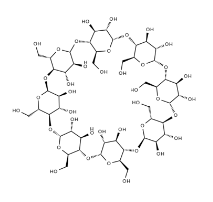
Native cyclodextrins vary by the number of glucose units in their ring structures. Alpha has six units. Beta has seven. Gamma contains eight glucopyranose units. This eight-member ring generates a significantly wider internal cavity.
Alpha variants suit small, linear molecules. Beta accommodates aromatic rings perfectly. However, larger complex molecules require the spacious γ-CD structure. Bulky steroids and macrocyclic compounds physically cannot fit inside smaller cavities. They experience steric hindrance. Gamma variants provide the necessary spatial volume to host these substantial guest molecules effectively.
Solubility dictates manufacturing efficiency. Beta cyclodextrin exhibits notoriously low water solubility. It dissolves at roughly 18.5 g/L at standard room temperature. This low rate forces engineers to use massive fluid volumes during wet granulation.
Conversely, the gamma variant boasts exceptional solubility. It achieves 232 g/L at 25°C. This high water solubility minimizes fluid volume requirements during liquid formulation processes. You save drying time. You reduce energy consumption. Production bottlenecks shrink considerably when you switch to this highly soluble excipient.
Human digestion handles different cyclodextrins differently. The beta variant resists digestive enzymes. It passes through the upper gastrointestinal tract largely intact. This slow digestion can cause mild gastrointestinal disturbances at higher doses.
Gamma variants break down rapidly. Salivary and pancreatic amylases digest the eight-member ring efficiently. This rapid enzymatic degradation makes it highly tolerable for human oral ingestion. Formulators prefer it for pediatric and geriatric products where gastrointestinal sensitivity is a primary concern.
| Cyclodextrin Type | Glucose Units | Cavity Diameter (Å) | Water Solubility at 25°C (g/L) | Digestibility |
|---|---|---|---|---|
| Alpha (α-CD) | 6 | 4.7 - 5.3 | 145 | Slow |
| Beta (β-CD) | 7 | 6.0 - 6.5 | 18.5 | Very Slow |
| Gamma (γ-CD) | 8 | 7.5 - 8.3 | 232 | Rapid |
Pharmaceutical research continuously produces highly effective but poorly soluble compounds. These APIs struggle to cross biological membranes. We use advanced excipients to bypass these biological roadblocks.
The molecular structure features a hydrophilic exterior and a lipophilic interior. The outer shell bonds easily to water molecules. The inner cavity attracts hydrophobic drugs. When an API enters this cavity, the entire unit becomes water-soluble.
You must evaluate specific criteria when treating BCS Class II and IV drugs. These classes exhibit profound solubility issues. Formulators deploy a drug solubilizer to force these APIs into solution. If the drug molecule exceeds a certain molecular weight, smaller excipients fail. The larger gamma cavity safely engulfs these bulky lipophilic structures, dramatically improving their dissolution profile in gastric fluids.
Encapsulation relies on specific thermodynamic principles. The host-guest interaction involves enthalpy and entropy changes. Water molecules inside the empty cavity remain in a high-energy state. When a bulky API displaces this water, the system's overall energy drops. This energy drop drives the formation of a stable inclusion complex.
Complexation extends product shelf-life significantly. It shields the API from harsh environmental factors. Large biological molecules often suffer from rapid hydrolysis. Exposure to light causes severe photodegradation. By hiding the sensitive drug inside the cyclic ring, you block reactive oxygen species. You prevent UV light from breaking vital chemical bonds.
Poorly soluble drugs often exit the body before absorption occurs. Encapsulation ensures the API remains dissolved in the intestinal lumen. The dissolution rates improve exponentially upon administration. Better dissolution directly translates to higher bloodstream absorption.
Furthermore, formulators use this excipient to modify release profiles. You can engineer systems designed for sustained release. The complex slowly dissociates in the target absorption window. This measured dissociation achieves clinical effectiveness safely. It prevents dangerous dose dumping, protecting patients from sudden toxicity spikes.
The food and beverage sector faces immense pressure to deliver functional, great-tasting products. Consumers demand potent health benefits. However, they reject items exhibiting bad tastes or strange textures.
Consumer adherence drives dietary supplement success. A highly nutritious botanical extract fails if it tastes terrible. The business value of taste masking cannot be overstated. High repeat purchase rates depend entirely on a pleasant sensory experience.
A specialized food grade cyclodextrin solves this sensory dilemma. It traps volatile off-flavor compounds securely. Bitter amino acids and astringent herbal extracts hide inside the molecular cavity. Taste receptors on the human tongue cannot detect the encapsulated guest. This mechanism turns unpalatable formulations into delicious consumer products.
Many valuable nutrients degrade rapidly during processing and storage. Formulators frequently explore various gamma cyclodextrin uses to combat this instability. It acts as an invisible shield for delicate ingredients.
Essential oils evaporate quickly at room temperature. Vitamins lose potency upon oxygen exposure. Unsaturated fatty acids undergo rapid lipid peroxidation. Encapsulation protects these susceptible molecules against oxidative stress. It locks them down, preventing premature volatilization. Manufacturers gain extended shelf-life and retain full nutrient potency.
Modern consumers actively seek metabolic health supplements. They buy products containing curcumin, CoQ10, and resveratrol. Unfortunately, the human gut absorbs these lipophilic nutraceuticals very poorly. Most of the active dose passes through unabsorbed.
Formulators utilize the inclusion complex mechanism here. The excipient pulls the fat-soluble nutrient into aqueous solution. This action drastically enhances nutrient absorption in the intestinal tract. Clinical effectiveness rises sharply. Consumers actually receive the metabolic benefits they purchased.
Using any novel excipient requires strict adherence to global regulations. You must prove safety, establish purity thresholds, and document toxicological limits before launching commercial products.
The European Medicines Agency (EMA) provides explicit guidelines regarding pharmaceutical excipients. They evaluate native cyclodextrins based on administration routes. The EMA confirms that γ-CD is safe for human medicinal use. Their documentation outlines accepted daily exposure limits for oral, intravenous, and topical applications. You must consult these limits during early-stage dosage design to guarantee compliance.
The Joint FAO/WHO Expert Committee on Food Additives (JECFA) thoroughly evaluated this compound. They assigned an Acceptable Daily Intake (ADI) of "not specified." This represents the highest safety rating available. Furthermore, the FDA grants it Generally Recognized As Safe (GRAS) status.
This regulatory clarity accelerates product development. You bypass lengthy safety trials for food applications. Time-to-market shrinks dramatically when you leverage pre-approved, GRAS-certified ingredients.
We must present an evidence-oriented view of gastrointestinal tolerability. While enzymatic digestion handles this excipient well, excessive intake can cause issues. Extremely high dosage thresholds may trigger mild osmotic diarrhea.
Unabsorbed molecules occasionally draw water into the colon. This causes loose stools. Formulators should calculate maximum daily intake limits carefully. Maintain transparency regarding dosage caps. Balanced formulations deliver clinical benefits while avoiding any gastrointestinal distress.
Transitioning from a laboratory bench to commercial manufacturing exposes hidden risks. Engineers must balance material costs, select appropriate machinery, and avoid unexpected chemical interactions.
Procurement teams quickly notice pricing differences among excipients. Gamma variants carry a higher upfront cost relative to beta variants. However, you must evaluate the functional benefits holistically. Beta variants simply cannot encapsulate macrocyclic molecules.
If an expensive, highly potent API remains entirely insoluble, the project stalls. Using the larger cavity excipient enables a previously unformulateable API. The ability to launch an exclusive, high-efficacy drug easily justifies the raw material premium. Focus on therapeutic viability rather than mere unit cost.
Industrial scale-up demands robust preparation techniques. You can choose from several established manufacturing methods based on available equipment.
Kneading Method: Workers mix the API and excipient in a minimal water paste. A specialized kneading machine applies high mechanical shear. This method works well for heat-sensitive drugs but requires subsequent drying steps.
Co-precipitation: You dissolve both components in a heated solvent mixture. Upon cooling, the inclusion complex precipitates out as a solid crystal. This yields high-purity complexes but generates significant solvent waste.
Spray-Drying: A highly efficient process. You atomize a liquid solution of the complex into a hot air chamber. It produces uniform, free-flowing powders instantly. This remains the preferred method for large-scale continuous manufacturing.
Even optimal scale-ups face formulation pitfalls. You must monitor competitive displacement risks carefully. Complex formulations contain numerous excipients. Sometimes, a common preservative or flavoring agent possesses a higher affinity for the cavity than the active guest molecule.
If this happens, the competing molecule evicts the API from the protective core. Solubility crashes immediately. Additionally, empty cavities exhibit moisture sensitivity during storage. Unsealed bulk powders will pull water from humid air. Always store raw materials in tightly sealed, climate-controlled environments.
Sourcing raw materials requires strict quality control. A compromised supply chain introduces impurities, ruins batch consistency, and triggers regulatory audits.
You must distinguish between pharmaceutical and food-grade specifications. Pharma-grade materials require strict pharmacopeia compliance (USP/EP/JP). They demand lower bioburden limits and tighter heavy metal restrictions. Food-grade procurement offers slightly more leniency but still requires rigorous microbial testing.
Assess a supplier's batch-to-batch consistency meticulously. Request detailed certificates of analysis (CoA) for consecutive batches. Monitor impurity profiles closely. Residual reducing sugars can cause unwanted Maillard reactions during heat processing.
Ensure the vendor provides robust regulatory documentation. The availability of a Drug Master File (DMF) is non-negotiable for pharmaceutical applications. A valid DMF allows regulatory agencies to review confidential manufacturing information without exposing trade secrets.
| Audit Category | Key Verification Requirement | Acceptance Criteria |
|---|---|---|
| Documentation | Drug Master File (DMF) | Active and registered with FDA/EMA. |
| Purity | Residual Solvents & Sugars | Below strict pharmacopeial limits. |
| Consistency | Batch-to-Batch Variance | Tight particle size and moisture control across 3 CoA reports. |
| Microbiological | Total Aerobic Microbial Count | Meets USP/EP standards for intended administration route. |
Addressing persistent R&D hurdles requires sophisticated excipients. While Gamma Cyclodextrin represents a premium raw material, its specific functional traits provide unparalleled value. Its unmatched cavity size accommodates bulky APIs seamlessly. The exceptional aqueous solubility streamlines liquid processing and granulation. Furthermore, its rapid enzymatic digestion guarantees a stellar safety profile.
These combined traits make it critical for solving advanced formulation failures where smaller excipients underperform. By mastering the encapsulation thermodynamics and selecting the right manufacturing method, you can salvage otherwise unviable drugs and nutraceuticals.
Next Steps:
Instruct your R&D teams to request complete technical data sheets from qualified vendors.
Order small-scale formulation samples to conduct initial solubility screenings.
Initiate phase solubility studies and compatibility testing with your specific bulky active ingredients.
Evaluate the thermodynamic stability of the resulting complexes under accelerated stress conditions.
A: The primary applications involve solubilization, chemical stabilization, and bioavailability enhancement of large APIs. It encapsulates bulky, lipophilic drugs that fail to dissolve in gastric fluids. By forming a water-soluble outer layer, it prevents premature degradation and drastically improves the drug's absorption rate in the human body.
A: The core molecule remains identical, but manufacturing specifications differ. Pharmaceutical grades mandate strict pharmacopeia compliance, lower microbiological limits, and highly restricted heavy metal thresholds. Food grades follow JECFA/FDA food additive regulations, which permit slightly broader impurity profiles while remaining completely safe for dietary ingestion.
A: It relies on a non-covalent host-guest interaction. The excipient acts as a host with a hydrophobic internal cavity. A poorly soluble drug molecule (the guest) enters this cavity to escape surrounding water. Thermodynamic forces stabilize this physical entrapment without altering the drug's fundamental chemical structure.
A: Yes. It holds FDA GRAS status and enjoys a positive JECFA evaluation. Unlike beta variants, human salivary and pancreatic amylases digest the eight-member ring rapidly. This fast enzymatic breakdown mimics standard dietary carbohydrates, making it highly tolerable and safe for regular oral consumption.
A: The difference stems from structural flexibility and hydrogen bonding. The eight-member ring of the gamma variant is more flexible and does not form the rigid, unbroken band of internal hydrogen bonds seen in the beta variant. This flexibility allows water molecules to interact more easily, driving higher solubility.


